
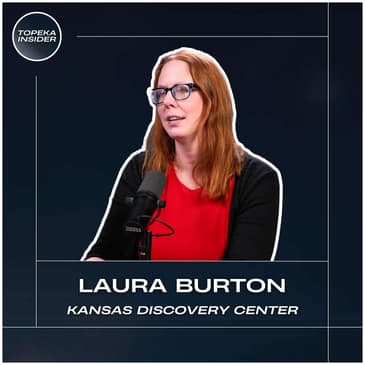
The episode explores the vital role of the Kansas Children's Discovery Center in fostering creativity and curiosity among children through hands-on learning. Laura Burton shares insights into the philosophy of educational play, the importance of community outreach, and the exciting plans for expansion, emphasizing the Center's commitment to accessibility and innovation in child development.
• Importance of play in child development and learning
• Personal story of Laura Burton's journey to the Discovery Center
• Focus on interactivity and hands-on experiences in educational spaces
• Upcoming expansion plans and new exhibit highlights
• Community outreach efforts to make learning accessible for all families
• Integration of local stories and cultural narratives into exhibits
• Celebrating the process of trial and error as a learning opportunity
• Creative marketing strategies to engage with the public
________________________________________
0:00: Exploring Children's Museum Innovations
11:33: Creating Interactive Museum Experiences
19:38: Expansion and Programs at Children's Museum
30:39: Enhancing Museum Experience With Unique Ideas
34:41: Creating Memorable Experiences Through Marketing
43:46: Teamwork, Growth, and Innovation
50:18: Topeka Community Conversations
________________________________________
Beyond the Podcast: 🎙️
Be sure to follow our Topeka Insider Socials below and check out our website for additional stories and articles pertaining to Topeka, KS
Website // Facebook // Instagram
Follow Your Hosts: 📱
Follow both Justin & Jon on their personal socials to get connected. They would love to connect and answer any questions about the show or their day to day.
Jon Griffith // Instagram
Justin Armbruster // Instagram
For Any Inquiries, please DM @TopekaInsider on Instagram!
Kids are experimenters and they will try different things and they will take things apart, and if they can take that door off, well, they're going to do it. And our staff will walk up and say, well gosh, that wasn't quite what we intended from that exhibit. All right, there, it is Like you learn how much force it takes to rip that off the hinges, and that whole project will be wrapped up by the end of the next year of 2020.
Justin Armbruster:That was my next question. This is a lot lot.
Laura Burton:Laura Burton, Director of.
Jon Griffith:Marketing for the Kansas Discovery Center Children's Discovery.
Laura Burton:Center. You've got it. Boom, let's go there, it is.
Jon Griffith:Welcome to Topeka Insider.
Laura Burton:I am so excited to be here. I am because, of course, I've listened to the episodes and so being able to be here in the studio is really exciting, and I love everything that you guys are doing on the podcast, so I'm kind of excited right now. I'm not going to lie. Thanks for being here, it's great.
Jon Griffith:Yeah, well, I've definitely. My family and kids have gone to the Discovery Center many times, so we were very excited, my kids. I just told them before this hey, we're having somebody from the Discovery on and they're like, oh my gosh, like ask about this and this and this, and so we're very excited to have you on as well.
Laura Burton:We're going to get your kids the inside scoop right here, I'm going to share all sorts of things. You'll be able to go back to them and say I know what's coming up at the Discovery.
Jon Griffith:Center, absolutely.
Laura Burton:And they're going to be pumped.
Jon Griffith:Yes, I'm so excited, so maybe just give us, just maybe, personal backstory. How did you come to direct marketing? Yes, at a children's museum? Yes, yeah.
Laura Burton:Absolutely so. I have spent my whole career now in nonprofit marketing, mostly here in Topeka. I'm a Topeka transplant, came here to attend Washburn University.
Jon Griffith:Topeka transplant for the win. Let's go.
Laura Burton:Absolutely, you know. I love our community, like somebody who has come into it and sees it from an outside perspective and can enjoy that. So came here for that and worked in different nonprofit organizations worked at the YWCA for a long time, worked at Midland Care for a long time and then was able to come to the Discovery Center about seven years ago now. I first came there as a mom, so before I was working there I went, and the first time I walked into with my kids.
Laura Burton:Oh cool yes.
Laura Burton:So the first time I came to the Discovery Center, my daughter, who is now 10, was about six months old and I was completely overwhelmed as a new mom and it was a lot. You know, I was spending a lot of time at that point trying to be a working mother, trying to take care of whatever, and I was somebody with a lot of family support system, but having babies is tough. And I was somebody with a lot of family support system, but having babies is tough. Having kids is tough, and I know that I was so into like the social media scrolling and this idea that I needed to have this aesthetically beautiful playroom for my child and know everything about how to help her grow and be wonderful and perfect, felt all this pressure for that.
Laura Burton:And I walked into the Discovery Center and I found this environment that was just made for her Right and so in the infant area at the Discovery Center, which is where I was at the time, with the mats and the colors and the toys and all of these little tidbits on the walls about why my daughter was developing the way she was and why she played the way she was, and it completely clicked for me that me as an individual mom did not need to create the perfect educational play environment for my child, because our community has created that for all of our kids, and I loved it from the word go. That's awesome. So went there a lot as a visitor for a few years before having the opportunity to come on doing marketing, fundraising, creative stuff. Since then have gotten into a lot of the exhibit design pieces of it. It has been an absolutely amazing seven years and it's going to continue to be amazing.
Jon Griffith:It's a great place that's awesome to have, basically like a fan, like become your marketing person, like specifically your marketing person yes, like you're not just like some stranger. They hired off the Internet from. You know Texas, like you're a true fan. You know strangers on the Internet Like you got to watch them for your marketing needs.
Laura Burton:Absolutely. No, absolutely. It did give me a different perspective on the ability to come in and say, OK, this is the kind of thing I enjoyed as a parent or a caregiver. Of course, when I was coming in as a parent, I did not know about the children's museum movement, the research around educational play, all of the stuff that have become a big part of my learning curve over the last seven years, like the big deal stuff. All I knew is I felt good when I was there and I felt supported when I was there.
Laura Burton:And so the neat thing about being on the other side of it now is you get to see a bit how all the magic happens and why all the magic happens. Um, and all of the thinking that goes into creating that space. That, I think, is kind of behind the scenes for parents who are coming in and saying, well, this is fun, right this?
Justin Armbruster:is a really cool place, so let me ask you this Kansas children's museum. Yeah, kansas children's discovery center is the name of the organization.
Laura Burton:Um, and you'll hear us called Discovery Center oftentimes.
Laura Burton:That's fine too.
Laura Burton:But we are a children's museum. That's what we are. So we're part of a network of 200 different children's museums all around the world and we have the opportunity to work with those museums and learn from them. Our partner probably our closest partner Wonderscope in Kansas City is another children's museum. There's one in St Louis, the Magic House, that many people have been to, lincoln. So there are a few others regionally and then, of course, all around the world. There are lots of different ones doing amazing things.
Jon Griffith:So we get the chance to work with those organizations and bring all of their good ideas to Topeka, and there's a network that you're in with all of those children's museums.
Laura Burton:Yes, the Association of Children's Museums. That's the network we're in, and so if people are members at our Discovery Center, if they are members at a certain level, they have reciprocal benefits at other children's museums which is really cool.
Laura Burton:So if you're a family that travels a lot, that's a great investment to make, because then you're saving 50% when you go to those other places and check out those other museums, which is really fun. We're all a little bit different. We're all a little bit unique. We highlight and showcase our communities in different ways, so a lot of family travelers look for that and enjoy that, and so that network is great for our visitors. It's also great for us because we can learn from them, and so, you know, I go to the conference every year.
Laura Burton:You get the chance to sit down with other children's museums and say, ok, how are you accomplishing this? And sometimes it's a really simple materials question like, ok, I want to build this thing Right, but of course kids need to be able to bite it. You know, or whatever. Like working in a museum, you have to do a lot of really creative problem solving to make a play environment that is safe and healthy and positive for kids. So there are a lot of just weird problems we have to solve, and being a part of those networks is really fantastic, I bet.
Justin Armbruster:So let me ask you this Spoken like someone who has never been or doesn't have children.
Laura Burton:Yes.
Jon Griffith:They would actually be concerned if you went without your kids?
Laura Burton:Yes, they would, they'd be, like this guy this guy doesn't have kids.
Jon Griffith:Why is he here?
Laura Burton:Why on earth is he here?
Justin Armbruster:It's true, you have to have a what is a children's museum.
Laura Burton:So when you walk in the door, what you notice right away is there are a lot of different types of things for kids to play with and enjoy. So inside the Discovery Center there are 15,000 square feet. Those 15,000 square feet indoors are dedicated all to educational play. So there is a spot where kids talk about science and learn about that play. So there is a spot where kids talk about science and learn about that.
Laura Burton:There's a giant light, bright in that experience, with mirrors across from it, where you're putting in different colored pegs and you're looking at colors. You're comparing, contrasting. There are wind tubes in that area, so you're putting these scarves into these wind tubes and manipulating the flow of wind to see what happens. I love that. One right, the Bernoulli blower, where you're actually getting beach balls to float using the power of the Bernoulli effect, which is air pressure. So you're experimenting with different concepts in science, but you're doing it through play and that's the type of learning that you see integrated throughout the museum. So we have a dramatic play area where there is like a pretend hospital, a cafe, a mechanics shop. We have a building area, grocery store.
Laura Burton:Yes, where kids are doing engineering the grocery store where they're running that Art, which is one of my favorite experiences in the museum, which is essentially a big glass house where kids can paint on the windows so they actually get to mix colors and paint with their hands and paint brushes and do those kinds of things. There is a Kansas grain elevator experience where they get to move these little plastic pellets through a realistic experience using real augers, levers and pulleys. So you see a lot of this cause and effect stuff. You see a lot of things that are fun for kids but get them curious, get them asking questions and get them experimenting. And then, once you leave the doors, we have four and a half acres outside and outside you have a lot of similar components, things that encourage experimentation a dinosaur digging experience, a pond and stream treehouse, pirate ship the pirate ship Isn't the pirate ship.
Jon Griffith:So fun, my kid's personal favorite, yeah.
Laura Burton:So it's everything that you get excited about as a kid, but the learning is kind of sneaky right. The learning is underneath and there is learning and there is engagement integrated into every single part of the experience. There is learning and there is engagement integrated into every single part of the experience. So the reason we call it a children's museum and what makes that a little different than a traditional museum museum is you might learn things at a museum, right, and maybe you might even interact at a museum. You might be able to push a button and hear a recording and do those kinds of things, but it's not really open-ended. In the same way, there's usually a specific learning objective. I walk up to an exhibit, I'm going to push the button, I'm going to get the information that I need to learn from the exhibit.
Laura Burton:That's all really valuable. That's fine as a way to teach children and grownups. A children's museum says I'm going to create an experience where you can do any number of different things and who knows what you're going to learn from that. You're going to learn what is interesting to you and what is? Compelling to you and you determine the path of your own learning. So that's that bigger philosophy that goes into how we build stuff.
Justin Armbruster:It basically sounds like an adult museum or a regular museum, one that I would be allowed to go in.
Laura Burton:You're not supposed to touch anything.
Justin Armbruster:There you go. But at a children's museum. You can push buttons, do things. It's interactive. You know that seems like there's more of a physical side to it. Absolutely, it's interactive. You know that seems like there's more of a physical side to it.
Laura Burton:Absolutely Everything is stuff you touch with. Everything is stuff that you play with. Everything is designed for kids to get messy and experiment and try out different things. That's part of why we have so many design challenges right, Because kids are experimenters and they will try different things and they will take things apart. And if they can take that door off, well, they're going to do it Right.
Laura Burton:They will take things apart, and if they can take that door off, well, they're going to do it Right and our staff will walk up and say, well, gosh, that wasn't quite what we intended from that exhibit. All right, there. It is Like you learned how much force it takes to rip that off the hinges. Okay, Now we know. Um, build, test, improve right. The engineering design process is a huge part of what we do. We want kiddos to try things and experiment with things. We encourage kids and grownups to fail safely. It's okay to try something that is hard. It's okay to try something and not get it right the first time. It's okay when your tower falls over.
Laura Burton:Your next tower is not going to have that same weakness right. So all of those things go into the experience and, yes, everything's got to be touched.
Jon Griffith:Yeah, I mean, I just I have a six-year-old and I have a two-year almost three year old, and especially the six year old firstborn, classic, kind of stereotypical firstborn you know, wants to make sure everything is perfect before he tries it you know, and so the thing we're working on with him is hey, you can do hard things, you can do hard things, you can try things, even though, if you don't know, you're going to be good at it yet you know.
Jon Griffith:Yes, and I think the Discovery Center has been one of those things where it's like hey, just go, get your, go, get your hands dirty, go, try stuff, go, you know, go, just mix yourself up in the stuff and do it and have a good time and see what happens.
Laura Burton:You know that is exactly the kind of conversation that we want caregivers having, Absolutely yes. When I talk about that engineering design process, the build test, improve. Well, a key part of that is the improve If you test and it's perfect right.
Jon Griffith:There's no room for that.
Laura Burton:And in the real world, engineers are doing that all the time. They're building and testing and they're they're trying new things and they're constantly improving that. Failure is a part of that process. And so it is really important that kids do things that are hard for them and that they can't always be successful at the first time, because that'll let them try again. That's hard as a parent. To watch your child be frustrated is very difficult, and we even have we have a particular field trip at the Discovery Center.
Laura Burton:We have 10,000 field trip students a year, by the way who come through the museum yes, and so we have a really cool field trip experience called Build Roll Engineer, where kids get to build these roller coasters, okay, and they get to use these rubber tracks and they get to send balls down the rubber tracks and create loops and hills and overcome engineering challenges. One of the rules is that parents can't help. Parents are intentionally given seats.
Laura Burton:They're told they need to sit on one side of the room and parents are not allowed to help and they have the best intentions right. Especially if you see a kid start to get frustrated or maybe even a little bit teary, it is really hard as a parent to not want to go up and rescue and say, well, what about this Right? But when kids overcome that, the feeling of pride they experience is so impactful for their learning.
Laura Burton:So, yes, sometimes as a parent, we have to sit on our hands a little, that's hard, absolutely so.
Justin Armbruster:As the marketing director of the Kansas Children's Discovery Center nailed it, it seems like you can just tell you're passionate about this.
Laura Burton:You love it, I do.
Justin Armbruster:And it feels like that would be an easy thing for you to go to work every day. As much as you love what you do Is that?
Laura Burton:accurate. It's a very fun place to work and you know I'm not going to say we don't have some hard days, but I want to be one of those people who says, oh, it's not as fun to work at the Discovery Center as you'd think it would be.
Laura Burton:It is absolutely as fun as you would think it would be.
Laura Burton:It's a blast. Yes, I get to build towers. Yes, I get to dress as a shark. Yes, do things better. It's a really cool working environment Obviously a family-friendly working environment, which one would expect, but it is a lot of fun and you get to see kids just light up and learn new things and have the wonderful experiences. And that is fantastic. When you're walking out on the museum floor and you see a kid with what we call the, I did it face right. It's putting the top block on that tower and taking those two steps back and looking at it and saying this time it didn't fall. That is so cool to see. So, yes, I love it it's. Every day is wonderful there.
Jon Griffith:Are you actually out on the floor a lot like problem solving and stuff like oftentimes yes, especially on the exhibit design side.
Laura Burton:So because part of my job doing marketing stuff, I came into the Discovery Center with a bit of that art background that I'd had from doing graphic work and other things. That's now gone into exhibit design and so a lot of what I have to do to create really good, compelling exhibits for kids is watch them play. And that's how we learn, so our lemonade stand is actually an interesting example of that Years ago. We have a lemonade stand at the Discovery Center.
Laura Burton:I know you've seen it because it's one of our most popular things to photograph.
Laura Burton:We used to have it as part of a larger financial literacy exhibit and it had a computer screen on it and on the computer screen you could do a little computerized lemonade stand game. Well, that was okay, but what we found was that often kids would ignore the computer screen and they would actually shove all of their toys to the side of the computer screen and they would want to play pretend lemonade stand without that screen there. So we chopped off the screen and we put pretend lemons and pitchers and cups and those kinds of things. Well then we saw a bunch of kids over there trying really hard to squeeze the lemons and they were hard pretend lemons, right.
Laura Burton:And they wanted to squeeze them and pretend to make lemonade, which is great, fine motor development for kids.
Laura Burton:So we had to find squeezy lemons and of course then you had to find squeezy lemons that you can safely bite into without it becoming a choking hazard for kids. So that's how I, as director and marketer, ended up in my office biting into pretend lemons to make sure we had them, that they were squishy enough, also biteable, also safe, and a vendor can tell you that you can take a bite out of something, but I don't trust them.
Laura Burton:So I've got to do it myself. So, yes, it's an ongoing process. We're always improving and we're always watching how kids play, because kids are the ones we get our ideas from and they're the ones who can tell us how we can make it better.
Jon Griffith:So, yeah, when I that's very, that's amazing, because when I heard a director of marketing, I just thought, oh, you do the website, you do some like social media stuff, you know, but you're like actually helping create, yes, the stuff that kids are interacting with. Absolutely Wow, and we try to do as much as we can.
Laura Burton:Increasingly, we're trying to do a lot of that local because we're trying to tell that local story Right. So for me me as a Topekan that means that when we're bringing in a water table experience, which we're going to be bringing in this summer by the way.
Laura Burton:That's one of the things your kids will be very excited about. I don't want that to just be a water table. I want that to tell the story of Topeka as a city that was built on the river and why Topeka was built on the river. I underground water in the state of Kansas and aquifers and what those are and how important they are for our state's agriculture. I wanted to tell the story of how in eastern Kansas a lot of our water is coming from rain and in western Kansas it's underground, and how that matters for the history and ecology of our state. I wanted to do all of that stuff. So that means we have to have local perspectives, we have to have local artists, we have to have people coordinating that who can tell our local story, because ultimately, our children's museum is how we introduce kids to our community. It's how we make them proud to be a Topekan, proud to be a Kansan. It's a part of our work and it's a part of our goal. So that ends up being a big part of my work too.
Jon Griffith:So how do you, where do you get all this stuff Like so for instance, like the, like the mechanic thing, like I I assumed you know and I walk in there knowing absolutely nothing about you know how all this works. I used to like, oh, there's like maybe like kits online. You just get for all of this stuff somehow car kit?
Jon Griffith:yes, if only there are some of those things, but it sounds like you're like building it kind of yourself a lot of stuff it's a mixture, so some of the car, for example, was built by another children's museum right that has a larger fabrication shop than we do.
Laura Burton:So some of those things we're able to buy from other museums or museum exhibit fabricators and bring in Others, the other things we really do build ourselves, the pirate ship, for example. That pirate ship was built on site by volunteers, and we're talking about those who have not been to the Discovery Center. I don't mean a small pirate ship built on site by volunteers, and we're talking about those who have not been to the Discovery Center. I don't mean a small pirate ship, I mean a life-size pirate ship.
Laura Burton:It is huge it is outside and that was all built on site with our incredibly skilled carpenter, facilities manager, drake Carver, and a group of volunteers. So it varies and then a lot of things are kind of a mixture, so the water table is a good example of that. The water table itself we are going to purchase from a vendor, because that's a very difficult thing to engineer and we want something that'll really last and work well. But all of the educational components we are designing, so the graphics that surround it, the information, the story it's telling, we are developing that as a museum and working with partners like Kansas Geological Survey and Friends of the Kaw to bring in other sources of information.
Jon Griffith:But if you have to modify something, you have a shop that can do stuff like that.
Laura Burton:Well, you ask a great question because in the past, no, we have not had much of a shop that could do that, and so Drake, who's our carpenter, has been building things outside on the back patio of the Discovery Center for the entire 13 years we've been in operation.
Jon Griffith:Like when you get some kit from a vendor he's putting it together.
Laura Burton:Putting it together outside or on Mondays when we're not open to the public, that kind of stuff. That is a big part of the reason that, and other things for the expansion that we've just launched.
Justin Armbruster:What expansion are you launching?
Laura Burton:What a great question.
Laura Burton:Softball, I really like you know I love a good softball.
Laura Burton:That's great, but also this is exciting. So Building Discovery is an expansion that is going to double the size of our children's museum. It's currently 15,000 square feet.
Laura Burton:It's going to be 30,000 square feet so it's a massive undertaking for us and it is funded by different folks, generous businesses and individuals in the community Gage Park Improvement Authority, sales tax dollars that Shawnee County voters voted in support of last year no, two years ago and it's going to not only add space to the museum but add some really great exhibit experiences. So you have two large exhibits spaces that are going to be a part of that. The Sunflower Gallery, which tells the story of our environment in the state of Kansas, tells the story of how a sunflower seed becomes a sunflower and has all kinds of learning around along the way.
Laura Burton:So kids are learning about wind, power and water and osmosis. The anchor of that gallery is going to be the world's tallest climbable sunflower. It's more than two stories tall and kids are going to get the opportunity to climb up it, which I'm so excited for. That's awesome. Should be a great tourism draw too. Then, right next to that, you have what we're calling the Kansas to climb up it, which I'm so excited for. That's awesome, should be a great tourism draw too. Yeah. Then, right next to that, you have what we're calling the Kansas Bright Ideas Gallery, which is all about Kansas inventors, and it also will have the chance for kids to share their own ideas for products and inventions things they have. It has a brand new traveling exhibit gallery space. Right now we bring in traveling exhibits like the one that we are just about to wrap up emotions at play with inside out. The next one will be thomas train engine that's going to be coming on down the track into the discovery center.
Jon Griffith:um those are. Favorite was the dinos, by the way dinosaurs were amazing because dinosaur eggs.
Laura Burton:I loved that one, that kind of experience.
Laura Burton:All three of those exhibits I just mentioned had more pieces to them that we had to leave out because we didn't have enough space in our traveling exhibit gallery the new one will have enough space for us to bring in any exhibit experience from anywhere in the world into Topeka, so we're very excited about those limited opportunity exhibits we can bring in.
Laura Burton:The expansion also has three classrooms. These are indoor, outdoor classrooms. They all have big garage doors that roll up so that kids can actually get outside and inside as they're learning. One has a test kitchen, so think about the power of an indoor-outdoor classroom with a test kitchen where kids can go out to the garden and get tomatoes and bring them in and learn how to fix those things. Those classrooms will offer school-age child care, which is something that we have been asked for again and again. Child care is a really serious issue for Topekans and for Topeka young professionals especially, and so being able to offer school-age childcare that is again play-based learning is really powerful, and with those three classrooms we'll have 60 spots for camps, summers, schools, out days lots of exciting things happening there, so really cool stuff with. The project Also does include a workshop, right.
Laura Burton:Which is how we got started on this workshop space, a real live indoor workshop um some health and safety things, a nursing suite, um a storm shelter, a sensory friendly space, some other smaller things that are um important and critical to us remaining accessible as a museum. So lots of great things happening there and that whole project will be wrapped up by the end of the things happening there and that whole project will be wrapped up by the end of the of next year of 2020.
Justin Armbruster:That was my next question.
Laura Burton:This is a lot. It's a lot. How long that would take? So in 2025, yes, so it's not really that long. Yeah, it's not that long.
Jon Griffith:It is a very, very aggressive schedule for construction, so we're excited about it is adding something, but they said it'll be like five years, so like dang it, five years but it's one year.
Laura Burton:This will hold us over. This will be. The zoo is a wonderful partner, so I'm not going to say anything about that timeline, because they are wonderful to us and great for us to work with.
Jon Griffith:But, yes, no, we're excited we're, just it can't be here soon enough because we heard there's penguins hands on the way that's the rumor I happening.
Justin Armbruster:is that going to limit anything that's currently going on? Are you guys going to be fully open? Still Fully open, Okay.
Laura Burton:So there are a few things. People have already seen a few of those things. For example, we're not going to be able to do birthday parties for the duration of the construction because we've lost our program room right.
Laura Burton:That's turning into a maker space Very exciting, but we're not going to have the chance to do some of those other things. There are, just like, some limited restroom access things sometimes, like one of our family restrooms is closed, the other one, of course, remains open, so a few small things like that, but we will never need to close. We'll be open throughout construction. So folks should come on by and bonus there's big trucks and that's practically another exhibit for us.
Jon Griffith:Yes, that's, so true. Excavators, oh my gosh.
Laura Burton:You get a cement mixer out there with a group of four-year-olds and that's the best day ever. Our whole construction crew from Crossland. They're like rock stars out there driving diggers.
Justin Armbruster:It is so cool, so for someone who hasn't been doesn't have kids. I don't go, you know often. Clearly, john, you might be able to answer this too. How often are kids and families coming to the discovery center? Is it like a? Hey, you know, we go once a summer, it's a great thing to do, you know every year. Or is it, hey, we go every week, every day? You know what does that frequency look like?
Jon Griffith:What? How do you?
Laura Burton:what was your family? Of families it varies a lot by family. We have a lot of very regular visitors who come every single week. That's pretty common for our members. We have a lot of folks who are dropping in once a year or when we have special exhibits. That's a big draw for people. That's part of why we bring in those special limited time exhibits, because they're unique and people will say, oh gosh, I want to get in there before Thomas closes because my kids really like that. So it varies a lot just depending on the family and their situation. Gotcha.
Justin Armbruster:So is it like you go once and you pay to go once? Is it like a membership you can be a part of? How does that work?
Laura Burton:Both things are true, so we do have regular admission. Admission at the museum is $9 a person for adults and kids. Infants under 12 months are free. Seniors $1 off Military Infants under 12 months are free. Seniors a dollar off Military 10% off those kinds of good things.
Laura Burton:What about 26? Memberships? If you're 26, you're a grown-up, you are an adult, or we sometimes say former child.
Justin Armbruster:Former child.
Laura Burton:Yes, yes, you at one time were one. So that ends up being a really good value for memberships because starting at only $109, you can do a membership and then it's unlimited visits for your family for the whole year. But I should mention and this is a really important and critical part of our work over one in three of our visitors every year are coming in with free or reduced admission. So last year we had 120,000 visitors that came in. One in four of those were traveling from outside Shawnee County, by the way. So our major tourist attraction, economic development, very important for Topeka and over 50,000 of those were coming in free or reduced.
Laura Burton:We have almost a dozen programs now that are designed to be able to give families access. So that includes things like museums for all, where if you have a WIC or an EBT card and you show that at the front desk, your admission becomes $3. It includes programs like medical warriors. Medical warriors is a special program for medically fragile children. So these are kiddos that maybe are awaiting surgery or they're undergoing cancer treatment or they're immunocompromised and they really can't be around crowds or they have other needs that make them medically fragile where they can't visit.
Laura Burton:When the museum is open, we have free private visits for those families that they can set up during times when the museum is closed. That's cool. They can come in and have those experiences. That they can set up during times when the museum is closed. That's cool, they can come in and have those experiences. Includes programs like Play Free, which is a collaboration between the Discovery Center and Topeka Correctional Facility. It's a very unique program in which we have children with incarcerated parents actually doing visits with their parents at the Children's Discovery Center during hours we're closed.
Laura Burton:We close for those programs and kids have the opportunity to come when it's to be a correctional facility. The children will come to the museum and their mothers will have the chance to meet them and they get six hour long visits where they get to share two meals together, do crafts together, special things like that, in a really child-centered environment. When you think about the difference visiting a parent at the Children's Museum versus the prison, that's a really different experience for children and one of those is really focused on the needs of the kiddos, and so we're very proud to offer that program. That program has actually expanded a lot in the past year. It started as a collaboration with us in Topeka Correctional Facility and a lot of people said well, what about dads, right? What about incarcerated dads? And we would love to be able to get everybody to the museum. But of course that's logistically difficult.
Laura Burton:When we talk about incarcerated men. We're scattered all around the state.
Laura Burton:So we've been bringing our mobile museum out to community-based settings in Hutchinson, el Dorado and other places where there are men who are incarcerated, and doing a similar program. Using the mobile museum, we've been able to get men doing visits with their children as well. We also have a program that's been going out to the juvenile correctional complex here in Topeka. One need that we had really overlooked and not thought of is the fact that there are incarcerated juvenile parents, incarcerated teen parents, and so we've been bringing the mobile museum out to the juvenile correctional complex and as a result of that program, we have had five teen dads meet their babies for the first time, participating in that program. So a lot of our work at the museum is talking about not only how do we create this really cool environment and place for our community, but it's asking who are we not serving, what barriers exist to play and engagement and healthy family bonding in our community, and how can we break those barriers down for families Huge, huge part of our work.
Jon Griffith:That's amazing. Wow, man you're like hitting me right in the feeler. As a parent, I mean that's amazing the Discovery Center with my mom.
Laura Burton:Well, think about a child who has an incarcerated parent and that is traumatic to that child in lots of ways we could talk about, but a big piece of it is they don't have those normalizing experiences. And it's really powerful for that child to be able to say oh yeah, over winter break I got to hang out with my mom at the Children's Museum too.
Laura Burton:That means a lot to that child's ability to have normalizing experiences out in their community in addition to the bonding, they get to do with their moms on site at the museum wow that's a program we've gotten national recognition for. We presented all over the country about play free. We were on cnn as a part of that program a few years ago I know it was about two seconds on cnn it was still on tv.
Jon Griffith:It was an excellent two seconds on.
Laura Burton:CNN. It was great, Really really cool program.
Jon Griffith:How did you set that up? I imagine the amount of red tape to get something like that set up would be tremendous.
Laura Burton:Having Topeka Correctional Facility as a partner was really helpful early on. So the inspiration for the program came from something similar they're doing in New York with Rikers Island. Their program is a little bit different. They have much shorter term visits and they have the caregivers the custodial caregivers of the kids stay there during the visits, which is just kind of a different dynamic than we have here. Topeka Correctional Facility already had a program called the Walk Program, which is designed for there to be retreats where parents and mothers I'm sorry, children and moms could get out and experience different kinds of things. So that structure was already in place there and we were able to work within that structure. That made it a lot easier.
Laura Burton:To be one of the things they could do, exactly that said, topeka Correctional Facility has had to do a lot of work right on their end to make this happen and they have been supportive of the program in ways that we're very grateful for.
Jon Griffith:Oh that grateful for.
Laura Burton:And now the broader Department of Corrections as well. When we talk about the men's prisons, they're also having us redo visiting rooms inside the men's prisons to make those more child-centered. So, there is. You know, Department of Corrections has seen the work that we're doing and has put a lot of faith in us and our ability to create these experiences for families that make families stronger and healthier, and we're grateful for that and excited for the opportunity.
Justin Armbruster:So it seems like there is a lot going on. There's a few things, yes, that the public maybe doesn't even sometimes know, about how many people work for the Discovery Center.
Laura Burton:Seven.
Justin Armbruster:Seven, yes I know Full time.
Laura Burton:We do have more people than that who are part time, so we have a lot of folks who work, especially on the museum floor, who are part time, but, yes, seven full time staff Currently. We are a very lean team, so that's why, when you talked about how you were surprised to hear the director of marketing, is biting to play lemons in my office to make sure they're safe, and designing murals and doing those kinds of.
Laura Burton:that's why we're all wearing we all wear a lot of hats. When we expand the building, that'll give us some opportunities to expand our team. We're excited about that for lots of reasons. We have a lot more ideas and there's a lot more need in our community, so we're excited for the opportunities to add to the team. But yeah, not a lot of people, but a lot of enthusiasm and a lot of good work.
Justin Armbruster:So, when you think of the Kansas Discovery Center, what ways are what parts of the Kansas Discovery Center are you guys killing it and what are some ways that you're like? I wish we could be more like St Louis in this way.
Laura Burton:Oh my gosh. Yes, Because I go every time I walk into a children's museum.
Laura Burton:And at this point.
Laura Burton:I've been to dozens all around the country.
Jon Griffith:There's always at least one thing where I think oh, I wish we had that.
Laura Burton:That's part of what's neat about the museum community is that everybody sort of has their own thing. So one way, I think, probably, where we are excelling and doing really amazing stuff is in the access programs right that I talked about. I think when it comes to museum access, we always have more work to do, but that is a place that we have been very intentional and I think we're doing really fantastic work, wow. I also think our outdoor space is a huge asset for us, and so, um and and that's true of gauge park Generally gauge park is such a great family tourist attraction and I think until you have traveled around the country with kids, I don't know if people realize how cool that is that we have our zoo and that amazing playground and our children's museum and the train and the carousel all in the park. There is adequate parking there is adequate green space.
Jon Griffith:You're not schlepping a stroller down eight city blocks to get to where you need to get and it's so large that, like you never feel cramped by all the people that are there, you can have your space and it's amazing.
Laura Burton:It is such a gem so the the reality of being able to be located there and work with the other gauge park entities shawnee county parks and rec and the Zoo that's huge. That's a place we're killing it Now in terms of things to improve. We are out of space, right. So that's where Building Discovery comes in. We often hit capacity. You know we're an organization. People used to dream that we would serve 100,000 visitors a year and we had 120,000 last year and we have grown every single year except 2020.
Laura Burton:Right.
Laura Burton:We remember that was a rough year.
Laura Burton:We made it through.
Laura Burton:Other than that, we've grown every year and so there's more need and there's we've got to have some more space, some more physical space. The ability to step into the child care space is really exciting, and then when I look at other children's museums, I just look at cool stuff they have.
Laura Burton:Right.
Laura Burton:I've seen some really great gardening programs that I'm excited for us to bring. I'd like for us to bring in people, or to be talking to kids, who will just have more really interesting, creative ideas about things we can add. I think about the Tulsa Children's Museum, for example, that has an entire climbing tunnel built out of packing tape. That's really cool, wow, and I have climbed in it and and yes, it is big enough for an adult and it's very exciting and it's slippery and it's a little weird, but it's also completely fantastic. Wow. I don't necessarily need a climbing table, a climbing tunnel built out of tape.
Laura Burton:it's a lot of maintenance, but I want something that cool and interesting and that yeah and unique and that is an idea that is just weird right we need more weird ideas, we just need things that are strange and unusual. And I feel like I know I've heard a good idea when I first hear it and I think that's where we can't do that. That's, that's completely bizarre and off the wall. And then I start to think about it a little more and I think, well, maybe we could do that. Right, those things are really exciting to me, wow.
Jon Griffith:That reminds me of. Have you read this book, the power of moments? Oh no, I haven't Tell me. Oh, it's so good, it's a chip and Dan Heath I think they write a lot of books kind of in this vein. It's not really like a leadership book, it's I don't know, it's hard to describe, but they tell us they're basically talking about how do you create like impactful moments in people's lives.
Jon Griffith:So, maybe in a corporate culture or in your family or whatever. And uh, they tell a story about this little hotel in LA that, um is like not a nice hotel. Like it's, it's not like a high level. You know it's kind of like a motel with the pool in the middle. You know in the courtyard kind of thing.
Laura Burton:What are you saying? That sounds amazing. Well, right, right.
Jon Griffith:Right, but, like you know, it's kind of like the semi.
Jon Griffith:you know it's like two to three star thing but it's rated five stars for like thousands and thousands of people on on you know, google or yelp or whatever, because they, they have just leveraged a few small things to make these really high level moments for people, so for instance yeah well, yeah, I think there's a bunch of them throughout, but like one that sticks out to me is he mentions they have this phone by the pool and you just uh, you know pick up the phone and it automatically calls it's the popsicle hotline, and so you don't even need to dial a number. You just pick up the phone and they say you know, do you want grape or cherry or you know whatever? And then five minutes later, like a bell hop in very nice uniform with a tray and a silver thing like says here's your popsicle this is legendary, yeah, and so they have a few things like that that just make, like, the moment of being there, yes, so memorable and so incredible that people are like five stars.
Jon Griffith:I will absolutely stay there again, even though it's like really they don't have the nicest beds, it's not like the nicest place in the world, but it kind of reminds me of that, like what you're saying about a uni, like a tape tunnel, where you're like that is memorable, like they're like oh man, they had this crazy thing there that totally made the experience.
Laura Burton:You know what I'm saying Absolutely, and I know the sunflower climber will have some of that energy I'm excited about that but yes, you're exactly right.
Laura Burton:Those moments especially, I think, for family travelers and people who are traveling the country, they want those memorable experiences. You know we're all getting to a place I think my experience is not unique. We're all getting to a place where we are kind of overwhelmed by the expectation that raising a child requires a lot of stuff and you just need to buy more junk that you have to step over and clean and more towards. Let's get some experiences that are memorable for our kids and for families that are thinking that way. I think that's why they like going around to different children's museums. I think that's why they buy the memberships. It's because they want something that's a little bit more lasting than whatever the latest weird toy is that you're going to step on it's so true.
Jon Griffith:I mean, yeah, and the power of like that experience, especially something that's learning and it's fun and it grows you in some way, is probably better spent than a bunch of toys that are going to be in a storage unit at some point. You know, and it's. I mean we have now our third kid and it's we're like why do we have so many toys?
Laura Burton:You're in a river of toys. It's insane, it really. It does feel like I am just like in an ocean of toys.
Jon Griffith:And we just moved, so we have only brought like 10% of toys inside and I'm like, why do we even have the 90% that has not left the box? Like let's just get rid of that, we don't need it anymore.
Laura Burton:But you know, if you do, there's going to be one thing in that box. Yeah.
Jon Griffith:It'll be like two years from now, like where's that thing that? You bought me, you mean the one I gave away. Yeah, oh yeah, that's so good, so I do. I have two questions, one I mentioned earlier. I just want to circle back just briefly. Where did you get the lemons? Where did you get the squishy lemons that are chew, proof that are chew proof OK.
Laura Burton:so we found a fantastic vendor that does stuff for a lot of children's museums. They're not cheap but they're fantastic and they actually you know I talk about the testing process. This is how you know they're for real. This particular company tests things out with a team of golden retrievers.
Laura Burton:So they produce the play food and they throw it out to their troop of golden retrievers who like get the opportunity to mouth on it for a while, and if the golden retrievers can't get into it, they know it's safe. Wow, fantastic strategy. Wow, very enthusiastic. Also, that sounds adorable and I wish I could be a part of the testing process Now.
Jon Griffith:they watched those before you bit into it right.
Laura Burton:One hopes In hindsight I should have asked more questions. But yes, yes. So a lot of there's a lot of research and just experimenting that goes into a lot of those decisions. It is fun.
Jon Griffith:That's got to be such a fun job Like making experimental squishy lemons, you know feeding them to golden retrievers.
Laura Burton:When you talk about having fun at work, that's it right, yeah. Same with answering the Popsicle hotline.
Jon Griffith:I know I want to be that guy, I know, I know, seriously.
Justin Armbruster:Now with answering the popsicle hotline. I know, I know Seriously. Now, as the marketing director, you do do the other stuff as well. You know social media absolutely.
Laura Burton:Social yes, a lot of the content development, those kinds of things. So telling our story in a million different ways as a marketer and especially a marketer who has been around for a little bit. Obviously, there's a new platform every other day, and so you can make yourself crazy as a marketer trying to keep up with the latest and greatest algorithms, or you could just get really good at telling a story and know what you're excited about and passionate about, and I have found that, as long as you can do that, you can do that on any platform and it will be successful, like if you're doing it well and you're telling a story well and you're consistent and you understand your brand and you understand what you're about.
Laura Burton:You can you can be successful on social media without knowing that Facebook this week is giving an algorithm boost to chase that stuff.
Laura Burton:And so we try to be present on as many platforms as are practical for us to do so.
Laura Burton:We try to do a few things and do them well, and you know, as a marketer, I also find a lot of our success now is just coming through communication, that's more one on one. Our email newsletter is our best conversion tool Right Better even than Facebook or some of the other social stuff, because I can't control how many people are going to see my Facebook posts but, I, can control whether that email lands in your inbox, and I still find a lot of things that feel kind of old fashioned to.
Laura Burton:A lot of marketers work really well Flyers work well. Posters work well, yes, like mailers, mailers, yes, and also posting things in the museum. And I'm still walking around to Topeka coffee shops and saying, can I put this on your bulletin board?
Laura Burton:Can I put this on your bulletin?
Laura Burton:board. Those kinds of things can't be overlooked, right. So we have a marketing mix that I think works well for us with a very small budget. We rely on a lot of social email and, at the end of the day, we're doing our work well, and so people want to hear about us.
Justin Armbruster:So let me ask you this. So, if you didn't know, I'm a full-time real estate agent.
Laura Burton:That's exciting.
Justin Armbruster:It estate agent. That's exciting. It has its pros and cons, but what I tell people is I'm really just happen to be a marketer that sells homes. There you go, and so my question is someone who loves marketing, yes, what is something that marketers are currently doing wrong that you think, people, they could be doing better?
Laura Burton:Oh, that's such a good question. I think I referenced it a little bit before with the algorithm chasing or just getting so overwhelmed in the quantity of platforms or the net or the depth of the metrics that you let that become your work and so you're. So much of your work and energy I see this with marketers sometimes is diving into Facebook analytics or insights and pulling out a jillion different data points and comparing those, and I think there is a lot of value in that if you look at it as part of again a larger strategy. But getting lost in the minutiae these days, when everything is minutiae is, is a path to ruin.
Laura Burton:It will just be exhausting.
Laura Burton:And it was very different marketing when you pretty much had your TV stations and your newspaper and as a marketer it was just your job to pitch that stuff and you had a couple of places to put advertising and then you could dive into some of that stuff because there weren't 500 different platforms to reach people. Now there are, and so you have to again know your brand and know your overall strategy and implement things and be willing to adjust, but not invest too much of your time and digging through things or chasing things. Or I love TikTok, I love TikTok trends. I think that is so fun. I could full time do random trends on.
Jon Griffith:TikTok.
Laura Burton:It's not worth it. We're on TikTok. We've got a platform there. We'll see if it still exists in a few months. We're there and we'll put video content on there every now and again, especially if it's something that is simple and easy for us to do.
Laura Burton:But I'm not investing a ton of my time in something like that If I'm not sure how it's going to convert, and I'm going to be way better off sending a postcard to a member and saying, hey, this is what's going on at the discovery center and we're excited about it, and we think you will be too.
Jon Griffith:Wow, that's really good. Yeah, yeah, my, I have a question about like you have a team of seven people and and then you're seven full-time people and then I'm sure you have a lot of other people that help, like, get things going. But, yes, uh, how do you like there's a high level of excellence in the museum, but you have seven people? Right and you're all. I'm sure. I'm sure you're not the only one wearing a lot of hats.
Laura Burton:We are all wearing all the hats, so how does a team of seven people keep up the high level of excellence that you're experiencing or building.
Laura Burton:Yeah, I think a lot of that has just been. We're a team, most of us have worked together for a long time, and so we have good working relationships. We have a good working environment. We have a working environment where it's okay to make a mistake. We have a working environment where it is okay to say oh my gosh, I messed up and I forgot X, y or Z, and your coworkers will come in and help support you, and that's not going to be a place where you're getting yelled at and disciplined by a supervisor for making a mistake.
Laura Burton:I think that sort of stuff is really critical and gets overlooked sometimes. That positive working environment is what makes people productive, and the ability to have people support you when you need it helps a lot that said we all. We all wear too many hats. We need more people. We will get there and we're getting there gradually. We have added some people and it's been fantastic. We have some great new team members. We have some new educators I'm really excited about who are out on the museum floor just doing cool play things with kids.
Laura Burton:That's been really fun. Um so, lots of good things happening, but it is it's a lot. I think a lot of us now, um, no matter what we're doing or wearing a lot of hats, look at you guys right Selling real estate and doing a podcast and running whatever else you are running. People who get excited about things just tend to want to move all the time and get a lot of things done. Doesn't mean we don't need to step back and think about what's most important.
Jon Griffith:Yeah, I think you're doing a good job selling your work environment.
Laura Burton:I mean people might see this and be like I want to work there Like that sounds awesome.
Jon Griffith:Advisorsdiscoveryorg.
Laura Burton:Yeah, exactly.
Justin Armbruster:Come on now.
Laura Burton:That's what I'm saying For the record I love advisors. They're wonderful sponsors, yeah.
Jon Griffith:There you go. That's awesome.
Laura Burton:They're good to us, one of many businesses we have supporting us. We have a really generous community and generous businesses, generous individuals. You know we're a 501c3. We rely on donations to fund especially those access programs and the community has always been so incredibly generous to us and of course with the new expansion project we're relying on a lot of that generosity to get the drywall up and the lights hooked up and those kinds of things.
Laura Burton:So it's just a great place to be a fundraiser. It's a great place to work in a nonprofit, because people here are passionate about making Topeka better.
Jon Griffith:Yeah, it's amazing. How are you building the sunflower, the two-story sunflower? How is that going to happen? We?
Laura Burton:have a fabricator who is helping us with pieces of that, so we have a firm that we we hired to do the engineering piece on that, because when we talk about anything that brings a child off the ground, the safety becomes incredibly important right. Um, as you know as a parent, it doesn't actually take much for kids to be able to to get off the ground and start making poor choices.
Jon Griffith:As the dad, I'm usually the one getting them off of the ground.
Laura Burton:There you go. Yeah, there's a role for that. That's really important and critical. So working with an engineer with experience on that kind of structure, and then the question becomes putting our local story onto that, and so that's where we're working with a local artist who's creating a mural that is going to be next to it to help tell that story.
Laura Burton:We're having dimensional sunflowers that are going to be built out of glass and metal and mixed media materials that are going to be a piece of that, and so it's like a lot of our exhibit experiences where there are pieces where we go to somebody you know who's the best in the country at doing what they do and say I need you to build this thing. And then we think how do we make this thing, topeka, and say I need you to build this thing.
Laura Burton:And then we think how do we make this thing Topeka and how do we help this tell our local story to kids? And the climber is a good example of that. There'll be lots of others too. I'm really excited about all the local artist partnerships. In the new building We've got some really cool mural work that's going to be happening and the chance to work with some. We have a lot of talented artists in Topeka, a lot of those folks bringing art into the space. In a way that's gonna help tell our story.
Jon Griffith:Have you ever had you don't have to say specifics, but just have you ever had an exhibit where you have an idea? You're like this is gonna be amazing and then you reach out to some people and they give you like they do it or they build it or maybe just a mock up, hopefully, because it's not that far into the process. You're like that's not what I thought. Yeah, like that's we're not going to do that anymore, yes, like I was picturing something better than that. Yeah, you know what I'm saying.
Laura Burton:Like yeah, or we've gone further, we brought, we've got exhibits and and they don't function well, or they don't. They don't do the same thing we wanted them to do in terms of play Right. And that's where that watching process comes in, and so that's why people who come to the Discovery Center.
Laura Burton:For many years have seen some things kind of come and go, because either it just doesn't function the way we want it to, or it's it becomes not as open ended as we need it to do, right. Or we just see something else and we're like, okay, this could bring the same concept in, right, bernoulli blower. We used to have a Bernoulli blower that had ping pong balls Really really cool, right. We liked it, and as it started to wear out, we were like, oh, they have the hippos now with beach balls. We want a bigger one, right? So that kind of thing. Um, so that's just a continuous improvement. But yes, absolutely, we've gotten exhibits.
Justin Armbruster:And we were like, hmm, but that just goes back to what you were talking about earlier. You know, we're OK failing. We want to fail If we're not failing we're not growing.
Laura Burton:That's exactly what it is.
Justin Armbruster:With exhibits, you know being OK experimenting, doing things that maybe be out of the comfort zone, or let's give this a go and if it doesn't work, it doesn't work, yeah.
Laura Burton:Part of the process different way than we thought it would. That's not uncommon either, where we just walk out onto the museum floor and say, huh, I didn't know they were going to be doing that Our current imagination playground area, which is these big blue building blocks You've seen those at the museum. Right we have, we put a whole wall up of these big blue building blocks and we even put a lot of thought into that wall yeah the fall ones.
Laura Burton:Yes, we put a lot of thought into the wall because we didn't want kids to climb it, and so we even looked at things like okay, we want to make sure there aren't handholds and footholds. We put a lot of thought into the wall, we put it up, and then we started noticing that kids were using the foam pipes that connect things to build off of the wall, and it became a building structure that we did not intend at all. Love those moments.
Laura Burton:Love those moments, that's cool Love those moments when kids will say you know, you had an idea about how you thought this exhibit was going to function. We have a better idea about how this exhibit is going to function, and I can think of dozens examples of that, where we just kind of stand back and watch and say, huh.
Laura Burton:OK.
Jon Griffith:So that's doing that now it's a little bit like when you give your kid a present and they play with the box. That's exactly what it is. What about the toy? Like I like the box. You're like okay, boxes are great, by the way, what a great open-ended building tool.
Laura Burton:We celebrate Cardboard Day, which is on the first Saturday in each October. It's International. Cardboard Day? No way it is.
Justin Armbruster:And we celebrate that with a Cardboard Creation Day. That is exactly as cool as we're thinking it is. That's funny. We just make things out of cardboard. Very exciting day. I love it Cool. Well, we like to end our time on Speak Insider with some rapid fire questions.
Laura Burton:Okay, so we're going to hit you with them.
Justin Armbruster:I'm ready. First thing that comes to your mind, hit us back, okay. Favorite local coffee shop.
Laura Burton:Coffee bar 17th and Washburn.
Jon Griffith:Yeah, right around the corner.
Laura Burton:Right around the corner. Yeah, great vibe. Yeah, right around the corner. Right around the corner, yeah, great vibe. I live in College Hill neighborhood, so I love my neighborhood coffee shops. I'm very blessed to be right in between. Circle and Coffee Bar. Love them both. The Coffee Bar's got this really warm, chill vibe that I just really enjoy a lot.
Justin Armbruster:Love it. Some good food. Yeah, it's awesome. You're going to fix something up around the house. Do you go to Lowe's Menards or Home Depot?
Laura Burton:Ooh, I tend to go into the Home Depot. Let's go, but you know, I'm also not too far away from the little hardware store Okay, it used to be Roach's, I'm gonna say it wrong it's not anymore right. So I apologize to the marketing professionals who are working on that hardware store that I don't know your correct name Waters.
Jon Griffith:I think right Waters.
Laura Burton:thank you, Apologies to the Waters family or corporation or whatever that is.
Jon Griffith:They've done a great job. It's like it's really nice. They've spruced it up and I can walk in it's smaller, which I kind of like so that I can get in there and not have to wander through acres.
Laura Burton:Yes, of lumber, so that's my go-to. But of course sometimes you got to go to the depot.
Justin Armbruster:I hit that up, love it. What is something that Topeka is missing?
Laura Burton:Ethiopian food. Oh okay, it's my favorite.
Justin Armbruster:That was.
Laura Burton:You didn't even think about that I know that was gut reaction.
Justin Armbruster:It's like we prepped these questions and we did not.
Laura Burton:Yes, we know I absolutely. That is my go-to answer for that. It is my favorite type of food and it is the one that we haven't had in Topeka. You know, topeka has great Thai food. Love wheelbar, iron Rail, love all of our local taco places. We excel at a lot of things. I actually think we have pretty solid food at this point. But, yes, like African Ethiopian, one of my absolute favorites. So I drive over to Blue Nile in Kansas City at the City Market, love it. I want somebody to open an Ethiopian place.
Jon Griffith:So if anyone out there knows anyone, I don't know- you know somebody, gabe, you know somebody, gabe, you know somebody. All right, let's go.
Laura Burton:Kenonia Touch African Cuisine. Oh, there's an actual place, Well she does like a mobile food truck type thing.
Laura Burton:See, there you go, Say it again what was it called?
Laura Burton:Kenonia Touch African Cuisine.
Laura Burton:I need to scope this out. Okay, I'm excited.
Jon Griffith:So is Ethiopian. Is that where? Like beef tartare? Is that?
Laura Burton:A little bit and like the injera, which is like the bread, so it's like the spongy pancake bread that you use to eat everything. And I can eat large quantities of just the injera all by itself and yeah, it's fantastic.
Jon Griffith:I mean you had me at spongy bread.
Laura Burton:That sounds amazing, it's like a sourdough variation, but it's totally unique and you use it to eat every single thing that comes with the Ethiopian food.
Jon Griffith:It's like hands right, You're using your hands a lot and dipping.
Laura Burton:Eating with your hands, absolutely. So yeah that's my first answer. Now I should say things like you know quality, affordable childcare Also true, which you are solving apparently Also true, remember how I just talked about how important it is to keep your brand top of mind.
Jon Griffith:And here I am, like you know what I want Some really delicious chicken. This is mixing personal and business. You know it doesn't have to be business, I love it.
Laura Burton:You know what Topeka is such a great community. We deserve quality, affordable childcare and Ethiopian food yes, both, yes, we need both.
Jon Griffith:Or Ethiopian childcare maybe.
Laura Burton:Wow, yeah, wow, that's exciting yeah.
Jon Griffith:I think there's something there, good one, john Good one.
Justin Armbruster:How many potholes did you hit on your way over to us today?
Laura Burton:No more than two. You know they're not doing too bad Gage right now. Gage did all that improvement.
Jon Griffith:Yeah, gage isn't bad yeah.
Laura Burton:Yeah, since I travel that mostly, oh, because hear from the Discovery Center. So I have to say the Discovery Center to Studio Route. You'll be gratified to know. Yes, Mostly Pothole 3.
Jon Griffith:It's a clear route, yeah.
Laura Burton:You're so quick-witted. I love it. It is. It's very true. We have our current exhibit, which will be closed by the time this airs, but folks know we bring in lots of new things. But it's about the Inside Out movies and if you've seen the Inside Out movies you know that there are this, there's this concept of core memories and the core memories can have anger or sadness or joy.
Laura Burton:So that's built in the exhibit. Kids have the opportunity to write down on paper a memory that they're having or a thought that they're having, and they get to decide what color then the orb is going to be. So I walked into that exhibit one day at the end and we always do look carefully at that exhibit, because whenever you give children the opportunity to write things, you just never know Right, so you have to check that stuff over A parent had clearly participated in it and that parent had done an entire row of about 15 red memories, which are the anger memories, and on each card the parent had just written the name of a Topeka road that was under construction.
Laura Burton:And I was like one who did this Also funniest thing I had ever seen and I loved the fact that, like a parent and child would have been in there and that parent is just using that moment to express some feelings. That's great play.
Jon Griffith:I just imagine like the parent is so engrossed. The kid is on the opposite side of the entire building.
Laura Burton:Exactly Because they're so like where'd my kid go? They're just in their feelings in that moment.
Jon Griffith:Oh my gosh, it was great. Someone has to know.
Justin Armbruster:Go to date night in Topeka. What are you doing? What's going on?
Laura Burton:Oh, first Friday, First Friday. So my husband, matt, is a native to Pekin Also. We have a lot of fun enjoying the city. We love First Friday and Noto. You know, if we get out there really early you can get a table at the Wheelbarrow, of course otherwise you're going to have to elbow people to make that happen.
Laura Burton:So sometimes we'll grab dinner somewhere else, but that's always going to be a good time. Just because it's open, you get to wander around, you see people, you know um, so we love that. We also love a good musical. So, um, topeka Civic is a go-to for us. We're always excited about that and we would. We'd love more traveling Broadway to come to Topeka.
Jon Griffith:We don't get as much, but I know when we do, we love that my kid was in a musical what musical? Uh, it was like one for, like preschool kids. Oh yeah, so like they were dressed up as cats it was like four kids actually it wasn't a musical, it's just a play. That's okay, dressed up as cats and it was like four kids. Actually wasn't a musical, it was just a play. I misspoke, but yeah, it was like, yeah, he's going to do it again.
Laura Burton:When they're that age, it's always kind of a musical my kids have done the kids have done speak a civic theater, theater camp for many years now. They have so much fun and that is a whole thing. They did lion King last year, um, as a. Wow, my child, my seven-year-old, has never been more excited as the day he came home and said he was cast as Pumbaa the warthog of farts, nice yes. And I think all of his theatrical dreams were achieved by that casting.
Laura Burton:Yeah, that's awesome.
Laura Burton:So yeah, Topeka Civic always giving kids those opportunities, Love it.
Jon Griffith:That reminds me of when my kid first started, when my oldest first saw Lion King. Yes, for some reason, you know the most traumatic scene in the movie.
Laura Burton:Oh yes, Spoiler alert.
Jon Griffith:Yeah, spoiler alert yeah, Mufasa dies.
Laura Burton:He doesn't make it.
Jon Griffith:But the specific part where he's climbing up the walls and then Scar grabs his arms and says long live the king. Yeah, that specific scene somehow got lodged in his brain in a non-traumatic way and he he just wanted to reenact it all the time. And so he'd be like let's see, I honestly it's been like four years now so I can't remember exactly what he would say but we would somehow get to where we would switch roles and he would be like on the couch and I'd be the one trying to climb on the couch and he would just grab my arms and he said long live the King.
Jon Griffith:And I'd be like, ah. And then I would just be like, should I be worried? You know, like this is the one scene he wants to reenact over and over and over, and we'd switch roles. He'd be like, okay, now I'm going to be Mufasa. I'd be like, should I be nervous about this? You know?
Laura Burton:at the Discovery Center. We know that dramatic play is a great way to work out stuff, so I think that it was totally developmentally appropriate.
Laura Burton:Also, as a parent, I would have the same questions. Yeah, it's great for you.
Laura Burton:I would have the same thoughts Again.
Jon Griffith:Kids do weird stuff, man they do weird stuff Like is he going to be talking about this in therapy someday?
Laura Burton:Like oh man, the movie lion king just ruined me apparently.
Jon Griffith:Apparently, you know, I think, as as grown-ups we understood that scene in a way that it sounds like he totally did not right, so you're ascribing meaning to it as a grown-up, that's probably true, we'll have to watch it again and see if he like gets it for the first time now or something you know by all means make sure that trauma sets in.
Justin Armbruster:Let's drive this deeper final question where can listeners and viewers find the Discovery Center at? Are you on? Social media Is the best way to get to learn what you guys are doing.
Laura Burton:We're on all the things, but KansasDiscoveryorg is a great place, our website to get information about what's happening at the Discovery Center, our events calendar, our free at-home science activities. Well, it'll give you a little taste of Discovery Center at home, discovery at home. We have 165 of those online for free. So all that is at kansasdiscoveryorg. And, of course, your favorite social media platform, facebook, tiktok, whatever we're calling Twitter these days. It's hard for me to keep track that stuff. Are you on Reddit? We?
Justin Armbruster:are not on Reddit.
Laura Burton:I'm just kidding, I'm kidding, oh man, should we be.
Laura Burton:That would be a yeah.
Laura Burton:Reddit needs us Pinterest yes, a while back, I don't know what's terribly active. Pinterest was there for a while. Oh, is MySpace still active?
Jon Griffith:Can we be on MySpace? I think technically it's still up, okay.
Justin Armbruster:We certainly don't have one at the Speak to Insiders Like six years ago.
Jon Griffith:I was just curious and I went back and found my own thing. I hope it email newsletter. That's a wonderful way to keep up and we always do exhibit announcements and things like that first to our email newsletter subscribers.
Laura Burton:So if you're somebody, I mean obviously your listeners. They're listening to Topeka Insider. They want to be the first to know.
Laura Burton:They want the scoop.
Laura Burton:They're going to want some of that email newsletter action.
Jon Griffith:They're going to want to put that in the like, maybe the description of the episode or something. Yeah, for sure.
Laura Burton:I love it. I love it.
Justin Armbruster:That'd be fantastic, Laura thanks for joining us today. Appreciate it. Thank you so much for having me.
Laura Burton:This was so fun this was so much fun Almost as fun as a day at the Discovery Center. Yeah, almost, yeah, almost there, really really close though You're so fun to talk to.
Jon Griffith:Like he said, you're so witty. I mean you must be contributing to the work environment.
Laura Burton:Oh, yeah, that's what I say. You know, let's send that message to my coworkers. Thank you so much for having me and also for everything you're doing for Topeka. I love obviously I love Topeka stories and I love the opportunity to hear more and learn more about this awesome community we're in.
Justin Armbruster:So thank you for the awesome podcast and I'll keep tuning in. All right, thank you.