
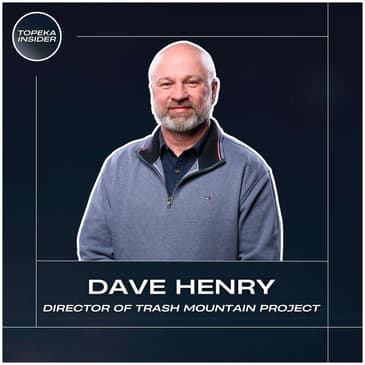
We sit down with Dave Henry, executive director of @Trashmountain , to unpack how local-led partnerships transform communities living on the edges of trash dumps. We trace his path from pastor and professor to nonprofit leader, and why education is the non-negotiable engine of long-term change.
• scale of dump communities worldwide and daily survival work
• why TMP partners with local Christian leaders instead of sending staff abroad
• countries served and how language access and culture shape impact
• core supports such as nutrition, medical access and education
• education protected through funding cuts and its long-term outcomes
• alumni returning as professionals to rebuild safer homes and systems
• community transformation over relocation as a guiding value
• executive director role, fundraising, donor communication and accountability
• growing the donor base beyond Topeka through personal networks
• how to attend the Spoken fundraiser and get involved
________________________________________
0:00 - The Global Reality Of Dump Communities
2:45 - Dave’s Path From Pastor To TNP
6:48 - What Trash Mountain Project Actually Does
10:45 - Why Partner With Local Leaders
13:50 - Countries, Language, And On-The-Ground Networks
18:35 - Nutrition, Medical Access, And Education
23:05 - Education As The Non-Negotiable
27:20 - Community Transformation Over Relocation
31:10 - Executive Director Role And Fundraising
36:00 - Highs, Lows, And Partner Accountability
41:00 - Growing The Donor Base Beyond Topeka
47:20 - Theology Teaching And Practical Faith
________________________________________
Beyond the Podcast: 🎙️
Be sure to follow our Topeka Insider Socials below and check out our website for additional stories and articles pertaining to Topeka, KS
Website -- https://topekainsider.com/
Facebook -- https://www.facebook.com/topekainsider
Instagram -- https://www.instagram.com/topekainsider/
Follow Your Hosts: 📱
Follow both Justin & Jon on their personal socials to get connected. They would love to connect and answer any questions about the show or their day to day.
Jon Griffith's Instagram -- https://www.instagram.com/thejongriffith/
Justin Armbruster's Instagram -- https://www.instagram.com/armbruster_jd
For Any Inquiries, please DM @TopekaInsider on Instagram!
The Global Reality Of Dump Communities
Dave Henry20 million people depend on trash dumps for their supply. Walk us through that. What's difficult about being executive director? We address issues of nutrition. We get to assist with medical services.
Jon GriffithYes, please. Or a trash member project.
Justin ArmbrusterWe're really asking for some idea. This podcast is brought to you by Washburn University, a tight knit college in a city of opportunity.
Jon GriffithWashburn offers small classes and big experiences. It's public prestigious and has the lowest student debt in the state.
Justin ArmbrusterAbove all, Washburn delivers a personalized education that you won't find at larger schools. Learn more at washburn.edu. All right, Dave Henry with the Trash Mountain Project TNP for those that are in the know. Executive director. Thanks for joining us today. I'm speaking.
Dave HenryGlad to be here.
Justin ArmbrusterTell us a little bit about you. Are you from Topeka? How did you get into the role that you're in now? Yeah. Tell us a little bit about a little bit about Dave.
Dave HenryYeah, so I have family around Topeka, but I've actually never lived here myself. I was a pastor in Celina for about 20 years. And so kind of from the uh mid-20s, early 20s to mid-40s, my age. And um about 10 years ago, uh I got involved with Trash Mountain Project and I got involved with Manhattan Christian College and uh made a transition out of local church ministry into doing both of those two things.
Jon GriffithYeah.
Dave HenryYeah.
Jon GriffithTeaching at the school and doing it.
Dave HenryYeah. So I'm a professor of theology, pastoral ministry, and Manhattan Christian. Still. Okay. Yeah, I just finished class and like went straight to my car and got it. Okay, let's go. Yeah. And then I work also with Trash Mountain Project here in Topeka. So I work remotely, but I'm here in Topeka all the time.
Jon GriffithYeah. Cool. Wow. Tell us about Trash Mountain. What is that? Trevor Burrus, Jr.
Dave’s Path From Pastor To TNP
Dave HenrySo Trash Mountain is a really unique ministry that focuses, it's it's Christian-based and it focuses on really the human side, the humanitarian side of uh the struggle that people have who live around the per they're around the perimeter of trash dumps globally. And so like here in the U.S., we don't have that because of really good government regulations that prevent people from building their homes right up on the edges. But in developing countries, you you see it all over the world. I mean, so it really is a global problem. I was reading something recently, and somebody that had researched, they were actually researching global trash and the recycling industry, but they had a couple chapters in their book dealing with the human side where they were they did the research of how many countries have this and how many people. And this journalist said that the estimation was around 20 million people globally depend on trash dumps for their survival. Whoa. Really? Yeah, it's not a joke. And I I've been looking for a number. We TMP had been looking for a number for years, and we were always trying to estimate it or extrapolate from what we knew. Right. And um when I read that, and it was a research-based book, I read that and it I was like, there it is. That's the number.
Jon GriffithSo people living inside of or on the edges of trash dumps, trash mountains.
Dave HenryYeah, so they're typically living on the perimeters. And most of these dumps aren't fenced and you know, that kind of a thing. They live around the perimeters. Um typically sometimes they'll end up in the dump because the dump, because of its growth, will encroach into their neighborhoods. But they're right on the edges of them, and in some way they're dependent on the trash. And so most of the time it's they're picking recyclables and then they're selling them to a uh like a middleman who then is selling it to like the recycling industry. Wow. And so they're just picking trash to live because where they are and you know, different things that they lack in life, um, this is their option. And so that's what they do. That's true.
Justin ArmbrusterI have a hard time even I feel like I'm just so far I mean we all are, but so far removed from that problem. Yeah. That I have a hard time almost even empathizing with it because I just don't understand it.
Dave HenryYeah, it's wild. Yeah, yeah. And so for me, like I didn't even realize I'd been when I was in college, I went on this this mission trip and was working with an orphanage just across the border into Mexico. And at the end of our project, we took a bunch of trash to the dump, and I'm 20 or something, and we were unloading it, all of a sudden there were local people around us, and I'm like, Where'd where'd they come from? Right. And they were suddenly there, and I asked the people I was working with, and they were like, Oh, they live here. And so at 20, I'm like, what? Yeah, yeah. And then it literally was 20 years later, uh, to the year where I heard about Trash Mountain Project and thought, okay, now, you know, this thing had been kind of sitting in the back of my head. Wow. Kind of as a memory, but you know, every once in a while it'd still pop up. And then 20 years later, somebody let me know about TMP, and I was like, okay, now there's somebody doing something about this thing that I saw once. Yeah.
Jon GriffithYeah. Wow. So what does Trash Mountain do to help people in those environments?
Dave HenryYeah. So what we do is we're US based. Um, all of our U.S. staff, we don't send anybody into other countries, all of our U.S. staff is here, and it's just a staff of four right now here in Topeka. Uh but we but we work in five different countries and we're in 17 different trash dump communities in those five countries. And what we do is we find partnerships with people who are locals who are already doing something typically. I think we have one exception where we helped initiate it, but where they're already doing something for the people in these communities. And then we come alongside of them and just say, hey, how can we help you do what you do better? And so these are all faith-based, Christian-based connections. Um and they're dealing with both, you know, the the spiritual component of just humanity, but also dealing with this the daily physical uh struggles, um, health care and uh food access and uh access to education and and all these kinds of things. And so we're um we visit these places, but it's the people in the countries who are doing the ministry that are leading these ministries, and then we're coming alongside saying, hey, where do we match up and where can we help you do that thing better? Trevor Burrus, Jr.
Jon GriffithYeah, that makes sense. What uh what made um I guess your predecessor, um but you're still kind of carrying that baton, what made you guys go that approach rather than just like, hey, we're gonna go start something ourselves?
What Trash Mountain Project Actually Does
Dave HenryYeah, he um and I'll tell his story as he told me, because this is about four years before I got involved with TMP. It it started in 2009. And he was working as an associate pastor at a church in Florida and uh went down, was exploring some different ministries that he could connect with and get his uh the college ministry that at his church connected to. And he found this one in Tagusa Galpa, Honduras, and was working there and really felt conviction to like go home and resign his job and move down there and work. And the guy there said, Oh, that's really not the best thing you can do.
Jon GriffithThe guy in Honduras told me.
Dave HenryAnd I think that was kind of that push for him to go, okay, I need to think about this differently. Right. And we found through the years that you know, to to put a person in a culture that they're not part of, yeah, you have years of adjusting to even understand what's happening around you. And so we can come into these places and connect with people who've been doing the work.
Jon GriffithYeah.
Dave HenryAnd we go, what do you, what do you do? What do you know? And um the ability to really connect and um make some difference is pretty fast.
Justin ArmbrusterIs there a uh I guess I'm just thinking practically, is there a language barrier that makes it tough? Do you guys have are they speaking English, your connections down there, or what does that look like?
Dave HenrySo it depends on our country. So five different countries, two of them are Spanish-speaking countries, and we one of our four US staff uh people, uh, she's over um Spanish-speaking countries and is fluent in Spanish. And the other three countries, um two of them, English is easy, very accessible, most everybody speaks it and understands it. Uh one of the countries, um the leadership speaks English, yeah. And some people do. So it's functional. And so where it needs to be translated, the our international partners are just able to do that for us.
Justin ArmbrusterI mean, I kind of think that like, you know, you have four time four full-time staff in uh for TPM, but you really have a staff, you know, that are on the ground. They're not your staff, you know, that's your partners, but it kind of feels like it's an extension of you guys uh to some extent, you know, especially for donors or people who are supporting. It's like, you know, that's kind of your boots on the ground. That's really cool.
Dave HenryAaron Powell Yeah, if you look at it and count it up. I mean, I I don't have an act actual number of those numbers change on those um in in those sites, but yeah, it's really dozens and dozens of people doing the ministry. And most of them don't know each other because they're all spread out in different communities and different countries and and things like that. And so TNP really becomes kind of this unifying spot for this network of activity.
Jon GriffithAaron Powell Wow. So what are the five countries?
Dave HenryAaron Powell So I can tell you four. Uh the fifth country, it's it's a safety issue to I won't say the name of that country. Um but we are in Honduras, Dominican Republic, uh, Philippines, and Kenya, and then an additional country in Southeast Asia.
Jon GriffithAaron Powell Ah, okay. Yeah. So uh what kinds of things are is Trash Mountain Project doing to support? I imagine you're probably doing some fundraising. Are you like getting supplies and sending? Are you doing like training for like the organizations? Like what all are you guys doing to make them more effective?
Dave HenryAaron Ross Powell Yeah, through the years we've done a lot of things. Um when I came on, uh we were uh you know, I came on doing discipleship, which meant I was working with our international partners and really just making sure that they were okay, the ones that were leading in each of these countries and each of these sites, and uh which is a really critical part of this whole thing. Because you know, that it's it's their life, it's their life and it's what they do occupationally, but they care about it deeply because uh very few people are gonna work in these communities unless they have a deep love for the people. They're hard places, really, really hard places to work. Um and so you know, we we do that, a lot of support for the people that we work with internationally. Um we we address the issues of nutrition. We in a couple of places we get to assist with like medical access to um medical services. And you know, occasionally we'll we'll take doctors and nurses and dentists from the US there. Um that that works in a couple places, in some other places it's you know too far and it's too complicated.
Jon GriffithSure, yeah.
Why Partner With Local Leaders
Dave HenryBut the uh so you know we're supporting that local Christian body that's there um to make sure that they're just on the daily living this thing out and and really being supportive of the broader community. Um the thing that we have found though, and and this is something I think that came out of this, I'll say came out of COVID, came out of this COVID era that, you know, that we've just been through. We found that when everything got really hard and a lot of funding that they were receiving from other organizations kind of dried up on them. And TMP was really able to hang in there well. I mean, we had to make some revisions, but we were really able to hang in there well uh with with all of our partners. But what they all did when they kind of lost some of their other funding and things got really tight, every single country prioritized um childhood education. That's like they they said we'll we'll drop almost everything else, but we don't we don't drop that. Right. And they're not connected with each other. I mean, that is the conclusion that they all came to independently because what they found is that's one of the biggest things that uh inhibits job access later on in life. And so we've seen uh, you know, we've had some people we've been able to scholarship that are now grown up, or these ministries did that even before we were connected to them. And they see this tremendous difference that that makes in the long term uh to where these are now young adults who are pouring back into their communities, doing things to, you know, and so there's this cyclical thing that they have all understood as a long-term, long play kind of solution.
Jon GriffithMakes sense. I mean, if you're a nation, the one thing you can't give up on is raising up the next generation who's gonna like be the future of your nation, you know, like you cut that off, you're shooting yourself in the foot in a pretty big way, you know.
Dave HenryYeah, absolutely.
Jon GriffithYeah, that's brutal.
Dave HenryAnd so you have all these kids in these dump communities that um, you know, just potential that any kids have. Yeah. And uh but you limit the availability.
Jon GriffithYeah.
Dave HenryAnd so then it's just like you just like you're saying you just cut that off.
Jon GriffithYeah.
Justin ArmbrusterUm so what's the goal of TMP? That's exactly what I was about to ask. Is it too because I mean, with 20 million people living amongst uh trash dumps, I mean, uh that's a big task to take on. I mean, uh, you're in five countries now. Do we is there a goal to get to more? Are you just focusing on the ones you're at you're at, or what's what's the next five years look like?
Countries, Language, And On-The-Ground Networks
Dave HenryYeah, I would say the next five years. I don't see us really getting too much outside of the five countries we're in because you know, we've really developed great partnerships there. And in each of these countries, there's a lot, many more communities we could look at. And so from just like a networking standpoint, I think we're gonna be in the five countries. I could see us developing quite a few more communities. Um, and yeah, eventually we'll get out beyond that. Sure. But I would say in the next five, probably still in the five years, probably still in those five countries, maybe one more, but hopefully, you know, a dozen more communities, yeah. That type kind of a thing. Um and so really the goal of what we do, our mission statement is to create Christ-centered environments for children and families living in trash-dump communities worldwide. We want the local people, we want the local Christians and these local leaders to like live, live it out the best they can. And I truly believe this, that when they do that, it it makes a cultural difference. It makes a difference to people's economics and and community and their their net their social networks and and all of it. And so, you know, where we could look at it and say, you know, we're we're not an educational organization. Um, we're we really want these communities to be fostered and grow and develop and be strong. And they are each saying, hey, these are the things that work as an expression of our communities.
Jon GriffithWow.
Dave HenryAnd so it it's pretty fun actually to just sit back and watch these communities start to flourish. And you know, we have one or two of them that you look at and you're like, that's that's pretty cool. Wow.
Jon GriffithWhen you see them starting to mature. Wow. Yeah. That it's funny. I was gonna add you were asking 30,000 foot view. I was gonna go, same question, but more on the ground. What's your goal for like a specific person, you know, who's living in or around the trash dump? Like, and is there like a process? Um So actually let me just so it's it sounds like what you just said. It sounds like what you're saying is your goal is not necessarily just like, hey, we want to like somehow get the resources in the hands of a person so they can move or you know, maybe get them some financial training so that they can just move. Your goal is really to like see a kind of a church community develop in a fully flourishing way. Right. And that in and of itself will lead to a lot of those things in a person's life. Is that kind of what you're saying?
Dave HenryUh uh you said it really well. We one, you know, you kind of look at it, you think, well, you want to move everybody out.
Jon GriffithRight.
Dave HenryBut the reality is that's that's their people. That's their culture. These are this is their family and all those connections. And I'm not sure it's always the best thing in the world to say we're gonna rescue you away from that thing.
Jon GriffithRight.
Dave HenryYou know? And so what we found is some of our young adults who are, you know, in the in the Philippines, um, we have people who are or a guy who's an architect and a guy who is a civil engineer now, and uh people going to school for business and all these kinds of things. And what we're finding is some of them are moving back into that community, even though financially they don't have to. Because that's their people. These this is my this is my network of people. And they're pouring back in now. And so the civil engineer and the architect are both working in this community, and wow, they're talking about, you know, how do we build homes that are safer and can withstand storms and have concrete floors instead of dirt and deal with, you know, sanitation and sewer and water. I mean, they're they're literally now like wanting this community to develop into something that's more beneficial. And so you know, you could look at it and say, is the goal to move everybody away? I th I think there are instances where getting away is probably the right thing. Um but a lot of times um it's about transformation. I think most of the time it's about transformation of what's there.
Jon GriffithRight. That reminds me of the book When Helping Hurts. Yeah. Um I was just like, it's easy for me to come in and I can, you know, come up with my with my own goals and ideas of what you really need. And sometimes maybe help you get the things that I think you need when in reality, maybe the long term that didn't help you as much as I thought, you know? And it's like, hey, we're after something much more thorough and long term, you know? Um so it's it's cool. Uh it's awesome, man. Is uh is the Philippines the one that you're not supposed to say?
Dave HenryNo, I can say Philippines.
Jon GriffithOh, okay. I was like, I wonder if he said it's not. Well you just said Johnson.
Dave HenryThe Philippines is good. It's it's another country.
Jon GriffithI was like, hey man, he can edit that out if we need.
Justin ArmbrusterIf you want to start just rattling off all the countries you know and look at his eyes.
Jon GriffithI just thought he sounds like it's in Southeast Asia, right? Like is that the thing I'm supposed to say?
Dave HenryIt is also yeah. Whenever I I leave the one out, I always leave it for last so that I make sure I leave it out. Yeah, exactly.
Justin ArmbrusterYeah, exactly. Is it the Philippines? Well, he said it. I was like, I want to make sure we didn't need to edit it out. That's funny. That's it. So talk to me a little bit about being an executive director. And I think your role is maybe even more unique than some, because uh, as an executive director of a nonprofit, as someone who's not familiar with that world, I think, hey, you know, your boots on the ground, you're working with people, you know, you're leading the teams, but you know, you're not doing that. You're managing the your team from here and kind of orchestrating. Walk us through that. What's difficult about being an executive director?
Nutrition, Medical Access, And Education
Dave HenrySo um, you know, I'm still learning it. And in some ways, being an executive director of a nonprofit is I was a lead pastor for 20 years, and there's a whole lot of overlap between those two things is a lot of the roles that you get in and things you have to learn and do. Um what makes this really workable for me in a really, really good way is I have a and I genuinely mean this, I have a really great team of people here. And so I I coordinate things. Um I think I lead in vision and execution of the vision. Um I'm the primary fundraiser um you know, kind of primary contact. But then we have people, we we have a person that works with our donors, we have a person that's over um our Spanish-speaking countries, we have a person that's over all of our finance and things, and which are things then that I just kind of have to know about and keep some real general sense of. Um so for me, I'm really a fundraiser kind of vision caster in like how do we walk this thing out.
Justin ArmbrusterWhat's the name? Gosh, I wish I knew this. What's the name of your guys' fundraising event that you put on here? Spoken. Spoken. That's what it is. I've heard really good things about that event. Oh, that's great. Yeah, I heard it's awesome. Never been, never been asked for. Well, you were invited. We're having it again. There we go. I've been invited. I've never been invited. That's awesome.
Jon GriffithI love it. So what have been some of the highs and lows of how it's been 10 years now?
Dave HenryUh yeah, 10 years as an employee and a couple years as a volunteer.
Jon GriffithWhat's been just the the real exciting parts? You wake up, man, this is why I get to do what I do. And what are some of the biggest, you know, not fun parts of what you need to do?
Dave HenryWhat days do you think about quitting?
Jon GriffithYeah.
Dave HenryYou know, I'm gonna be really honest. I have never thought about quitting TMP. I have had other roles where you're like, man, somebody else ought to do this other than me. But I've I've I've never had that so far. That's all. The I'm a really, really relational person. So the both of my answers are probably gonna come the best and the worst on the relational side of that. Makes sense. You know? And so you see um you see groups of people in these communities like make that turn, and you're like, okay, we're moving from negative or even neutrality toward you feel that positive turn. That's exciting to me. Right. Down deep, that's a here we go. And so, you know, I want the end results, but I get just as excited to watch somebody go, all right, they're they're turning the corner and here they come. So I would I would say that's a huge part for me. And then some of the hardest parts are um again, relational kinds of things where you see uh communities that continue to struggle, or you hear individual stories of people in these communities who experience great loss or loss of life, um accidents that take life, or or uh health issues, disease, things like this. So I think because of that, what's in me, the relational component, the best and the worst is all all gonna be in that category.
Justin ArmbrusterHave you guys ever had a partner in a country that I don't know, maybe maybe wasn't doing what they're supposed to do? It's because it's just so far away and you don't know them, they're not on your staff where you had to keep them accountable or let them go, or is it a pretty difficult process to get into partnership with you guys?
Dave HenryYeah, so you know, the the partnership thing um really kind of tends to grow kind of naturally. We'll we'll do exploration and The community, things like that. And we haven't started a new partnership in about six years formally. And part of that again is just kind of where the economy's been the last few years. But yeah, we we we've had a place where we had to part ways uh with the particular local people we the local leaders we were working with and re-establish leadership with a different group in the same community. Yeah. And it just became necessary. One of those things where it was just an impasse that we had.
Jon GriffithWhat was it called?
Justin ArmbrusterI'm kidding. I knew that. You're kidding. Just joking. I imagine that'd be really difficult. That would be very difficult. Yeah, because you know, they're, you know, for some extent, you know, you're the the fundraising and the admin side of some of what they're doing, and you have to be able to keep them accountable, make sure you guys are being good stewards and who you're partnering with, that way you can report to your donors. And it's hard to keep them accountable because they don't work for you and they're across seas, but it's also a balanced kind of relationship.
Education As The Non-Negotiable
Dave HenryBut yeah, they're they're all independently doing their own work and we're partnering with them, and so it becomes a separation of the partnership. Yep. Uh that kind of thing. Yeah, yeah. That'd be difficult. That would be very that's a rare event, but yeah, it has happened.
Justin ArmbrusterWell, and it sounds like you know, you're pretty picky about who you partner with. You haven't had one in six years, which means you know, you're content where you're at, you're not trying to just willy-nilly whoever would take your money, uh, whatever.
Jon GriffithIt's great. Yeah, wow. So it's it's cool, just the story that you shared about the kids in the Philippines who, you know, end up going to university and becoming architects and engineers. And is that common? Like kids to kind of get out of that bubble and you know, that's gotta be so rewarding to hear, too.
Justin ArmbrusterOh, it's the best. Washburn University, a proud sponsor of this podcast, wants to keep its homegrown talent here at home.
Jon GriffithGraduates of Shawnee County High Schools and homeschools are eligible for the Thrives Scholarship.
Justin ArmbrusterOther local graduates may qualify for the Promised Scholarship, meaning you could go to Washburn tuition-free.
Jon GriffithLearn more about these amazing opportunities at washburn.edu. Washburn is just right. Just for you.
Dave HenryI was over there a year and a half ago, and I knew these stories, but it I got to meet one of the guys. Oh, it's cool. You know, we got a walk over on the property that's right adjacent to where their the their homes are now. And uh the church is the center of that property, and people have built their homes kind of on the edge of the dump, but on the church property, they were welcome to build their homes for shelter. And the other part of this property that's opened and they had flags out, literally like just like a construction zone you see here, and they were platting it out, and they're gonna, hey, this is we can fit this many, and that you know, and and you need to step back and you're like, There it is. You know, like you you see that because that's long-term uh kind of solution. Right. So, but you know, it it takes years of investment to take somebody from eight or nine or ten, twelve years old to a place where they're educated and old enough really to engage with that kind of change. And so um we see but we we are seeing that. I mean, we see that in our other countries too. We've we've seen people um become adults and stick around. Wow.
Jon GriffithAnd um and like reinvest. Yeah, wow.
Dave HenryYeah, yeah.
Jon GriffithThat's cool. Is it I'm sure it maybe depends on the nation that you're in, but is it common like for a family in the sort of trash dump community for their kids to be able to go to school? Is that normal? Like those kids generally are able to go to school pretty easily, or it depends.
Dave HenryUm so one of the countries we work in, though the unnamed country, uh when when they not the Philippines. Not the Philippines. Uh you know, for them, they're they do have access to education, but at the end of every grade they test to go forward and they leave behind the material from before. And so i if a child's not doing well, they move on, and then that compounds into a problem, and by fourth grade or so they quit going to school. And there's no mechanism there to say no, you have to keep going.
Jon GriffithRight.
Dave HenryUh and so the solution that this particular group does is they've started preschools and um they accelerate the kids in the dump community. So when they start first grade, they essentially are a year ahead of everybody. And so our partner there looked at that 12, 15 years ago and said, here's a solution, a very specific solution. Right. And it works. Wow. It absolutely because then they stay in the school's there. It's accessible to a lot of them, not totally, but to a lot of them. But it was just giving them the tool they needed to stay and not fall so far behind that they couldn't keep up.
Jon GriffithAnd once they're in school and making their way comfortably through school, then university is a natural opportunity.
Dave HenryYeah, it's accessible to some of them. I mean, you know, we there are times where we assist with uh we have some people aro around here in the U.S. that sponsor kids in college and will commit to paying for their two or four or whatever years of college to get them through. Wow. Because most of the time they don't have access to be able to do that. Right. Um but those are pretty easy things for me to talk about with people.
Jon GriffithOh, I imagine you want to send this kid from the trash dump to college, yes, please take my money.
Community Transformation Over Relocation
Dave HenryYeah, and you think about college here, and it's you know it's quite expensive. You go, you know, yeah, it the you can send them to college for four thousand dollars a year. Wow. And that covers everything. That covers their transportation and their education and their you know, and people a lot of people will go, I I can do three fifty a month. Yeah. You know, it's that kind of a thing for a few years. And so those are the kind of things when you get those kids positioned, um, it becomes easier.
Justin ArmbrusterUh your team are the are you guys all based out of Topeka? Uh yes. Um so as far as fundraising goes, uh it's a little bit different than a local nonprofit ministry that maybe is, you know, serving the Topeka area. Do you find uh, I guess a two-part question, does that make it easier to fundraise? Because you know, you can go to other metro cities and you know the the cause is still the same and there's they can still rally behind it, or does that make it more difficult because they don't really get to see the fruits of you know they're giving or the your guys' labor because it's not stateside? Sure.
Dave HenrySo I'm gonna start off with I'm still discovering that answer for me. Yeah. Um Brett, our founder, um, was a phenomenal fundraiser. And you know, born and raised in Topeka, and that's and so the bulk of our uh donor bases, Topeka, or very close by. Sure. Okay. And we have some pockets around the country that are intense donor bases also, but Topeka is 80% of the donor base, that kind of a thing. And so yeah, it's hard in the sense that you don't see like it's not like we're doing this or we're building this building or we're not in a neighborhood here or something.
Justin ArmbrusterIt's not kids with at schools that they know.
Dave HenryNo, yeah. And so you have to be really good, I think, at communicating over distance. And um, you know, that that's something that always changes and we're relearning that all the time. How do you how do you communicate that well? How do you talk about it? And I think it uh what I found that in the little bit of time that I've been in the role I'm in, is that if you communicate that really well, um people are pretty motivated to be part of that. Yeah, yeah. Communication seems to be the thing. That's cool. And then they see it, they know the stories, they see videos, they see the plan, and they go, Yeah, okay. You know that's great. So yeah.
Justin ArmbrusterUm is there any as far as fundraising to outside of Topeka, any goals there, or is that hard to do just because you're from here and fundraising so you know, maybe relational? Or is there s is there a way that you guys can expand that?
Dave HenryYeah, one of one of our goals. Um, we started this this last year and will continue for the next two or three years is to expand our donor base geographically.
Justin ArmbrusterYeah.
Dave HenryAnd you know, because of my age and having been in ministry so long, and I I teach uh theology and ministry, so I have former students who are church leaders in different places around the country. Yeah, I I have started the process of reaching out to them in various places all over the country and saying, Hey, would you let me come and just yeah, sit down and have coffee with you and a handful of friends and just tell you about it? And you know, so that that's that's kind of where we are. It's it's a bit of a new phase for us right now, is to say we're gonna intentionally target places at a distance from here.
Justin ArmbrusterYeah.
Dave HenryWow.
Executive Director Role And Fundraising
Justin ArmbrusterI feel like uh I have a very unique perspective, I feel like, with fundraising, because I was in ministry for several years where I had to fundraise for my salary and for what we were doing. I was working with Topeke Young Life, did that for a little bit. If you're just getting into ministry and you're just starting fundraising, it's the worst thing in the world. It's hard to do. It's hard to do, it's hard to ask people for money. Especially if you're young. Especially if you're young. Yep. Um, and now on the flip side, now that I'm not in ministry, I get to have a lot of those conversations where someone's asking me for money. We're sitting down having coffee. Right. And so it's always I really enjoy, especially the young guys who are young guys or girls are sitting down. I really enjoy, especially it's uh to funny. I always think before I take the meeting, there's a good chance I already know how much I'm giving if I can. Um but so I really enjoy getting to sit down and be like, hey, that was awesome. You did a great job, you know, would love to support, you know, would love to whatever. Uh so that's funny. Is fundraising something that comes natural to you? Not at all. Not at all. Yeah, does it come natural to anyone?
Dave HenryI I think there's a few people out there that just have the personality. Psychopaths, yeah. Yeah. Uh just they're just great storytellers and they and they're compelling. And uh and uh I mean that was Brett. That was the founding of the organization.
Jon GriffithNo natural fear of rejection.
Dave HenryApparently not, yeah. And uh so I don't know. I know I don't think I'm a natural fundraiser at all. I think it's something I'm I'm currently learning. And we, my wife and I planted a new church in 1998 and stayed with it until 2016. So that was 18 years of our 21 years of ministry before doing these things. And, you know, I didn't mind uh, you know, talking about money and things like that in the church, but I never felt like I was really all that great at it. Yeah. And so moving into this role is um, you know, hopefully an age thing makes you feel a little different about those conversations. You kind of get to a point where like, I just need to ask. You know, that that kind of a thing. But uh yeah, it's something I I feel like I'm really having to learn how to do.
Justin ArmbrusterYeah. I uh I always tell young guys that when you're sitting down with someone, you know they love the Lord, there's a certain reality of they're giving a set amount no matter what. It's just kind of where they're getting to give it to. And so, you know, if they're given whatever it is, you know, whatever they have on their heart, it's like, you know, you just get to be an opportunity for them to be uh involved. Because guys like me, it's hard for me to do direct ministry. I can't make those calls. I don't have the time to you know sit down with students and do this and do that, but I would love to support. You know, how can I be involved in ministry uh even if it's not my vocation? Right.
Jon GriffithSo super cool. Yeah, I actually went through the same thing. I raised support for myself for 10 years.
Justin ArmbrusterOh, really?
Jon GriffithYeah.
Justin ArmbrusterUh what was your where were you at before community?
Jon GriffithSo I worked with a campus ministry similar to Young Life named Called The Greatness. Oh, yeah. And uh did that for 10 years. We have that in Manhattan. I worked at the one in in Manhattan for seven or eight years. And uh yeah, I did a lot of support raising. And uh there were while there were elements that I did really enjoy, I mostly hated it. Uh and uh and it's funny, I had some buddies who, like you're describing, were just so naturally gifted at it. And uh I remember there were some perspective shifts for me that were really, really helpful in the training process of uh kind of like what you're describing of like, like, hey, I'm not necessarily asking you just to give to me. I'm really I'm asking God to provide. I trust that God's called me into this, and so I'm trusting that God's gonna provide. So I'm asking God, hey, are you you know, you you got me into this, so you're gonna provide for this somehow. And now I'm just going and discovering who it is that God is gonna prompt. Yeah. You know, which uh which took a lot of, you know, it doesn't fully get rid of the rejection you feel when someone turns you down, but but it takes a lot of pressure off you, you know. Like, hey man, this isn't fully on me. And uh, you know, while there's always things I can learn to get better, uh it you know, it might not be something I did wrong that is a reason they aren't aren't doing this, you know. That's it's not because I'm you know a bad salesman or storyteller or something like that, but yeah, um but man, it's it was just incredible the way that God provided and you know, consistent and miraculous ways, you know. It's yeah. And there's some I remember one of the things they said in the training was like, hey man, if you if you are gonna be able to sit down with somebody in ministry and and ask someone to like surrender their entire life to Jesus, then surely you can ask somebody to give a little bit of money. Like which of these is more intense of a commitment, you know? But like emotionally, it doesn't feel like that.
Justin ArmbrusterThat's I've never heard like that. That's good.
Jon GriffithYeah. I mean, yeah, I mean, it's it's in reality, it's true. I mean, as a Christian, that's what I believe. Like, man, I'm I'm asking you to give your entire life and eternity to something, right? And, you know, hey man, carry your cross, surrender everything, you know, Jesus on the throne, you're not, you know. That's quite an ask. Yeah, right. It should be theoretically less of an ask to be like, hey man, would you want to give a few hundred bucks a month to this? You know, uh, you know, but one feels more like icky if you're not thinking about it in that way. You know, like, oh, that's like it's bad to ask about and talk about money, but yeah.
Highs, Lows, And Partner Accountability
Dave HenryI think if you can shift it in your brain too, to th like for Trash Mountain project, is we're really asking for somebody else. Right. Genuinely offered. Yeah, sure. Yeah, exactly. And then you know, we get to have our hands on those funds to help facilitate it, but really um and I think that makes it in some ways a lot easier. Yeah. Yeah, too, to be able to say when you're fundraising for your salary, if you can frame it in terms of this is really so I can do ministry this is for others. Exactly. You know, that type of thing.
Jon GriffithTrevor Burrus, Jr.: It is. There is something about that. I always wonder that too. Like, it does seem like it would reframe it a lot to be like, hey, I'm not even really asking for myself. This is for you know these kids who live in a trash dump in Honduras. Right. It's like that seems not saying your job is easy in any way, but it does seem to take some of the burden off in that way. Like it's not just like I'm not just asking for some commission for myself here. I'm asking for this kid, you know, in Honduras, you know, picture. Yeah.
Dave HenryRight. Yeah. And then and then you try not to be manipulative. You know what I mean? Yeah.
Jon GriffithA decent meal in the week because you're you won't think about this.
Dave HenryYeah, yeah, yeah. We definitely don't want to go there. No, no, no, definitely not. You know, but it's that it's that how do you tell this story honestly and truthfully and without like taking away the intensity of the story for what's what's real? Yeah.
Jon GriffithI have a creative idea for your fundraising. Okay, let's read something good. You are a theological professor at Manhattan Christian College. Um, have you ever considered having students sign a contract so that they can pass your class? That, like, hey, when you become a pastor, you will give to Trash Mountain.
Dave HenryTrevor Burrus, Jr.: So I have taught Christian ethics before, and that alone prohibits me from even going to give it a channel.
Justin ArmbrusterJohn, you're embarrassing me. I'm just trying to think outside the box. Yeah, that's great. You don't. Obviously, I'm joking. Do we want to switch to some Topeka questions? Sure.
Jon GriffithUh I'm curious.
Justin ArmbrusterI'm gonna snag a drink here real quick.
Jon GriffithYeah, yeah, yeah. I'm curious, right before we do that, what's it like teaching theology at uh at a university level? Just shifting gears away from trash mountain. And what what do you love about that?
Dave HenryI love the how practical theology can be if you think about it that way. Um for me, I don't want to just approach theology and say, uh, here are the things you should believe. And while there's an element of that in theology, this is what scripture reveals, this is what life reveals, all these kinds of things. I'm I'm constantly going back to like this has to matter.
Jon GriffithRight.
Dave HenryAnd so I think that's what I love about theology. And for me, when I when I'm able to say, hey, here's conceptually this idea, and this is where it has hands and feet, theology gets a lot easier. And so I I love teaching theology. I I genuinely do. I mean, I teach other classes too. I teach pastoral ministry and some other things like that, but uh I I tend to really go back to those. You know, I teach a gospel class, and man, that's that's rich stuff. Yeah. If you're really looking at saying, okay, what's Jesus actually saying here? Uh-huh. And what are the implications of what he's saying and doing here? Yeah. Yeah.
Jon GriffithTrevor Burrus, Jr.: What uh in a is there anything in addition to the gospels that you teach in terms of theology? What kinds of theology?
Dave HenryI teach a course called practical theology, which is church-oriented, all the stuff related to the life and community of the church.
Jon GriffithTrevor Burrus, Jr.: Like how what you believe translates into the way that you're doing church and stuff like that.
Dave HenryLiving it out individually, corporately, the you know, the aspects of what we think of with um, you know, communion and baptism and you know, just um leadership in the church and sanctification and justification and all of these things, and just trying to really pull all this together and say, what does it look like to live in this? To live in this in community. Um I teach a class on um Christian theology through the centuries. I co-teach with uh another professor, and so we go back and look at doctrines from their origin point and say, how do we how do we get to Trinity? You know, stuff like that. Like walk through those kinds of ideas. Um gosh.
Jon GriffithUm Do you have a favorite and least favorite church father?
Dave HenryUh Basil.
Jon GriffithIs your favorite?
Dave HenryOh yeah. Yeah, hands down. So Basil was in what we would now consider like modern day Syria.
Jon GriffithIs he though is he the one who like discipled Augustine? No.
Dave HenryUm Basil is part of what's I'm getting an eye over here. Basil Basil was known as the Cappadocian fathers. Okay. So there were three of them, two Gregories and a Basil. Okay. And uh what I love about Basil ties in with what I do at Trash Mountain Project. He was the guy who was super practical and he took his money and convinced people to live generously with each other.
Jon GriffithWow.
Dave HenryAnd uh it sustained for a century. Um, and eventually all things eventually die out. But long after he was gone, this imprint that he had made on that culture that he was in, the community he was in, and he's highly regarded by many, many through the centuries. Yeah.
Jon GriffithDo you have a least favorite? No.
Dave HenryI don't know if know enough about the church fathers to have a least favorite.
Jon GriffithThe guy that uh Santa slapped at the I don't know the story.
Dave HenryOh, you don't know the story? No.
Growing The Donor Base Beyond Topeka
Jon GriffithDon't look at me that I know the story. Uh so Saint Nicholas, who is like an actual guy. Yeah, right. Uh was he was like uh he was like uh a bishop in whatever region that he was in. Okay. And was at I'm so fuzzy on the exact details, but like he was at one of the councils. So maybe like Nicaea or something like that. And uh whoever the like heretic of the day was that was like Arius, I think.
Dave HenryI love how you say that the heretic of the day was.
Jon GriffithWell, yeah, I mean, every in every like era there's like a heresy the church was fighting. So like I think it was Arius. Arius was like uh Arianism was like, you know, sweeping through the church, and they're really fighting against this heretical thing that was you know really bad or whatever. And I think Arius' thing was that he was really creative and he would come up with these songs for his basically heretical ideas, and they would like get stuck in people's brains. So like normal people started getting swept over at his ideas because he had these catchy songs. And so Saint Nicholas at one of these councils is debating with Arius, and and Arius is basically just kind of flying off the handle. Nicholas gets so mad, he slaps him. Saint Nicholas, who is who you know becomes Santa Claus, basically, and gets slapped. And then he gets his titles like stripped. They're like, hey man, uh bishops can't be like slapping people. You can't be a bishop anymore. And uh, you know, he was eventually like sainted or whatever, but that's funny. Yeah, yeah, yeah. So uh there's like memes like in theology circles about like you know, Santa doing what it does best, you know, giving gifts and slapping heretics or something like that. Yeah, John, I can promise you I've never heard that story before. Yeah. So anyway, I knew that I was gonna be well without outside the reach, but it's just something I was curious about. Cool. Anyway, we can shift.
Justin ArmbrusterYeah, let's shift to Topeka. So when did you move to Topeka?
Dave HenrySo I still live in Manhattan. And so yeah, IT. So I'm in Topeka at least once or twice a week, if not more. Yeah. Uh so much of what we can do, we do, we can do remotely. Yeah. Um, and so a lot of our work. But so I'm not in Topeka every day, but often. Uh, but no, I actually live in Manhattan. All right. Yeah.
Justin ArmbrusterMaybe one day we'll get them. One day we'll get them. And uh, you know, here's hoping.
Jon GriffithCool. It is hard when maybe half your job is right in Manhattan. Oh, yeah, absolutely. Um, you're in Topeka enough, though, to have opinions about some things in Topeka.
Dave HenryI have some opinions.
Jon GriffithLike you eat at restaurants in Topeka sometimes? I do. Okay. So do you have a favorite local Topeka restaurant?
Dave HenryEl Mezcal. That's a great answer.
Jon GriffithThat is a great answer. Uh just solid. That's that's a local answer. That's the answer someone in Topeka might give. I'll be honest.
Dave HenryWell, I have family that lives here, and so I'm in Topeka a lot. Yeah. Yeah.
Justin ArmbrusterThere's nothing that hits like El Maz Cow. I go there, I got my guy Danny. He always dabs me up when I walk in. There you go. And the best part about it, and I can say this on air, he always gives me free queso.
Jon GriffithWhoa. It's awesome.
Justin ArmbrusterHe might have just got Danny messed up with his justice.
Jon GriffithSo you're you're telling us we should go ask for Danny and ask for the Justin.
Justin ArmbrusterAnd I didn't I didn't know how that worked. Like we'd always just show up and like they'd whoever's with us, whoever serves us, serves us. Then Danny pulled. Me aside one day, he goes, You need to ask for me when you walk in. I was like, Oh, okay.
Jon GriffithWas he saying that you could just now tell everyone they should do that now? Yeah, everyone asks for Danny. Everyone in some peak. Unless I'm there. There you go. Cool. Um, are you a coffee guy? I am favorite coffee place?
Dave HenryOkay, this one's a hard one because I I because part of what I do is meet with people I meet at a lot of coffee places. Yeah.
Jon GriffithYep. Yeah.
Dave HenryUm, the one I find myself suggesting, if they don't have one necessarily, is Blackbird. Yeah, okay.
Justin ArmbrusterYeah. I heard they have little tenth engaged. I don't go to Blackbird enough, but I've heard they have great lunch and great sandwiches.
Jon GriffithThey they have great pastries too. They're like uh like cinnamon rolls and banana bread and stuff.
Dave HenryOoh, yeah, that's probably part of the appeal for me. Yeah. Yeah, cool. So good. Uh driving in, did you hit any potholes? In Topeka or outside of? Can I I mean how hard is it? Comment on both. Um is Topeka worse than Manhattan? Oh no. Um it I would say it's the same. Okay, a little outsider.
Jon GriffithA little in Yeah, that's good to know. Hey, Topeka, you don't have it as bad as you think. Yeah. Suck it up. Stop the legs.
Dave HenryOkay, so here's the deal about Manhattan is um they're always working on the roads. And because we have 20,000 college students there during um the school year, they tend to destroy the roads in the summer. Yeah. And so you've got cones everywhere and all this kind of stuff. So they work really hard at trying to make the roads nice, but they're yeah, they're typical. They're typical.
Justin ArmbrusterI bet Manhattan's got its own beef with construction and especially like for game days. I bet it gets very busy.
Dave HenryUm and there are those main thoroughfares that are really nice. Yeah, they've done a lot with Kimball up around the stadium and those areas where they've improved those a ton. Yeah, yeah.
Jon GriffithDude, I was in Manhattan like a couple weeks ago, and I was shocked by all the things that I mean, I lived there for like seven or eight years, and I was like, man, so much of this is brand new, especially up by the stadium, like that whole area. All of that area is transformed.
Dave HenryIt really has. Yeah. Yeah. I live on the east edge of K-State, a few blocks on a very old road road in a very old neighborhood. My road's pretty bad. Yeah. That's what I'm thinking of. But uh probably around town, most of them are pretty good. Yeah, yeah, yeah.
Justin ArmbrusterYeah. Cool. Well, where can people find you or Trash Mountain at if they want to, I guess, follow on social media or uh when is your spoken event? How could people get involved? Or what is it?
Dave HenryOur spoken event is typically the first weekend in October. We don't have that 100%, but that's the typical date. So early October. Uh, we'll find a venue here. Um, we've kind of gone back and forth between having like a big full banquet and a dessert thing. And this last year it was all just digital. We didn't actually, but we're going back to the full, you know, like event uh this year. So it it should be first weekend in October. Um Trashpountain.com uh would be like the spot. Uh we really keep that up and a lot of clarity on who we are and what we do and all the connections and all the communication. Um I think we have a pretty good social media presence. Yes. Uh we have somebody that works really hard at that. And uh so you I think you can find us on just about any social media platform that we're for the spoken event uh in particular.
Theology Teaching And Practical Faith
Justin ArmbrusterIs that something if there's a listener who wants to attend but doesn't know you or doesn't have any connections, is that something they can like register for online? Do they need to be invited somehow? How could someone Oh, it is open.
Dave HenryWe would love for people to come. Uh we have that event gets sponsored, so it's a no-cost event for people to come to. They can just come, have a great meal. Um, it's you know, we kind of do our annual report. This is how things are going, project forward a little bit and go, hey, this is what we're like genuinely looking forward to in next year, five years, this kind of a thing. But no, that's that is an open door. We would absolutely love to have people. Probably the best way on that um here in a couple months, you'll start seeing stuff on on our website. And then, you know, once you do that, then you'll start seeing all the social media feeds, yeah. And and everything like that, too. But yeah, you'll here in a couple months. That should that should be uh evident.
Jon GriffithThat's awesome.
Justin ArmbrusterDave, thanks for your time, man.
Dave HenryThis has been appreciated. Appreciate you having me.
Jon GriffithAmbrose of Milan is the person I was thinking of.
Dave HenryOh, yeah, Ambrose. Uh-huh.
Jon GriffithBoom. That was my theology teacher would be mad if I didn't just you know correct myself there. So boom.
Justin ArmbrusterAnyway. And that's the way uh coming on, man.