
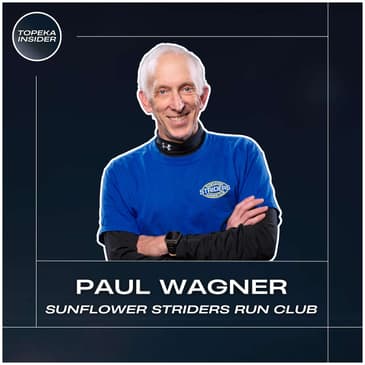
We trace Paul Wagner’s path from a shared professorship at Washburn to leading the Sunflower Striders and unpack how Topeka’s running scene grew from race-first to community-first. Practical training tips, trail highlights, and the real costs of putting on local races round out a lively, useful conversation.
• why a shared teaching role made space for family and service
• how running clubs shifted from PR chasing to social connection
• conversation pace, run‑walk, and simple plans that work
• Topeka routes from Deer Creek to Lake Shawnee and Shunga
• trail running skills, fueling, and staying present on technical terrain
• what it takes to stage a race, from volunteers to sponsors
• Boston qualifying, big-race energy, and destination events
• weekly meetups, paces for all levels, and post‑run spots
• Topeka’s future: riverfront vision, connectors, and a marquee race
• how to join Sunflower Striders via Facebook or Fleet Feet
________________________________________
This episode is brought to you by Washburn University.
Graduates of Shawnee County High Schools and homeschools are eligible for the Thrive Scholarship at Washburn University. Other local graduates may qualify for the Promise Scholarship so you can go to college tuition free. Washburn is just right, just for you. Learn more at washburn.edu
________________________________________
1:41 - The Job-Share Experiment At Washburn
7:20 - Campus Growth And Athletics Momentum
8:40 - What A Running Club Really Is
13:45 - Social Running, Tech, And Timing Evolution
18:10 - Trails, Ultrarunning, And Run‑Walk Method
24:00 - Marathon Class, Group Ethos, And Community
28:20 - Weekly Meetups, Paces, And Routes
34:20 - Trail Systems, Long Routes, And Events
41:35 - Boston Qualifying, Big Races, And Costs
47:20 - Shoes, Mileage, Triathlons, And Training Load
54:30 - Experience Over Speed And Race Economics
1:01:20 - Topeka’s Race Potential And Trail Vision
________________________________________
Beyond the Podcast: 🎙️
Be sure to follow our Topeka Insider Socials below and check out our website for additional stories and articles pertaining to Topeka, KS
Website -- https://topekainsider.com/
Facebook -- https://www.facebook.com/topekainsider
Instagram -- https://www.instagram.com/topekainsider/
Follow Your Hosts: 📱
Follow both Justin & Jon on their personal socials to get connected. They would love to connect and answer any questions about the show or their day to day.
Jon Griffith's Instagram -- https://www.instagram.com/thejongriffith/
Justin Armbruster's Instagram -- https://www.instagram.com/armbruster_jd
For Any Inquiries, please DM @TopekaInsider on Instagram!
We're awesome at this point.
Paul Wagner:Oh yeah, you don't want to take time. They run for three, six, twelve hours, twenty-four hours.
Justin Armbruster:I mean, look at 'em. You don't look like that just by showing up. This podcast is brought to you by Washburn University, a tight-knit college in a city of opportunity.
Jon Griffith:Washburn offers small classes and big experiences. It's public prestigious and has the lowest student debt in the state.
Justin Armbruster:Above all, Washburn delivers a personalized education that you won't find at larger schools. Learn more at washburn.edu.
Jon Griffith:Welcome to the studio. We've got Paul Wagner. You do two things. You are a professor of biology at Washburn, and you are the president of the local running club called the Sunflower Striders. That is correct.
Justin Armbruster:Sunflower Striders. Thanks for being here, Paul. Yeah, thanks for having me, man.
Paul Wagner:Great. Talk about running. That's I'll we'll be here for two days here.
Justin Armbruster:Well, do you want to tell us, I guess before we get into running, tell us a little bit about you. What's your background? When did you move to Topeka? What's your story?
Paul Wagner:Yeah, so um I went to a small school in North Carolina. Then I got my PhD at the University of North Carolina Chapel Hill. Uh, I moved to Kentucky to do to work as a postdoc where I met my wife. And then I moved to New Jersey to work at the medical school there for a while. And came back when she got her degree, and then we decided that, well, we wanted to share our job. And so we came to Washburn in '99.
Jon Griffith:What do you mean, share your job? Share your job, walk us up. Yeah, yeah. Excellent, share your job.
Paul Wagner:Share your job. All right. So normally a teacher's load is to teach four classes. And we said, okay, you get two people, we'll split it, she'll teach two, I'll teach the other two, but we'll take one salary. And so we'll share the job. And what made you want to do that? Um, the when we were in research, it's very difficult to get funding. You have to go out there and get your funding, and that's that's a hard job even in this environment now. It's even harder. Right. And most of our mentors always complained because they worked 24-7 that they didn't know who their family were.
Jon Griffith:Oh gosh.
Paul Wagner:And so, you know, they're the teenagers all of a sudden, you know, where did they come? And so Who are you? Yeah, who are you, right? And and well, but they were in the lab at seven in the morning, they'd leave at seven at night, they come in on the weekends, and so you know, grants are due, and you have to be there. So um brutal. And you have to have the money for your employees. It's one thing for me not to do my job and I lose my job. But if I don't do my job of writing a grant and getting the money, I all those people lose their jobs. And I couldn't do it. I that stress was too much to do. So and you know, my wife is a very talented teacher. So teaching was great. So we applied all over the country. I think three schools said, Well, that's an interesting idea. Uh Washburn was one that said, Well, we'll entertain it. I don't think we had a contract for three years, but we worked through it. Because we hadn't thought about the other end of the administrative end of it, which is, well, what happens if you divorce? Oh. You know, what what happens? We're not planning on that. Well, yeah, we weren't planning on it. Right, but but what if one dies? Does the spouse lose their job? And so there was a lot of legal things that we hadn't thought through that that needed to be worked out. And you know, now Washburn has the policies and it you know, it worked for us. So they came up with policies as well as we had to write it all. Whoa. Because there's disability issues, there's all kinds of you know, okay, health insurance. Because if you work part-time, you don't quite get health insurance. You got to have a full-time job. Well, we do have a full-time job. It's just that there's two of us. Right. Yeah. So there were logistics that I hadn't even thought about. Yeah. But thankful for Washburn, you know.
Jon Griffith:It's like a monster's ink situation where there's like a two-headed monster working one job or something like that.
Justin Armbruster:Did you just call our guest a monster?
Jon Griffith:They're the good guys.
Justin Armbruster:Okay, so they they made it work. They made it work. Yeah. And how long have you been there?
Paul Wagner:So we were we came in '99.
Jon Griffith:So we're going to be a good thing. Come on, let's go. Yeah. So it's been a good fit for you guys. It's been a good fit for us.
Paul Wagner:Yeah, because, you know, again, uh in Topeka, one salary can go. You know, we had our children, we didn't have daycare because one of us was always home. And so you could afford it. Um, that wouldn't work in other places where salaries, you know, you need two incomes to make it go. Right. Sure. That's very cool. And and the other thing was my wife is very talented, and I could never see her staying home and me being the breadwinner when uh this talent needs to be in the classroom. Right. Yeah. And so now the students get the boast of Beth World's. You know, she her teaching my in the lab, I'm the MacGyver of the I like that.
Justin Armbruster:So four classes, is it you take two, she takes two, or do you both handle all four and just kind of share a role?
Paul Wagner:Well, we can, but we share the role in that she does the lecture part and I do the lab part. Oh, they get our talents. Yeah. Um, we both have lecture parts that other classes that we teach when they rotate through. But um yeah.
Jon Griffith:So she does a majority of the lecturing and you do a majority of the lab. Wow.
Paul Wagner:That is very cool. But it so it works, you know, but we're unique in that aspect.
Jon Griffith:I wonder how many people are in your position around the nation.
Paul Wagner:Not many.
Jon Griffith:Yeah, I gotta imagine it's like ten or less, maybe. Yeah.
Paul Wagner:I mean, there were a few schools like Augustina, and there was one in uh eastern Michigan that you know thought, oh, that's not a bad idea, but some of them are unionized. Again, that was a big lot of paperwork that we didn't want to do. Right.
Justin Armbruster:You were telling us before Eric, you guys applied to lots of different schools to try to pitch this in Washbury. With this idea.
Paul Wagner:With the idea, yeah. Our our cover letter said we're sharing, we want to share the job.
Jon Griffith:Wow. Yeah, that's I can't imagine uh an administrator receiving that like what? I've never seen this before.
Paul Wagner:Like, what do we do with this? Well, and and and a lot of schools wrote back saying, you know, well, we don't need to do go through the hassle of this because we've got so many applicants. Sure. Right. Okay, well, fine. Yeah you know, we we'll just try this. I mean, yeah, might as well try. Right. Yeah.
Justin Armbruster:So you've been at Washburn for 25-ish years. Uh okay, so you've seen that campus grow and change.
Paul Wagner:Yeah, we're awesome at this point.
Justin Armbruster:What?
Paul Wagner:That's awesome. What we're what we're awesome at this point.
Justin Armbruster:Well, I guess I'm even thinking because I I went to Washburn, graduated in 20. I mean, it's changed so much since then. Yeah. Yeah. What are some of the things that were there at Washburn uh when you got there and are still there? What's what's new over the past 25 years?
Paul Wagner:Well, the biggest change is when we came, Washburn was considered a com a commuter school.
Justin Armbruster:Okay.
Paul Wagner:You drove to campus, you went home.
Justin Armbruster:Yep.
Paul Wagner:There was no dorm. Oh, there's no on campus. Yeah, the only thing they had was where the new law school is that was married student housing. Uh there was a row of apartments. There was rows of apartments on the brick things. Wow. Yeah. So it you know, there was no campus life.
Speaker 3:Yeah. Yeah.
Paul Wagner:And now campus life is seeming. You know, we're up to 7,000 students.
Jon Griffith:What was it back then?
Paul Wagner:We were 5,000 at best. Okay. Um, maybe maybe three to four at the time. Yeah. I mean, the goal was always to get to 10. I wouldn't doubt that we get there eventually.
Jon Griffith:Yeah. That's really cool. Yeah, it seems like it's just like the professionalism, the excellence is like you know, and athletics has helped that.
Paul Wagner:Yeah. Yeah. Right. You you bring in winning volleyball teams and you bring in soccer teams that are in the national, you know, and football teams that are now going to improve, and then we built the new track. Oh, so sweet.
Justin Armbruster:Speaking of athletics, I think it's time we change gears. So you are the president of the Sunflower Striders. Yeah, that's right. Running Club. Yes. I didn't know a running club was a thing. Yeah. That is so tell us a little bit about that. How'd you get involved? What is what is a running club?
Paul Wagner:So a running club is it started as just a basic group of people who just enjoy running, wanting to share it with the rest of the community. That was the idea.
Justin Armbruster:Some people call those people crazy. Yes.
Paul Wagner:They still do. Um, and and now we've got several clubs in the town. Um, there's the Roadrunners and then there's the Top City Running Club. Um, and it and it's helped now that we have a new store. We have Fleet Feet. Yeah. Um that has been that has exploded, and they just hired a community uh engagement person. And so that has helped a great deal getting the name out.
Jon Griffith:So the the store isn't just like a place to buy gear, it's a community hub. It's a community hub. Interesting. I did not know that.
Paul Wagner:Yeah. So, you know, like on Thursdays, we meet at Spin Pizza, we meet at Thunder Grill, we run around the lake, we come back and eat dinner. Wow. So so it and when we first started, it was more of a running club that, okay, we're gonna do, we're gonna get faster, we're gonna be our personal best, you're gonna go to races, and you know, everybody's gonna see what the striders can do. And but running has transformed a little bit from that to more of a social thing. Okay. You know, it's it's not a bar. Right. Right? It it's it's a place to meet somebody that has something that in common, right? They like to run, um, and but it's not as expensive. Well, shoes are, but you know.
Justin Armbruster:Sure. What does being in the striders or a running club look like? Is it a commitment?
Paul Wagner:Is it uh it it can be if you want to be. I mean, you can be part of the executive board. You can help us, you know. We we do girls on the run, which is uh um elementary school program for girls to gain their confidence and stuff, but they learn how to run and they at the end they run a 5k. Cool. They all have they all have running buddies. Is that around campus? No, it's um the Scott Magnet school. They do it on the the new Deer Creek area there. Nice that's right behind them. They run on the trail. Um, so you know, we help time that race, and you know, and then we have we the striders used to time every race in town, every 5k, 10k. They had the clock, they were the timers. Um, but then you know, chip timing came in and now computers and that's was too expensive for us to get involved with, and and so now you hire a timer to do that. And people want that now. I mean, we did it manually. So, you know, you crossed the line, I wrote your name down. I okay, now we look at your time and what place you took, you know, that took a good hour to get everybody situated. Now it's instant. Yeah, you cross the line, there's your time, your place, you know. It's already, you know, on your phone, on the site, yeah. Yeah. So um, and you know, back in the 70s, you know, now we're all in our 60s, and this is a big joke now because we're in our 60s and 70s, so we're not technically savvy. So you know, cell phones are like what? And you know, FaceTime or Facebook and Instagram and TikTok is like what? Yeah.
Jon Griffith:So we're learning to So you finish a race, so like go find your time online.
Paul Wagner:What's that? Yeah, what just tell me my time. Yeah, and and that's why, you know, some of you know we're called the ancient group because you know, you know, uh because you know, the when you advertise, you know, now they communicate, right? They communicate on Facebook, we're gonna meet here, we're gonna do this. And the new groups, you know, are really savvy about getting their name out and where they're going to be. Um and Fleetfeed even does that. They have their own Facebook and so you guys started in the 70s. Yeah.
Jon Griffith:That's fifth 50 years, right?
Paul Wagner:Yeah, we're 53 now, I think. Wow this year.
Justin Armbruster:That's crazy.
Paul Wagner:Yeah. So it's it's been a I mean, it's it, you know, it it's changed it's morphed now to what it is now, where you know, but we still have a really core group. And then there's the the Topeka trail runners, and they've seen a huge explosion. Uh and trail running across the country has just exploded. Really? Um and alter running. So Altar running? Altar running. So anything over 26 miles. Oh, ultrarunning, yeah. Yeah, alter running is just miles. So us runners call them crazy. They're, you know. Uh but that that has seen a big explosion, partly because now it's not about running fast, it's about how far you can go. Right.
Justin Armbruster:Yeah.
Paul Wagner:You know, they run for three, six, twelve hours, twenty-four hours.
Jon Griffith:Yeah.
Paul Wagner:You know, 100 miles. You run slower, you know, and then probably i in the 80s and 90s, uh Jeff Galloway was an Olympic runner, and he came up with this idea that he wanted to share running with everybody, and so it should be good for anybody. And so he started run walking.
Jon Griffith:Run walking.
Paul Wagner:Run walking. So you run a little bit, you walk. You run a little bit and you walk.
Justin Armbruster:And that's what I do, John.
Paul Wagner:And it's been uh tremendous because walking, no running. Because you you don't get as injured.
Justin Armbruster:Yeah.
Paul Wagner:And you can go farther. Yeah. And in anybody can do it. Because you can choose to run for 30 seconds, walk for 30 seconds. Some of us, you know, run for nine minutes and walk for a minute. And Washburn used to have a marathon training class.
Jon Griffith:I heard about that.
Paul Wagner:Yeah. And uh, you know, that's what we taught. We taught run walk. Oh, you so you were the one doing it. Well, I helped with the professor who was doing it. Yeah, that's cool. And uh we did it for 20 years, so yeah.
Jon Griffith:Um and uh was the final to run a marathon?
Paul Wagner:Yeah, yeah. So that you get an A. I mean, you had to keep a journal. And if you came to every class, you know, we you got points for coming to class. There were a few quizzes on you know what you should wear and what you should eat and that kind of stuff. But if you've crossed the line, you that's that would you finish the race. You finish the race today. Okay, that's kind of cool.
Jon Griffith:So not start the race, you gotta finish the race. Yeah, you gotta finish the race.
Paul Wagner:So you know, and then you met on Tuesdays, Thursdays, and Saturday mornings. You're talking about 18-year-olds getting up, coming at seven o'clock in the morning before class and running.
Speaker 3:Yeah.
Paul Wagner:Um I was impressed, you know, we had 40 students usually. Wow. Each semester. Yeah. Well, j January to May. Yeah. So it was in the spring.
Jon Griffith:Oh, once a year. Okay. Once a year.
Paul Wagner:It was started in January, 16 weeks. And we used to go to um Lincoln, Nebraska. So to their marathon, which is an awesome marathon. That's cool. They run it really well. And uh so we would go as a group, block of hotels, everybody get up, everybody finish the race, and you know, and one of the things about the stride is their mission is that it's better in a group. And our other thing is that no one's ever left behind. And so, you know, with that, that's why it's it's so community-wide. You know, it's a big group. Everybody knows that it's hard to run. Yes, it is, right? Thank you, Paul. Well, but but runner the community, the runners are good cheerleaders. Yeah, they all have been there. Yeah, they've been injured, they've they've tried to do something. So everybody's going, yeah, you can do this. Yeah, so they're big cheerleaders, and that's what's fun. Yeah.
Justin Armbruster:I could just see myself huffing air. Shut up, Paul. No, I can't. This is horrible. You can do this. No, I can't.
Jon Griffith:Yeah. I was excited. I got into running a few years ago, just like two years ago, so it's not a long, not long. And uh, and the only running I had done beforehand, I did one year of track in high school. And so I did the mile in high school. And so, you know, it was all about trying to get a pretty good pace, you know, going. And uh, so I assumed, well, that's how you should run all the time. Right. And so when I first got in, I decided, like, okay, I'm gonna try to like get into running. I couldn't get more than three or four miles. I was like, this is insane. It's not fun. I'm like, just my mental ex anxiety is so like I can't think about anything because I'm just stressed, you know, because I'm pushing myself too hard. And then when I committed to doing a marathon, I was Googling a bunch of you know, plans and stuff. And one of the first things the guy was like, hey, run slow enough that you can talk to your friend. Yes. And I said, Oh, I'm doing this very wrong. Uh so then I slowed way down and and I became very enjoyable. Yeah. It I was like, oh, this is what people are talking about. Like, you can actually have fun, you can talk with your friend, you're just talking. I can like think about things. Uh, like I'll often I would like uh, you know, I would read something and then I'll just be like thinking about it like for an hour on a run, or like I you know, I preach at church, so I'm like thinking about ideas for what I'm gonna talk about and things like that. And I was like, this is very relaxing. Like this is so good.
Paul Wagner:Oh, yeah. I I I like it because I turn my brain off. Yeah. Yeah. I mean, there's nothing going on. Yeah, it's one foot in front of the other, and I can go for an hour or two, and yeah. How many people are in the striders? So we have right now the core group is about 30 or 40. The newsletter goes to probably two, 250. Okay. Yeah. Um, you know, and so on any given night, so Tuesday nights is at the governor's mansion, Thursday nights is at a restaurant, Saturday morning is at a coffee shop, and then Sunday is at 10th and Fairlawn if anybody wants to show up. You know, and there we can ever have anywhere from you know 15 to 20 people. Yeah, cool. Depending on the weather. Uh how far do you run uh when you meet? Most most times it's four miles to six miles. Um, the walkers do three or so. Sure. We have the whole range. We have stallions and we have walkers. So we have the whole range. So if you come out, you know, we'll match you up with somebody who's running your pace. Oh, that's cool. So and you know, and that's why as you improve, you can move up to the group that's running a little faster, or if it's not your day, yeah, yeah. Go with the walkers or whatever.
Justin Armbruster:And you guys like circle back to a place and you'll do like a dinner afterwards.
Paul Wagner:Yeah, yeah, yeah. So we usually finish and then you know, Blackbird for coffee or uh higher grounds, or yeah, you know, or like we go to Thunderbird Grill or Spin Pizza over by Wheatfield.
Justin Armbruster:Higher grounds, that's the one on Topeka Boulevard, right? Yeah. Uh I went in there for the first time. That's a nice place. Great place. Great place.
Jon Griffith:Oh, twenty first. Yeah. Oh yeah, that one's super nice.
Paul Wagner:Yeah, that one's super nice. Yeah, super nice. Yeah. Uh all right, to Quincy Hill.
Justin Armbruster:Uhhuh.
Paul Wagner:And you're on the trail.
Justin Armbruster:Yeah, okay.
Paul Wagner:So no streets. You just cr well, you have to cross The Tobeka, but once you're there, then Shunga Trail?
Jon Griffith:Yeah.
Paul Wagner:Okay, yeah, yeah. You can run whichever direction you want to go and as far as you want to go.
Justin Armbruster:That's awesome. Uh what's in your guys' newsletters you send out?
Paul Wagner:Yeah, so the newsletter you usually we try and highlight what's going on in the community. We um our editor keeps up with the race calendar. So if there's a race going on, it's usually in there. Okay. Um and then it announces usually the calendar that Fleet Feet is doing on Thursdays, where they're gonna be, our where we're gonna be, where the trail runners are going to be. Um so the the list of of times and places that you that's where you can find what we're gonna do for the month. Cool.
Jon Griffith:Usually is Fleet Feet its own club as well?
Paul Wagner:Fleet Feet is they they want a community presence. And so we all the running groups try to support what they want to do. So they usually kind of run through them. We'll run through them. So, you know, they they put on usually they lead the Thursday run. So um, and they also have somebody that shows up on the Saturday morning run. Okay, okay. Wow. And so they help us coordinate all of that. Wow. They just put on the first turkey trot here. Okay. Um they ran it around Lake Shawnee. They had 500 and some people show up. Wow. That's a massive run for around here. Wow. I mean, most runs are less than a hundred.
Jon Griffith:So we uh I me and one buddy were determined to do a turkey trot this year, and we could not convince any of our friends and family to get up early enough on Thanksgiving to do it. So we're like, next year we will we will do it. We will get all our friends to do it.
Justin Armbruster:So turkey trot is what, a 5K?
Paul Wagner:5K. Yeah, they had they also had run around the lake, which is about seven. Yeah. Um now the Striders, we have our Thanksgiving run around Lake Sherwood, and uh, which is about five almost six miles. Uh okay. And we had our New Year's run there as well this time.
Justin Armbruster:So here's here's a question. If someone uh someone enjoys running, yeah, and but they aren't maybe from here or don't run around Topeka very often, they're just treadmill runners. What are a couple of different trails or paths that you would recommend to someone that you're like, hey, you should do this one, it's this long, this one is this long. What would you recommend?
Paul Wagner:Yeah, so well the now that Deer Creek is completed, you can run from Southwest Topeka, uh Advisors XL all the way to Lake Shawnee. Whoa, yeah, and not cross a street.
Justin Armbruster:Really?
Paul Wagner:Yeah. Um so you you run under Fairlawn, you run under Gage, you then run past the Expo Center, you then run under 10th Street, now the Deer Creek runs along the river, uh-huh, and then it comes back up toward California near Dornwood, the park. And then you get on 29th, now you cross over to Lake Shawnee and you run around the lake. So really, yeah. You you I mean, there's quite a bit. It's great, yeah.
Justin Armbruster:So uh for psychos that want to do that, advisors excel to the lake, all the way around the lake. How how far is that run?
Jon Griffith:Um over 13 miles.
Justin Armbruster:So if you go then back to advisors, it's almost a marathon.
Jon Griffith:Yeah. Yeah, you could be more, yeah. Yeah, yeah. Yeah. I mean, a lot of people bike it.
Justin Armbruster:Okay.
Jon Griffith:Is it eight? Is the whole Shunga Trail eight miles? Nine. Nine. Yeah, because then Lake Shawnee is seven. Seven. Yeah, so that's sixteen times two.
Justin Armbruster:Yeah, thirty-two.
Jon Griffith:Yeah, well, you're not gonna do the lake twice, so it'd be sixteen plus nine again.
Justin Armbruster:So okay, that's a big one.
Paul Wagner:Yeah, it's a big one. Maybe give me a small one. Then you could then you can go out 45th Street and get on the landing part of the trail. That goes all the way to Pomona.
Justin Armbruster:Yeah.
Paul Wagner:I mean, and that's dirt once you get past 45th. So if you don't like uh I you mentioned running off of uh not on concrete. So if you don't want to be on concrete, you know, you go past get on 45th. Um there's the new restaurant out there with the pickleball.
Jon Griffith:Um yeah, 785. 785.
Paul Wagner:So we park there and we run down and you get on that part of the trail, and you know, people run as much far as they want. Awesome. Um that's that's a great run. I mean, that's really comfortable. Um then Governor's Mansion, there's Isliff Commons. Uh so there are a number of different oh, and the the the trail runners just ran in December 20th. They had what's called a festivist run um out at Grant Park, which is out South Topeka by the airport. Um, they have a mowed trail, and they ran from seven in the morning to seven at night.
Jon Griffith:Whoa, wow.
Paul Wagner:And it was come as you come whenever you wanted to, and you I was just kind of jumping whenever you want to. Whenever you want to. Okay. Some of them ran the whole 12, but and they had a they had a board, they had a board, and you marked down your miles. Uh you know, and and they had it was uh potluck, so you brought whatever and you could just grab whatever, you know. Um and uh they had water and stuff for everybody, but uh, but I think they totaled 700 miles. Whoa. And they had like 73 people show up during the day.
Speaker 3:Yeah.
Paul Wagner:And then um Burnett's Mound.
Speaker 3:Yeah.
Paul Wagner:And right now that's the only race in town that's in of any distance. Um, and that's in the first weekend in March. That's the skyline scramble. Okay, and you can choose to run for three or six or twelve hours.
unknown:Jeez.
Paul Wagner:Yeah, I ran my I ran the first my first scramble last February or last March, and uh that that was uh eye-opening for me. Really? Yeah, because it's totally different. So, you know, I've run 40 or 50 marathons and and half marathons, and I know how to fuel for those. So I thought, okay, I'll fuel for three hours. I know.
Jon Griffith:Yeah.
Paul Wagner:Not even close.
Jon Griffith:Really? Because it's all is it just the dirt trails up and down around the hills?
Paul Wagner:Yeah, and you're turning and stuff, and you have to pick up your feet. So roadrunners don't pick up their feet, they shuffle. Yeah, it's it's just more efficient.
Speaker 3:Yeah.
Paul Wagner:Um, but when you run on trail, if you shuffle, you're gonna see your face. Yeah. I mean, you're just gonna be planted, which happens a lot for for people like me who try to trail run, you know. Uh and uh, but so picking up your feet and and watching, you know, turning corners and stuff. I mean, I was so depleted.
Jon Griffith:You can't zone out like maybe you would in a a road run.
Paul Wagner:No, no, you have to be in the moment.
Jon Griffith:Yeah, yeah. Like if you're on a long, straight path, you just zone out and just go. Yeah, so like on 45th. Yep.
Paul Wagner:You know, yeah, it's it's pretty flat. Your head's lost in the clouds, you're yeah, yeah, you can stare at the fields. Yeah, but when you're turning corners and you're coming down, like at Governor's Mansion. Right. Coming down some of those steep hills, um, you know, and then it turns. If you're running fast, which some of them do, I don't know how they do that. They, you know, they're running seven minute mile pace. What? Oh my gosh. Yeah, wow. Yeah, we have several people in town here who are incredible runners. Yeah. Whoa.
Jon Griffith:Yeah. So you've run 40 to 50 marathons.
Paul Wagner:Oh, yeah, and that's that's minor. Really? Yeah, yeah. We've got several people here who are 200 plus. Whoa.
unknown:Wow.
Paul Wagner:50 states. They run one in every state.
Jon Griffith:My dad, uh growing up, he my dad was not into running, but he had one of his dear friends, I forget the guy's last name. He had some kind of record of some kind, but he ran a marathon, I think twice a month for like 30 years. And so he but it was kind of like his full-time thing. He would travel around. He did like the Sahara, he did like the Rockies, he did all kinds of stuff. So whenever we knew that anytime we saw him, it was because he was in town for a marathon. You know? Yeah. And so we would go meet him after for a meal or whatever, and he would always, you know, it was gnarly, but he'd like show us his feet, you know, and and be like, oh bro, what what are you doing, man?
Paul Wagner:Yeah, well, but there are other things, you know, like the Lincoln Marathon, if you run 13 of them, you know, they gave you a jacket with a big 13 on it, you know, that's big deal. Yeah. Or, you know, a lot of us, you know, qualified for Boston. You know, you have to run. Boston is the only one where you have to actually run another race in a specific time to qualify.
Justin Armbruster:Interesting.
Paul Wagner:You know, and so have you ever done the Boston? Yeah.
Justin Armbruster:Man, how was that?
Paul Wagner:That that's that's a bucket list. Yeah. Yeah. Yeah. I mean, I wish now it wasn't so expensive, but oh, is it really expensive, no? Yeah.
Justin Armbruster:What does it cost to run?
Paul Wagner:Registration is a real like 300. Okay. But but you know, and then you have your air transportation and hotel and all that. But but the you know, when you're running, it's a they bust you out and then you run into town. Oh, okay. So it's a one-way kind of thing. But it's five deep in fans on both sides of the street.
Jon Griffith:The whole way. What?
Paul Wagner:I mean, and Wesley College, which was used to be a women's college, um, now it's a co ed college, but they're known for their cheering, and you can hear them miles coming up. Whoa. And you know, everybody writes their name on their leg or on their sleeve, so and as you come up, they're yelling your name.
Jon Griffith:Oh, that's so cool.
Paul Wagner:It's massive. You mean you know the the the smiles that everybody gets when you hear your name as you're you know, you're chanted. Yeah, yeah, it's like it's crazy. Wow. But yeah, that's a that's race is just amazing. Wow.
Justin Armbruster:I'm gonna ask a really weird question, but I think you're ready for it. Washburn, a proud sponsor of this podcast, wants to keep its homegrown talent here at home. Graduates of Shawnee County High Schools and homeschools are eligible for the Thrive Scholarship.
Jon Griffith:Other local graduates may qualify for the Promise Scholarship so you can go to college tuition-free.
Justin Armbruster:Learn more about these incredible opportunities at washburn.edu. Washburn is just right, just for you. Now back to the show. How many pairs of shoes do you go through a year?
Paul Wagner:At least four.
Justin Armbruster:Yeah. Wow.
Paul Wagner:Well, the the the rule is five hundred miles.
Jon Griffith:Okay. You're running two thousand miles a year?
Paul Wagner:Fifteen hundred? That's awesome.
Jon Griffith:That's cool. But but slacking. Yeah.
Paul Wagner:You think you're slacking? Yeah, but but when you're running, you know, when you run f you know, five or six a day, and then on the weekends you're running ten or more.
Jon Griffith:You're running five or six every single day. Yeah. Seven days a week? Yeah. Whoa.
Justin Armbruster:I mean, look at them. You don't look like that just by showing up and this guy.
Paul Wagner:Yeah, but you know, when again, running, you know, we have got people of all shapes and sizes. So they all I mean, they're addicted. All right. A lot of, you know, those people who run that kind of mileage, they're all addicted. I mean, you we've got the altar runners, you know, on the weekend, it's 30 or 40.
Justin Armbruster:Yeah.
Paul Wagner:You know, so when I say I'm running five or six or eight, that's nothing compared to that group. Yeah.
Jon Griffith:You know, so uh Yeah, that's once and they got your whole mileage all week. Yeah, for the whole week. One run. Yeah. Yeah.
Paul Wagner:I mean, in when we, you know, the idea is that whatever you run during the week, that's your long run on the weekend.
Jon Griffith:So interesting.
Paul Wagner:If you run three days a week and you do, you know, four or five, then you run a ten or twelve. Okay. Interesting. But I mean, there are all kinds of plans. Yeah. And we have so I mean, we have decades of experience. You know, you know, people who have run 200 marathons or whatever. I mean, if you want to know something about running, somebody knows. Yeah. You know, they've tried it.
Jon Griffith:Have you ever tried like a triathlon? Yes. Really?
Paul Wagner:Yeah. How what was that like? Well, Tin Man used to be here in Topeka, which was uh that's a small, that's a sprint basically, where you know, you swim 800 meters and you get out and you run a 10K and then you bike like 19 or whatever. Um, versus uh Iron Man, which that's doesn't look I can't have any interest in that no interest in in that. Um but yeah, so I did several here and here and we did several as a team where one of us ran, one of us biked. Oh, that's cool. Yeah, that's fun. I mean that's doable actually. Yeah, but the training is really difficult because you know, if you're not a swimmer, you need to find you have to swim, you gotta become one, yeah. Yeah, and so you know, and then you have to train in all three sports because they all use different muscles. Right, yeah. You know, so running muscles are different than biking muscles. So your training doesn't necessarily transfer. No, no, like if you I get on a bike with the bike group group around here, I'm like, how do you guys do this? You know, they're like, boom, you know, they're gone, and I'm like, okay, well, you left me in the dust because my muscles don't translate.
Justin Armbruster:I never really thought of training for an Iron Man through that lens. Like, you're training for three different things, and that you have to you have to train for all three because they don't apply to either one.
Paul Wagner:No, and their distance.
Justin Armbruster:Yeah.
Paul Wagner:Uh Iron Man is a full marathon at the end, 112 in the middle, biking, you know, and you're swimming three miles.
Jon Griffith:That sounds like the worst part to me, honestly. Three mile swim is insane.
Paul Wagner:That's a long story.
Jon Griffith:That's so much swimming.
Paul Wagner:Yeah. And you know, if you say you're swimming, you know, 40 minutes a mile uh for a mile, you know, you're in the water a long time. Yeah. And if you're doing it in open water, yeah.
Jon Griffith:Insane.
Paul Wagner:That's a whole new insane.
Justin Armbruster:Okay, so you're saying I I have no context to how long it would take to swim three miles. So you're saying it it would take people two and a half.
Paul Wagner:Two and a half. Then they get out and they bike for a hundred and whatever miles. That's another five to six hours. Oh my gosh. And then you're running a marathon and they, you know, three, four hours?
Justin Armbruster:Yeah. Yeah, but that's at the end too. So I bet it's an all-day thing.
Paul Wagner:Yeah, it's an all-day. Wow. Yeah. Well, yeah, and the record holders are, you know, nuts. You know, they're like eight hours, you know. That's crazy.
Jon Griffith:That's crazy.
Paul Wagner:Yeah, they're swimming, they're three miles in what most people would swim a mile in. Wow. They're just all out. How did you first get into running? So I'm an all-sport athlete. So I played basketball, tennis, track in high school. Um, and then when I went to college, I started out as a basketball player, but I went to a really small school. So if you could chew gum and walk, you could play. So so I I to keep in shape, I I ran cross country.
Jon Griffith:Ah.
Paul Wagner:And then so cross country basketball, then track and tennis in the in the spring. So all year long. This is in North Carolina? Yeah. So all year long sport, you know, and so when I left school, there's no more organized sport, right? There's like what team am I gonna play? Well, yeah, it's like what do I do now? And so when I was graduate school, it was like, well, I'm in a new country, I'm in a new space. I need to learn. So I went from town to town um picking up five K's, and I would run in the morning, and then I'd stick around and see what the town's like. And so it just became one of these things of how I saw, you know, Kansas, I saw Kentucky. Wow, it's just a way to to to go visit. Yeah, explore. That's cool.
Jon Griffith:Wow. Interesting. That's very cool. And then I, you know, and then it was addicting, you know. What about it is addicting?
Paul Wagner:Um well, you know, people talk about the high. It it's that's a real thing. Yeah. I mean, I can talk about it physiologically too, but I mean, it is real. Yeah. Endorphins rise when you get a a good run. And and I like the camaraderie. I just like the and I also when I run solo, you talked about your mind just kind of relaxing. That's what one stress is. My wife hands me my shoes. You know, she's get out of here. Yeah. You know, go hit the trail. And uh yeah.
Jon Griffith:So she knows you, she knows the signs. Yeah, yeah. And so it's relaxing for me to just go out and cruise.
Justin Armbruster:I've never thought about uh what you said, running, you know, when you do it like you guys do as a hobby for fun, it's not about your time. You run at the pace that you can talk to somebody to, yeah. Which would be really slow for me. But that's uh it's not about slow. Right. I never thought about it like comfort. Yeah.
Jon Griffith:Well, yeah, because they have like the zones and stuff, and yeah.
Paul Wagner:Yeah, you can I mean that that's you know, I mean, now with the advent of all this kind of stuff, I mean it it's it's great. I mean, and a lot of us are numbers geeks. You know, we're looking at our VO2s, I mean, people keep journals, you know, watching what we're doing. Yeah, you know, what did you do last year? Um but but yeah, so you know, if you can if you can talk, you're not outrunning your aerobic capacity. You're comfortable. Yeah, you can do that for as long as you you can. So you're not gonna get tired and you're not really pushing. Now, if you want to improve time-wise, then you have to get to the point where you can't speak. Sure. Uh right. And but then you don't do that for very long.
Speaker 3:Right.
Paul Wagner:Right. You know, I mean, but when we run long on the weekends, you know, when we that's all conversation.
Speaker 3:Yeah. Yeah.
Paul Wagner:You know, unless we're all of a sudden mad at each other and we're we're oh, I'm gonna sprint now. Yeah, see if you can keep up.
Justin Armbruster:And I I have to imagine for someone, you know, someone like me who I I don't have any running experience, that you know, I should be like training or getting into running. You should be running and talking for a lot of your training because all your training. Yeah, all of it.
Paul Wagner:Yeah, if you if you take the journals of the top elite Olympic runners, 80% of their runs are conversational.
Speaker 3:Really? Wow.
Paul Wagner:They ten percent of that is is where you couldn't run for more than a minute. Ten percent of it is what called tempo, where you're at race pace.
Justin Armbruster:Okay.
Paul Wagner:But the rest of it where I mean, but they're putting 70 and 100 miles in a week, but 80 to 90 of that is conversation.
Jon Griffith:Yeah. How much do you think genetics plays into that? Or is it would you say it's 50-50 training genetics?
Paul Wagner:Well, I think genetics is isn't everybody tend. Why do you play basketball? Why do you play golf? Why do you because you're good at it. Yeah. Positive feedback. You positive feedback, right? I mean, I don't know if I'm not good at golf, but he likes golf, but isn't it? But you can hit the ball. To me, that swing is like I don't even know what to do with the club. You know, and so I think you gravitate to whatever you're good at. Yeah. And so if if running is comfortable, then and you enjoy it, and you know, and then you get feedback like all of a sudden you won your age group in a race. You know, and then And next time you know you run a small race and you win it, now you're hooked.
Jon Griffith:But do you think something like running, which is a fairly basic human skill or experience, something like running, it doesn't require unique skills uh or things that are really out of um inaccessible to your average person. Um do you think something like running theoretically, little little you know, thought experiment, could the average person with the right training become an Olympic runner?
Paul Wagner:No.
Jon Griffith:No. There's gotta be like some.
Paul Wagner:No, but they could finish a marathon.
Jon Griffith:They could finish okay, yeah, yeah.
Paul Wagner:We always talked about in the marathon class that the one thing about the marathon is is it everybody's going to finish. It's just a matter of how much time. Right. You know, okay, three hours. You might take four or five hours, but you're we're all going to cover the same distance. It depends on how you do it. Right.
Speaker 4:Yeah.
Paul Wagner:Yeah. So um, you know, and then and that's when you like, okay, I want to shoot under par, right? It's the same ideas. Well, I just finished the marathon in four hours. I now want to get under that. Right. You know, and so it that's where the the addictive part comes. Right. The you know the improvement. Now that might be genetic that you know you're predisposed to that. The competitive kind of yeah, right.
Speaker 3:Yeah.
Paul Wagner:And that's where running groups have now changed because that was the goal. When we went to the track, that's what the goal was. I want to beat last week's time. Yeah. Right. Whereas now it's a social event.
Jon Griffith:Yeah.
Paul Wagner:Why do you think that has changed? I don't know. I don't know cultural-wise where the competitiveness went. You know, I don't I don't know about where that went. I mean, that's part of the people who started it and what you know, some of us still like to do that, but but a lot of it now is much more social. Who can I meet? Who can I run with? And then the races became not so much the distance and how fast it was destination. You know, like doing a race in a cool place. Yes. Oh, okay. And what experience experiences. Yeah. And so, you know, Boston, New York, LA, Colorado, ooh, Pike's Peak. Yeah. You know, it it became more of that, or you know, you go to Arkansas and you get the plate. I mean, it's it's three pounds. I mean, it's the biggest metal I've ever seen. Um a marathon in Arkansas?
Jon Griffith:Yeah. Wow.
Paul Wagner:Yeah. And, you know, it's a little rock. And and and everybody knows it because it's it's the plate. Uh-huh. Oh, and I got the plate. You know, it's like, and you know, you put it on at the end of the race, you know, well, everybody's laying on the ground because it's so they put it on you. Um, but yeah, so it was that it changed to that.
Jon Griffith:Ah, the experience.
Paul Wagner:It's the experience. And and which is fun, I think it's wonderful. Yeah. You know, so when we design, when we're talking about putting on races, we have to think about how do we make this a fun experience.
Jon Griffith:Yeah. Yeah.
Paul Wagner:And so a lot of times when you go to a race now, big ones anyway, you know, there are bands, there's the festival afterwards. Right. You know, there's a lot going on. Yeah. Because that's what people want. They want the experience.
Justin Armbruster:I mean, that makes a lot of sense. That's the same thing for golf. You know, I go out and play a nice country club in Colorado. It's like I'm not going out there to see how low I can shoot at the country club in the Colorado. It's like I want to go out there, have a good time, vibe under the mountains. Five under the mountains. And then I go out there because I want to try their restaurant that's at their clubhouse. And, you know, it's more of the experience of it and less about Kia was like that.
Paul Wagner:Yeah. The golf course, it's like, oh, whoa, these were the pros play, right? Yeah. Yeah.
Jon Griffith:My first race ever, I did the half mare, the Kansas half in Lawrence. Lawrence, yeah. Um, and the vibe was awesome. Yes. Uh there. I mean, one, there were so many people that it was just fun. And all the volunteers on every corner were high-fiving you, they were playing music. It was just fun. It felt like a party. It is. And you know, everybody is encouraging everybody. And then immediately like three weeks later, I did my first marathon, and it was this tiny marathon with like 50 people. And you got off by yourself. Oh, it was the worst. It was so boring. Well, and my my training partner ended up backing out two days before. Uh, and so I ended up, you know, training for three months with a friend and then doing this race by myself, which I did not want to do, uh, for kind of some of the reasons you're describing. And so I was like, well, I'll make the most of it. So at the starting line, there's literally there's only 50 of us, and it's a rail to things, so it's just straight, 13 out, turn around, 13 back. And so I'm trying to talk to people at the starting line. No one wants to chat. So I'm like, it's dead silent. There's no music, there's nothing. And the race was like commemorating someone who had passed away. And so it was just somber.
Speaker 4:And I was like, this is brutal.
Jon Griffith:So finally, about halfway through, I ended up like like lining up with a guy who was like bubbly and really interesting. And so we chatted for quite a while, and I was like, all right, I needed that. But then the rest I was like, oh, I'm never doing this again. Like, I want to do a fun one again.
Paul Wagner:Yeah, well, everybody knows that, right? Yeah. I mean, yeah, though that's and that's the point. When you know, then I think that that's what draws people now is what's the experience going to be. Yeah, that's gonna be really tough.
Jon Griffith:It was like it was like psychological more than the race was. Yeah. I was like, this is brutal. I talked to my wife, I was like, you know, I had my phone on me, so I'm texting her while I'm running. I was like, can you meet me with headphones? I'm so bored. I need something. You know, it's four hours, so that's funny. Yeah.
Paul Wagner:Yeah, I think that yeah. I mean, I I I think you know, for running, you know, for people who put on races, I mean, it they have to think through that kind of stuff. And now it's really expensive. You're talking about the volunteers. Yeah, I mean, that's one of the things that I want for to Topeka would be to have we just lost the top city half. Um the race director decided that couldn't do it anymore.
Jon Griffith:They just did it last year, right? Yeah, yeah.
Paul Wagner:They ended it.
Jon Griffith:Oh man.
Paul Wagner:Yeah. So they just canceled it, what, several weeks ago? Oh, really? Um, but it Is it a volunteer thing? Yeah. I mean, f someone's a volunteer thing. Um, some it's costly now to put a race on. You really have to have big sponsors. Uh otherwise you don't break even. Well, you don't break even usually. Really? Yeah. Races don't make money. Um not even like pay for itself. No. Dang. No. And and and you know, races are expensive now. 30, I'm sure for your marathon you 60, 70. Yeah. Yeah. Um, you know, unless you have thousands of people coming, right? Right. You're not going to make money. Right. Um, you know, we finally stopped the to speak at Auburn because of, you know, lack of volunteer help, but more of it got so expensive.
Jon Griffith:Wow.
Paul Wagner:We couldn't put it on anymore without getting a sponsor.
Speaker 3:Right. Yeah.
Paul Wagner:And we never had a sponsor. We've never had a sponsor. We always earned enough to put the next one on. Right. Yeah. And interesting. So, you know, and Topeka is we have to work with the police a little bit. Sure. They're not as friendly to having people run on the streets.
Justin Armbruster:Yeah.
Paul Wagner:They don't want to close the streets. And I get it. I it's a security thing. Um, but you know, when Lawrence and Wichita, this is a source subject, but I mean, but but Lawrence, uh, Wichita, Abilene, Celina, you know, they shut the town down.
Speaker 3:Wow. Yeah.
Paul Wagner:To put their event on.
Speaker 3:Yeah.
Paul Wagner:And I wish Topeka would do that. Yeah. Yeah. I mean, we used to have the um Thanksgiving run this Saturday after Thanksgiving, the mission, the Topeka rescue mission run. Oh, okay. I used to get 900 people. Wow. Whoa. And they already had closed the streets because for the parade, right? Oh, so taking advantage of they took advantage of that, and it was a huge race. I mean, people came from all over the country to run that race. I mean, um, unfortunately, you know, the people just got tired of putting on the race because that's a years-long event. Well, you know, you to get it all organized. You know, so you need volunteers. It's you know, a lot of big races, they have race directors who are paid.
Speaker 3:Well, yeah.
Paul Wagner:You know, I mean, but to have a volunteer race, you know and you know, like the Topeka half, they needed a hundred volunteers. Wow. That's a lot of people when you only have 200 people running it. Yeah, that's crazy. You know, you got more people standing out cheering than you do running it. Yeah. So that's so funny. You need people like Excel and you know, security benefits and you know, those kind of big names to come along and say, here's 30,000, go for it. Right.
Jon Griffith:Dang, so it takes $30,000 to put on something like the Topeka half.
Paul Wagner:Well, yeah, by the time you get the barriers and a timer, uh-huh. You know, a timer can cost you up to $2,000.
Jon Griffith:Wild.
Paul Wagner:You know, and you you your medals and your shirts and all that organization, yeah, it can cost quite a bit. That's crazy. So, and if you have to pay for security, you know, if you have to pay for the police to be on this is overtime. This is they're doing this, you know. Um, the sheriff's department, we moved to Topeka Auburn from in we used to run from Fairlawn Plaza out.
Justin Armbruster:Okay.
Paul Wagner:And we moved it out to Indian Hills, and the Sheriff's Department said, Oh, we'll cover your streets.
Jon Griffith:Oh, that's cool.
Paul Wagner:And so they covered the streets for us then. Um, but again, they did that volunteer-wise. They'd even say, you know, if something comes up, we have to leave. Yeah. You know, you're on your own. You're on your own. So you know, we had to cover every corner that you know, and you know, we designed the course so that we didn't have as many volunteers. Yeah, yeah. Yeah, volunteering is tough. I mean, I don't know about any groups you have when you try to do something to get volunteers. Is it it yeah, you know, people are busy.
Jon Griffith:Yeah, people are busy. Yeah. Well, how about we shift to maybe some Topeka specifics? Yeah, let's do it. Let's do it. Questions. Um, you've been in Topeka 30 years now. Um, so uh curious, what are some of your favorite parts of living in Topeka?
Paul Wagner:Well, I I'm a I'm a Washburn fan. Yeah. Yeah. So Go Bods. Go bods, yeah. I mean, so Washburn is a treasure here. I'm I'm glad it's getting to see its and I'm glad we got Washburn Tech to come along with Washburn. That's that's been huge. Yeah. Um and uh but the but the community aspect of this of Topeka is my favorite. You know, I walk into Fleet Feed and it's oh Paul, you know, yeah. You know, I mean I you you walk into uh you know, you come to a club run, you know, everybody knows who you are. Wow, yeah. That you know, the small feel. Yeah, you know, or I walk into a grocery store and I'm either that or I'm doc you know, Dr. Paul. Hey, a student knows you. Yeah.
Justin Armbruster:Um I was telling my wife just the other day, we are walking into a restaurant and I need glasses if I'm trying to see far away. And I said, shoot, I forgot my glasses. And she's like, well, you know, we're just just eating. You know, you don't you don't need them for that. Like, well, yeah, but when I walk into a restaurant, I immediately scan for everybody I know there. Like, who do I know?
Jon Griffith:Who do I know here?
Justin Armbruster:Because I just expect I'm gonna see some people I know.
Jon Griffith:And you don't want to like make eye contact without your glasses. Right, and it's like not say something like, he hates me. Yeah, exactly.
Justin Armbruster:That's a thought. It's like I'm gonna see someone from 20 feet away, not recognize them because I put on my glasses, and they're gonna be like, Yeah, I saw you, you didn't wave. Or you just stare for a really long time. I'm like, which what is that there?
Paul Wagner:Mine is okay, you sat in that chair. Right, right. Yeah. Um okay, I have a name. Well, after 20 years, I mmm. Yeah, I still know where you sat, but name maybe not.
Justin Armbruster:So what do you think? Uh what do you what's something that you think Topeka's missing? Like if you could bring something from another state or city, what would you bring here?
Paul Wagner:Oh, I I would bring a race.
Justin Armbruster:A race?
Paul Wagner:Oh, yeah. I'm I mean, we've been we tried to plan a marathon in Topeka, like the Garmin and all these bigger races. Yeah. Um, we tried to bring it here, just too many moving parts. Um, but I would love to have so we we could run from Evergy Plaza is the perfect thing. Oh my gosh, yeah. Where Top City started, that's where they ran out of. But that's a perfect venue to start a race. Yeah. But we could run to Noto, we could run to the governor's mansion, yeah. We could hit kind of like the five bureaus in New York, yeah. We could hit all of Topeka in a race and show off the best parts of Topeka. Right now, I'm hoping that Topeka gets the riverfront done.
Justin Armbruster:Yeah, that would be cool. That would be really cool.
Paul Wagner:Because that would be my venue. Yeah. I would start the race there.
Justin Armbruster:Yeah.
Paul Wagner:And it I don't know if you've ever run by Overland Parks, the station, train station. So if you run west toward Sunflower Soccer, uh it's a great trail. Yeah. Um the only aspect is the the train track. We uh so the the the striders put on what's called labor your legs. It's the Labor Day. Uh we put on a community-wide event. Everybody's welcome. Just come and run with us. And uh we hi we rented the Overland station and we ran out um toward Sunflower Soccer and back. Wow. And and um as they were coming back, the train stopped. So the train blocked you? Yeah. Dang. Yeah. So we couldn't have a run. You know, a race on that because the train. Um they used to have, I don't know if you've heard of brew to brew.
Jon Griffith:Yeah, yeah. From Lawrence to Kansas City? Yeah. Yeah. Was it like 40 miles? Yeah. Yeah.
Paul Wagner:We ran it one year and I got down to just before we were getting into Lawrence, and the train came across and stopped. And so we were standing there and for good 15, 20 minutes. Thank you. Until they got the train to move. They had to go convince them to move. Like, hey man, we're in the middle of a race. Yeah. Some of us were trying to think, well, it's not moving, so we can jump between climb over the things, and they were going, no. Official the race officials, like, no, don't do that. Yeah. What if it starts to move and but but yeah, so and I mean I'd hope that someday that that you can run towards sunflower soccer. The problem is that 75 crosses. That's federal land. And so to use that, you have to get federal permit.
Jon Griffith:Oh my goodness, yeah.
Paul Wagner:And so, you know, because we always we thought sunflower soccer too would be a good venue to start a race. Yeah. I mean, they've got a snack bar, they got restrooms, you know, yeah, yeah, all those things. Um and so, you know, but there's there's federal land that you'd have to have a permit. There's a farm you have to get that between Sunflower and the trail that actually goes to Silver Lake.
Speaker 4:Whoa.
Paul Wagner:I mean, my hope is that someday they'll cross a bridge over to the governor's mansion. And you can make a circle from Nodo to the governor's mansion back downtown. Yeah.
Justin Armbruster:You thought about this a lot. Oh, well, I mean, yeah.
Paul Wagner:I mean it's I mean, they're there for the race community here, I mean, because there are a lot of runners in town. Yeah. And we're splintered. You know, top city run club, the road runners, the to, you know, we've got, and then there's the trail alliance. They're huge.
Jon Griffith:Really?
Paul Wagner:The trail alliance, they keep Burnett's Mound, they keep the Governor's Mansion, they've done the bike trails at Governor's Mansion. Right, yeah. They've now extended that to the other side of the governor's mansion to where the Washburn Tower, um, radio tower is. You can do over there. They're trying to connect to the Kansas Museum, the trails there. Oh, yeah. Um, their their vision is all the way to Rossville.
Jon Griffith:Whoa. Wow.
Paul Wagner:That it's those trails are always connected to Rossville. Wow. Um, but yeah, that volunteer group is amazing.
Jon Griffith:That's wild. Yeah. Do you have a favorite local restaurant?
Paul Wagner:Tupton Thai. Let's go. That's a great choice. Yeah. Come on. That's when we go, that's Yeah.
Jon Griffith:Yeah. We we often go to Tupton Thai. Yeah.
Paul Wagner:That's a good thing.
Jon Griffith:Are you a coffee guy?
Paul Wagner:Not so much. Hot chocolate, but you know, I mean, all the I mean, we meet at PTs down in Wheatfield. Yeah. Yeah. Coffee grounds, we meet at Deadhead.
Justin Armbruster:Yep. I always joke. Uh PTs. PT's encircle like second offices for me. Uh and uh I have like set days, like, hey, this is my PT's day. I just office out of there. And there's guys that I see there like every single time. Yeah. And don't know them. I just know that guy's gonna be there.
Paul Wagner:And Blackbird.
Justin Armbruster:Blackbird's great. Blackbird.
Paul Wagner:That's our Sunday stop. Yeah.
Justin Armbruster:Yep.
unknown:Yeah.
Paul Wagner:And there's always people in there that they know because we're coming through. They're there at the same table all the time. Yeah.
Justin Armbruster:Uh are you a golfer?
Jon Griffith:No. Okay. I mean, he kind of you know mentioned that earlier, not knowing what to do with the club.
Justin Armbruster:Yeah, you know, the the biggest compliment you gave me it was when you said some guys try and shoot under par, and you kind of pointed to me like that's a goal of mine realistically. I wouldn't even throw my ball.
Paul Wagner:Yeah. Yeah. I'll frisbee with you. Yeah, yeah, yeah, yeah, yeah.
Justin Armbruster:Uh home projects. If you're gonna do a home project, menards.
Paul Wagner:What was that look?
Jon Griffith:That was the look of somebody who does not do home projects.
Paul Wagner:Oh no, no, I just finished my body. I just finished my in-law's bathroom.
Justin Armbruster:So menards is it? Home Depot Lowe's. What do you got?
Paul Wagner:I use all three, but oh my gosh, but because they all have different things. That's a cop-out answer. I know it isn't cop-out answer. So I'll I'll say Home Depot. Uh let's go. I'll say Home Depot because I use them more than I do uh Minards. Yeah.
Justin Armbruster:But but I shop at all three because they do have different things, and I have tools that I need that I can't get at Juan and get at the You know, this is this is a trend that is continuing to be validified that people who actually do home projects go to Min Arts. People who hire people to do projects go to uh sorry, people who actually do home projects go to Home Depot. People who hire them go to Min Arts. Well, like renting tools.
Jon Griffith:Yeah.
Paul Wagner:Home Depot.
Jon Griffith:Oh yeah. You know Yeah, redid my floors and rented? Yeah.
Paul Wagner:You know.
Jon Griffith:Yep.
Paul Wagner:But Yeah.
Justin Armbruster:But Menart's is a grocery aisle.
Paul Wagner:It is a grocery aisle.
Justin Armbruster:It has snacks. Yes, it does. Yes, it does.
Jon Griffith:Oh, okay. I have a question. Are you guys have you ever or would you open a snack in a grocery store before you've paid for it? Like while you're shopping.
Paul Wagner:Have I or would I?
Jon Griffith:Both.
Paul Wagner:Have I? Yes, not now. No.
Jon Griffith:You don't do it. You used to, but you don't anymore. Why? I had kids.
Paul Wagner:They're not listening, I hope. Yeah.
Justin Armbruster:I haven't. I wouldn't have a problem with it. If it's like, hey, I'm starving. I'm gonna go grab some trail mix, do my shopping, open it up, pay for it after it's already gone. I'd do that. No, yeah.
Jon Griffith:I remember when I was a kid uh going to the, we visited my aunt in Pennsylvania, and uh she opened like a bag of chips, and I was like, you can do that. And so we're like, you know, walking through the grocery store and she's eating the chips, and then you know, we pay for it after. Yeah, and ever since I was probably like eight, and I was like, it just like the wonder in my brain. I was like, what? You know? So now I not every time, but uh very often. Yeah. Well, like, I'm gonna snack as I shot. That's fun.
Paul Wagner:That's good to the store because you last longer in the store. Yes, sure. Exactly. Right? You start picking stuff up that you didn't even want before. Yeah.
Justin Armbruster:Yeah. Uh how many potholes did you hit on your way over here today? Two. Just two. Just two.
Paul Wagner:That's not too bad. Because I was counting them.
Justin Armbruster:He knew we were gonna ask. That's fine. Uh finally, Paul, where can people? What would I what are we?
Jon Griffith:Oh, what's your date night? What's a Go B TV? Yeah. On Tuesdays. On Tuesdays.
Paul Wagner:Yes.
Jon Griffith:Really? They have a discount on $5 movies. What? Tuesdays. What's uh best movie you've seen recently? Avatar. The new one? Yeah. I've all of the series.
Justin Armbruster:Oh, really? Is the third one out? I think so. Or you're talking about the second one.
Paul Wagner:Well, I saw, I mean, it seems both. Yes, okay. Yeah. The third one I think is in right now. Yeah.
Justin Armbruster:Okay, cool.
Paul Wagner:Fire and ash, yeah.
Justin Armbruster:Yes. Yeah, I didn't know that was out. Sweet. Cool.
Jon Griffith:How many TikTok dances are you doing these days?
Paul Wagner:Somebody asked that the other day, and we all said, you don't want us on TikTok. Yeah, that just would not be right. Uh so yeah, I I'm hoping more and more young people want to come in and take over because you know, we're that that would be great to have someone who is more savvy in communicating that. I mean, because the running community is big here. I mean, it's it's exciting to run with group. Yeah. Um and and there are a lot of runners, you know, like you that are running by themselves or with somebody. But, you know, and we'll meet them all on the trail because we know that they run every day, but they don't run with us. Um you know, but the more people we can get together, the better. Like the top city run group is a little bit younger.
Justin Armbruster:Yeah.
Paul Wagner:Um, they meet at Velker Park uh over by the uh Veterans Hospital. Um that tends to be a little bit younger group. Uh and uh you know our group is ranges from 80 to you know 40-ish. You know, occasionally somebody, the younger group comes out and runs with us.
Jon Griffith:So if I'm I'm about to turn 40, that sounds like I should think about aging up to the striders then.
Justin Armbruster:It's the more experienced group.
Jon Griffith:I'm not in a club, but it sounds like the striders, yeah.
Justin Armbruster:There we go. Well, uh Paul, where can people find you at if they either want to connect with you or want to join the Striders? How can they get a hold of you and the Striders?
Paul Wagner:You can we we have a Facebook page, so you can follow us on Facebook. Uh our website is down at the moment. Um but you can if you go into Fleet Feet and ask, um Fleet Feet has theirs. Uh you know, so Facebook would probably be the fastest way to find us.
Justin Armbruster:Cool. Paul, thanks so much for joining us. This is so great. Wonderful. Yeah.
Paul Wagner:I'm impressed that you learned about us from somebody else. So that word of mouth out there.
Jon Griffith:Yeah, a friend of mine uh texted me your info and said, Hey, yeah, that's that's exciting. That's that's somebody.
Justin Armbruster:Yeah, super awesome. Thanks, Paul.
Paul Wagner:Hey, I'm appreciate it.
Jon Griffith:Yeah.