
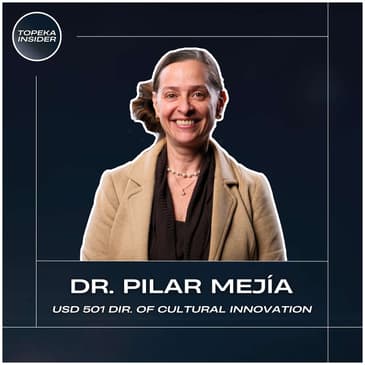
We trace Pilar’s path from Columbia to Topeka and explore how language, culture, and community shape learning. Dual language classrooms, the seal of biliteracy, and the difference between language needs and disabilities take center stage with practical tips for families and curious adults.
________________________________________
0:35 - Meet Dr. Pilar Mejía And Her Journey
3:25 - From Fashion To Education In Kansas
6:08 - Degrees, Endorsements, And Kansas Schools
10:24 - Language, Culture, And Family Roots
12:25 - Accents, Dialects, And Spanish Varieties
14:50 - Life In Topeka And Why She Stayed
18:40 - What Topeka Needs: Languages And Food
21:56 - Learning Tools: Duolingo Vs Rosetta Stone
24:20 - Kids, Plasticity, And True Immersion
30:17 - Diversity In USD 501 And Languages
33:08 - Dual Language Model And World Languages
36:15 - Placement, Heritage Speakers, And Equity
38:00 - Challenge: Staffing And Teacher Shortages
41:18 - Language vs Disability: Getting It Right
46:00 - Open Hearts, Open Minds, Community
48:15 - Rapid Fire And Closing Moments
_________________________________________
This podcast has been brought to you by Choose Topeka. If you're thinking about making a move, Choose Topeka can get you up to fifteen thousand dollars to relocate. Apply now at ChooseTopeka.com
Beyond the Podcast: 🎙️
Be sure to follow our Topeka Insider Socials below and check out our website for additional stories and articles pertaining to Topeka, KS
Website -- https://topekainsider.com/
Facebook -- https://www.facebook.com/topekainsider
Instagram -- https://www.instagram.com/topekainsider/
Follow Your Hosts: 📱
Follow both Justin & Jon on their personal socials to get connected. They would love to connect and answer any questions about the show or their day to day.
Jon Griffith's Instagram -- https://www.instagram.com/thejongriffith/
Justin Armbruster's Instagram -- https://www.instagram.com/armbruster_jd
For Any Inquiries, please DM @TopekaInsider on Instagram!
I actually know Sophia Vedgada. What?
Jon Griffith:Did you get here on this podcast? Kidoba's not cutting it for you.
Dr. Pilar Mejía:Because language is not language by itself. Language is culture. I wouldn't be here without the supportive and sponsorship of Topeka Public Schools.
Justin Armbruster:This podcast has been brought to you by Choose Topeka. If you're thinking about making a move, choose to Pika can get you up to fifteen thousand dollars to relocate.
Jon Griffith:Whether you're buying or renting, Topeka and Shawnee County are ready to welcome you. Apply now at ChooseTopeka.com. Okay, welcome to Topeka Insider. Today we have with us Dr. Pilar Mejía de Colombia, the General Director of Cultural Innovation at Topeka Public Schools USD 501. Let's go. That was the video.
Dr. Pilar Mejía:Thank you guys. Thanks for having me. Yeah, glad you have to be.
Justin Armbruster:Thanks for being here. Do you want to tell us a little bit about you, your background, uh, how'd you how did you get to the States? And yeah, a little bit about you.
Dr. Pilar Mejía:Sure. I was, as established, born and raised in Colombia in Cali, Colombia. That's the third largest city. It's about almost three million people. It's a big, big hustle bustle uh city full of you know beautiful landscape and green and happy people and joyful people. It's also the capital of salsa, not the chips and salsa, but the dance salsa.
Speaker 3:Yeah.
Dr. Pilar Mejía:And so music is a huge, um, a huge part of our culture, food, and um whatnot.
Jon Griffith:We're gonna we we should give Justin a salsa lesson as part of this episode. We should not. We'll be here way too long.
Dr. Pilar Mejía:I came to the States 20, almost 27 years ago.
Speaker 4:Yeah.
Dr. Pilar Mejía:January 9th of next year, it'll be 27. Jeez.
Jon Griffith:That's awesome.
Dr. Pilar Mejía:Um and I, you know, after being in college, Teach in Texas for two years, I moved to Topeka. And um my goal was to pursue or, you know, a job in my previous life career, which was fashion design. I got a master's in Italy for for um product management in fashion.
Jon Griffith:And so naturally, Topeka was the first place you wanted to come to do that. Absolutely. Yeah. I mean, Milan, Topeka, exactly straight shot.
Dr. Pilar Mejía:So Payless was here, and you know, it's a long story short, that was not gonna work. I, as a foreign person, needed a sponsorship, and Payless at the time was not sponsoring internationals, uh, specifically for work visas. And um, so I had a pivot and decide what I was gonna do with my life now that that was not gonna pan out, and decided to go back to school for education. I had taught foreign languages in uh in Cali. So I liked teaching and I felt successful. I was successful at it, so I'm like, well, let me see about this, making this a formal career. Went back to school at Washburn and then got my master's at KU and then did my doctorate at K State.
Justin Armbruster:You got the full Kansas experience. Do you have Kansas? Do you have a favorite?
Dr. Pilar Mejía:My favorite experience. Uh I I don't have a favorite school.
Jon Griffith:All right.
Dr. Pilar Mejía:I'm sorry, you guys, but I He's trying to get a hot take out of you. I'm gonna ask you what you gravitate towards, but um Washburn was it was all perfect for the time in my life. Yeah. Being a non-traditional student at Washburn was amazing. It was a small school, it was personalized. Um, I was I don't know, it was it was great. And then being a full-time teacher um at KU, I it all started with a cohort for teachers um or staff in Topeka Public Schools. Um anyway, it was it was perfect then, and then fast forward a few years through the leadership academy that Topeka Public Schools and K-State have still have a partnership with. Um I because I had a master's had the opportunity to continue my doctorate. And so that was K-State. So um that was amazing, you know, with the the Topeka Public Schools part with K-State, and then on my own, I had an amazing chair. I mean, I it's it's one of the smartest women, uh, best teachers, you know, holding your hand while pushing you super hard, being there. So it was all great for the period of uh in my life that I was in.
Justin Armbruster:That's cool. So you are a highly educated individual. How many years were you in post too many?
Dr. Pilar Mejía:It started. I mean, granted there were little breaks, but it started in 2005, and I graduated with my doctorate in 2017.
Speaker 4:Wow.
Dr. Pilar Mejía:So it was a minute. And I always like, you know, when I was done with my master's, I'm like, I don't want to learn anything else in my life, I'm done. Uh actually, with my endorsement, then no, but the master's, I'm like, okay, the opportunity was there. How do you not? Okay, fine. Then I'm like, not, and then the academy, and people are like, we'll do it. I'm like, uh, I don't want to be a principal.
Speaker 3:Yeah.
Dr. Pilar Mejía:But but here it is, apply, just apply. Okay, fine. And then, hey, but that can take you to a doctorate. I'm like, nope, that's it. Right. I'm not, and here I am.
Jon Griffith:So here we are. So you you said your uh was your educational um because you were studying education.
Dr. Pilar Mejía:Yes.
Jon Griffith:Was that around specifically teaching languages?
Dr. Pilar Mejía:No. What kind of education was So my bachelor's was just a master's sorry, uh bachelor's in education.
Jon Griffith:Just general, okay.
Dr. Pilar Mejía:And elementary. So I, you know, at the time the license was K9.
Speaker 4:Yep.
Dr. Pilar Mejía:Um, so general education. And then I started getting more into my the the thread that has continued in my life, um, motivated, I guess, by my DNA, which I got an endorsement for and TSOL, which is teaching English to students of other languages. So I got my E S O L endorsement so that I could actually be a teacher of students whose native language is not English. So I did that. And while doing that, you know, after that, I it that turned into a master's, so I, you know, it was twofer type thing.
Speaker 3:Yeah, yeah.
Dr. Pilar Mejía:Uh, but if you look at my career since I started in Topeka Public Schools, um, which by the way was the only school district in the Topeka area that was sponsoring internationals at the time, um there has always been a threat of me being part of committees that have to do with you know, with uh this population. Or um, you know, I had a lot of students in my class that were of Spanish speaking homes or Spanish speaking themselves. And then I did teach English learners in the middle school. Then I became a coach of English learners, uh teachers. So it it wasn't like a specific I'm gonna go do as a as a foreign language or as a language thing, but more supporting the people, the culture um in a broader scale, I suppose.
Justin Armbruster:Yeah. How many languages do you speak?
Dr. Pilar Mejía:I speak three. Uh so Spanish is my native, English, I speak Italian, I dabble in French, I dabble in Portuguese, but don't ask you questions in Italian or Portuguese, no problem. You can switch to Italian, but and I could possibly do the Portuguese. The French, I dabble. I love it. It's like the one that I wish I could just blah blah blah.
Jon Griffith:But um Well, it's a bummer because I'm fluent in French, so I guess I guess we can't use it.
Dr. Pilar Mejía:Hey, we can. Go for it. I'll do my best.
Jon Griffith:I'm kidding. No, I don't. No, we are wow, we're currently teaching our kids Spanish. And so it's so basic right now, though. So I'm I'm still I like they still they still haven't caught up to my basic level yet. So I I haven't like diving in with them yet.
Justin Armbruster:But I tell people my uh extent of Spanish is I like to think if I was plopped down in Mexico somewhere, I would survive. You know, I could get myself.
Dr. Pilar Mejía:That's how I am with French. I totally can. If when I go to France for to visit or whatever, I stay in French as much as I can.
Speaker 5:Yep.
Dr. Pilar Mejía:And so, you know, but now let's not have a conversation about no problem.
Jon Griffith:Yeah. Yeah. That's awesome. So you uh what what do you love about language? What's what are some of your favorite things about surely like learning different languages has shown you something about how language works. And I'm curious just what has come out of that for you?
Dr. Pilar Mejía:Um I I think that I had no choice. Well, no, I did have a choice. But my my dad, he spoke French, he spoke English, um, he dabbled in Portuguese, and he loved languages. And so foreign language was something that was always around. He would throw little sayings at us, or he would, you know, it was always there. And I guess I have one sister, I'm the youngest of two. We both kind of loved the sound, um, trying to say the things, learning more. Um, we were in in a bilingual school from the age of three to twelfth grade.
Speaker 5:Wow.
Dr. Pilar Mejía:Um well in in three. We we did a year in Madrid, but it was all immersed immersion in English.
Jon Griffith:Wow.
Dr. Pilar Mejía:So that's a gift that they gave us. Yeah. And then with my dad, my mom also had uh was a year in Canada, so a little French. Just I don't know, it was part of my daily life that language was around that was in Spanish, plus very high expectations of our use of Spanish at home. So if we pronounced things wrong or conjugated wrong, there was always that, hey, it's this way or that way. Right. So it's a curse. Because now I'm like, right. I notice everything.
Jon Griffith:But there is a a high expectation that you were learning languages, not just your native language, but languages. Right. That's cool. That's very cool.
Justin Armbruster:Yep. Uh we talked about this a little bit before we started rolling, but uh and I'm gonna expose myself here. Um as the uncultured white cur guy I am. You said there was a little there's different types of Spanish, you know, Colombian, Mexican. What does that mean? What does that mean? What does that mean?
Dr. Pilar Mejía:I mean, if if you sit uh Mexican, a Colombian, a Venezuelan, an Argentinian, uh Salvadorian, whatever, an Ecuadorian, we all sound different, very different, and we all say things. I mean, we all understand each other.
Speaker 4:Sure.
Dr. Pilar Mejía:Uh Spaniard, but then there will be times when, wait, what did you call that?
Speaker 4:Uh-huh.
Dr. Pilar Mejía:I don't know, but I'm I'm not can't think of an example, but um I mean, even trash can, Puerto Rican, it just words like trash can are very different. Right. Words like, I don't know. I can't think of anything.
Jon Griffith:Is it Puerto Rican or Costa Ricans that don't roll their Rs?
Dr. Pilar Mejía:They have a hard time. So it's like Costa Rica instead of Rica.
Jon Griffith:Or like carro. Instead of carro.
Dr. Pilar Mejía:Yeah, like casual. Yeah. Oh, it's kind of a Z H sort of. It's z I cannot I cannot do it like they do. Yeah. But yes.
Jon Griffith:And then don't Spaniards, they you have a lot of like shh like S.
Dr. Pilar Mejía:So their S sound, they probably would say no, they don't. But their their accent is is stronger. Their S are more shh like S H pronounce the Z and the C with a you know vowel after it, um, as as you would T H. So I say Zapato for Shu, they say Tapato.
Jon Griffith:Tapato.
Dr. Pilar Mejía:Um so it it's and their their G's and J's, we say more huh and they're more huh. Yeah.
Justin Armbruster:So it's just more guttural and is it so distinct that if you know you were sitting in a room and everyone was talking, you could tell that you're we know you're from here. Yes. So it's very obvious.
Dr. Pilar Mejía:Absolutely.
Justin Armbruster:Interesting.
Dr. Pilar Mejía:When people are like, where are you from? I'm like, um, I say two more things. Where do you think? Colombia! You know.
Jon Griffith:So what what are some of the distinctions of Colombian tone and you know, oh I cannot imitate them because they weren't um you know, everybody like when people try to imitate Colombian accent, which is also an overgeneralization because the coast speaks differently, et cetera.
Dr. Pilar Mejía:But um I'm like, no, don't do that. So I feel like it's the same way if I try to sound like a Mexican or a Spaniard, they're like, no, stop.
Jon Griffith:So I I had some dear friends in college from from northern Mexico, and so I learned all their the northern Mexican slang, que onda, and you know, different things, and went down for Christmas a few times with them. Um and uh they and then we had some other friends who are from southern Mexico, and they would always make fun of each other that the northern Mexican Mexicans sound like they're singing because they always end high in their sentences. You know, caonda? Like they always end up. And the Southern Mexicans always sound angry because they always end low. You know? And so it's the exact opposite. So they always make fun of each other for things like that.
Dr. Pilar Mejía:And like when I'm around Colombians, I'm like, oh, you're from Medellin, oh, you're from Bucaramanga. Okay, yeah. You're from Cali, they they can tell.
Justin Armbruster:Yeah, yeah.
Dr. Pilar Mejía:You know, like a New Yorker or uh somebody from Alabama. Yeah. Sure.
Justin Armbruster:Or you mentioned, you know, uh uh British versus American. You know the distinction is English, but it's English.
Dr. Pilar Mejía:But you don't call it an apartment a flat, they do, right? Et cetera, right?
Justin Armbruster:You know, yeah, that's cool. Well, switching gears maybe a little bit, you've been in Topeka for 25-ish years now. Yes. I mean, you're not from Topeka, but this is home. So tell us a little bit. What do you what do you love about Topeka? Uh and you yeah, and you're living here for 25 years. What kept you here, yeah. What kept you here?
Dr. Pilar Mejía:Uh well, first of all, my education, my job. Because, you know, right at student teaching, Topeka Public Schools was there with open arms and an open heart, and I cannot be more thankful because I don't I wouldn't be here without the support of and sponsorship of Topeka Public Schools. Um, so I got a job. That was fantastic. And I got I got the job that I was hoping for, teaching, etc. Um, and then a few years later, I met a guy.
Speaker 4:That'll keep you here. That'll keep you here.
Dr. Pilar Mejía:Yes. And um we eventually got married, and so he keeps me here, our jobs keep us here. He has two sons, so we also were here for their critical years. Yeah, and then those critical years, even though you know they're grown almost 24 and 21, um, they're still around, we're still around. But Topeka, you know, I I grew up in and have lived in cities that are very big and very, I don't know, busy, congested, like Cai. I lived in Bogotá, the capital of Colombia. I lived in Madrid and I lived in Milan. And in College Station, Texas, and in Topeka, Kansas. So that small town feel um I had never experienced, and I really like it. Uh everything's close. Um you are in a small town, but with access to a big city like bigger city like Kansas City. Um things are easy. They're just manageable. You um get in the car, you can you can estimate the time to get from point A to point B versus in Cali, you're like, uh I mean it's reasonable. In Cali is like, but what if, but what if the traffic, but this and that, and there's uh oh who and it's it's a lot.
Jon Griffith:So maybe something closer to like LA here, right where you're like, we might be in traffic for an hour or two or something.
Dr. Pilar Mejía:It's not that bad, but it's very congested. I mean, um there are actual actual laws where if your license plate ends in a certain number, you cannot use your car this day of the week or these two days of the week. Yeah. So like it's real. Wow. The congestion is real.
Speaker 4:Yeah, yeah.
Dr. Pilar Mejía:So um then what people did was they bought other cars with different numbers or two.
Jon Griffith:Two cars.
Dr. Pilar Mejía:Leave it to us.
Jon Griffith:You gotta make sure the license plates are different. We are walking.
Dr. Pilar Mejía:Because you can you can select the number. Oh, it's horrible. But anyway, so I just like the feel, and you know, my husband and I we love to travel, and so living here is a good base, you know, cost of living is great.
Speaker 3:Yeah.
Dr. Pilar Mejía:Um we have our our circle here, so our our life is here. Um, I did long for bigger for a while there. Um but then I I got content and happy with you know, this is great. This is great for our family, our lifestyle, and we can pick up and travel. It's very well located in terms of you know, for the United States purposes. It's really far from Cali, if you think about it. Yeah. Because getting there, we're only three and a half, we're three almost four hours from Miami, boom. But to get to Miami is another story.
Jon Griffith:Right. So are we in the same time zone?
Dr. Pilar Mejía:Um right now we here are an hour behind. Because of daylight savings?
Jon Griffith:Yes. Okay. But normally we're in the same?
Dr. Pilar Mejía:Yes, normally it's Miami time.
unknown:Oh.
Dr. Pilar Mejía:Okay. Yeah.
Justin Armbruster:Uh so being well traveled, being all across the world uh living, what what would you say is are some things that Topeka is missing? What would you love to see Topeka either have, whether it's realistic or not, that you would think it would complete, you know, maybe that's that desire to maybe belong for a bigger city. We tell half the people not to drive on Tuesdays.
Dr. Pilar Mejía:Besides that, yeah. Um, one of the things that I most long about um bigger cities is that exposure to or access to languages. Um because language is not language by itself, language is culture. Um, and so with culture comes tolerance and diversity, you know, represents more than just we're different. It's like anyway, uh that's a kind of a philosophical thing. But in Cali, you have multiple language schools, you know, not only K-12 schools, there's German, French, English, um, and in some of the those schools, there's like say in my school now, not then, you learn English and you learn Mandarin, for example. So you're in Spanish, in English, in Mandarin. Uh, but there are institutes, language institutes. So I would go as an extracurricular as a fun for me thing to the um French institute for you know how somebody takes music classes, I would take French classes or whatnot. So I long that because I would be all over it. Yeah. Um so that's something I I wish we had here. And then the access to gastronomy that is, you know, just more rich in terms of options, quality.
Jon Griffith:Um you said gastronomy.
Dr. Pilar Mejía:Gastronomy.
Jon Griffith:Oh, I thought you said okay. I thought you said astronomy. Yeah.
Dr. Pilar Mejía:No.
Jon Griffith:I was like, huh.
Justin Armbruster:Well, that's what I thought she said too. Then she said gastronomy. I'm like, I don't know what that is either, but okay, food. Food. I know that.
Dr. Pilar Mejía:Uh I miss that a lot. Because that's something that everybody can access. The languages is an interesting, but food, everybody likes food. Right. So having more diversity.
Justin Armbruster:What kind of food would you like to see more of?
Dr. Pilar Mejía:Colombian for one.
Justin Armbruster:I was just getting ready to ask you.
Dr. Pilar Mejía:You're gonna ask me what that is.
Justin Armbruster:Is there a Colombian, is there a place you can get Colombian food in Topica? Where do where's the nearest place?
Dr. Pilar Mejía:Houston, Dallas, not in Kansas. I don't think may I don't even know if in Nebraska, I don't know. It Texas, but far away. Very far away.
Speaker 4:Yeah.
Dr. Pilar Mejía:Um and I mean I would love to see Colombian food here. Um but in general, just more. Oh man, if I think about the restaurants in Cali, for example, um there's so much variety of things to eat in a variety of um modalities. Like the place can be a little something, but it it has a lot of character and really good food and just the ambiance. Um I don't know.
Justin Armbruster:Just Qdoba's not cutting it for you.
Dr. Pilar Mejía:I do like Qdoba. I'm more of a Chipotle girl. All right.
Jon Griffith:Oh, okay.
Dr. Pilar Mejía:What are you? Qdoba?
Jon Griffith:Uh there's a right answer. Uh I am torn. I've historically been a Chipotle person.
Dr. Pilar Mejía:Uh-huh.
Jon Griffith:Um my friends are trying to get me to switch. Um, but I have not quite switched yet. I'm still a Chipotle person.
Dr. Pilar Mejía:I just I love it. Um but anyway, I I love um their food. I I love it.
Justin Armbruster:But it's not Colombian.
Dr. Pilar Mejía:But also it's okay. And then what else? You know, so I'm not bashing what's here. I'm saying I would like to see more like fewer chains, uh, more local, more authentic, something. Um I mean, we have places that are cool, but I don't know.
Jon Griffith:No, that's great. Do you this is a little bit jumping the gun on Louis Huey? We have some rapid fire questions at the end, but uh just I think it's great right now. Is do you have a favorite restaurant, like a favorite local non-chain place?
Dr. Pilar Mejía:Oh, non-chain?
Jon Griffith:Or like what what are some of the more local restaurants?
Dr. Pilar Mejía:With Buffalo Wild Wings.
Jon Griffith:Okay.
Dr. Pilar Mejía:Like obsessed. So we do go there a lot. Um we we like Top Tim Thai. That isn't. Oh, let's go. Yeah, it's not uh a chain. Right. I hope it hasn't become a chip, but it's here.
Jon Griffith:Yeah, I know that we love that place.
Dr. Pilar Mejía:Yes. Um, I mean there are good things at Chili's. I don't know.
Justin Armbruster:Okay, I have to I have a non-food question that goes back to languages.
Dr. Pilar Mejía:Yes.
Justin Armbruster:In your professional opinion, yes. I'd say you're a professional language person. Duolingo. What do we feel about that app? Hey, quick heads up.
Jon Griffith:If you have been thinking about relocating, the city of Topeka might just pay you to move.
Justin Armbruster:Seriously. You could get up to $15,000 to live and work in Shawnee County. Check it out at choose to peek it.com. Now, back to the show.
Dr. Pilar Mejía:It's better than nothing.
Justin Armbruster:Okay. That's a high thought.
Dr. Pilar Mejía:That's a good exposure to at least hear how how things sound.
Speaker 5:Okay.
Dr. Pilar Mejía:Um, you know, you learn vocabulary.
Speaker 5:Yeah.
Dr. Pilar Mejía:Um, but I mean, in order to learn a language, immersion is huge. But I do really appreciate people who use Duolingo and try and want to, you know, get out of their comfort zone or because it shows, you know, I see you, I value you, I I can, you know, maybe in some level now relate a little bit better to you. Um so anything that opens a person's mind, I appreciate. And so Duolingo is cool.
Justin Armbruster:Yeah. Yeah, I'm following. It's a great uh get them into that. It's maybe not if you're wanting to become fluent or you know, really dive in deep. It's not the tool, but it's a good entry.
Dr. Pilar Mejía:Yes, absolutely. Like I said, anything that will help somebody, you know, get a little bit broader in in knowledge, information, or um because then it's exciting. Oh, I've heard that word before. Right. Yeah, you know? And oh, that's how that sounds. That's cool. Or let me try to roll these R's that are hard.
Jon Griffith:Do you have uh an opinion? So if someone wanted to learn a language but they're not college aged, so they're not maybe gonna go to university, you know, they're not in K through 12. What what options would you suggest?
Dr. Pilar Mejía:What are they doing? They're grown-ups or Yeah, just grown ups wanting to learn.
Jon Griffith:So let's say, hey, I just want to learn Spanish or French or something else. I'm not, you know, I'm just an adult living my life in Topeka. What would you recommend?
Dr. Pilar Mejía:Rosetta Stone.
Jon Griffith:Okay. Okay.
Dr. Pilar Mejía:Uh-huh. Um, which is similar in the methodology uh as Duolingo. Uh it just is more um, I think it's just more rigorous a little bit. Yeah. Um I mean it does take you through the steps. It is also the four domains. You listen, you speak, you write, you read, um, the understanding, you know. But it's a little bit more robust. Yeah, yeah, that makes sense. Yeah.
Jon Griffith:Yeah. My kids.
Dr. Pilar Mejía:But it's all about the what you put in, you get out.
Jon Griffith:Yeah. Yeah.
Dr. Pilar Mejía:And it takes dedication and time, which kids throw them in a thing. They're gonna learn it because it's amazing. For us adults, it's even though it's easier to learn because we have the mental capacity, the experiences, the background, all the things, but we don't have the time. So that's that's the challenging part.
Jon Griffith:Do you think there what it why is it people always say it's easier for children? Is it simply time, or is there like a brain plasticity thing to it too?
Dr. Pilar Mejía:Or the brain, I mean, there's plasticity. There's also plasticity in the in the mouth and and the palate and whatever to be able to replicate sounds better because then you start getting more stiff with age. Right.
Justin Armbruster:And so that's making the same sounds, sure. Right. That becomes surprised, hamburger.
Dr. Pilar Mejía:Correct. That becomes harder as adults, but understanding a language and actually learning a language is easier. However, kids just learn it almost by osmosis if they're like, think about an English learner. They're in the culture, they're it's everywhere. The immersion is there, so they're gonna learn it, period. Yeah, right? For us, it's not so easy.
Justin Armbruster:Yeah. I've heard uh the easiest way to go learn a language is go live there for three months. You know, just go live there, and it's you're just around it, you're gonna pick things up so much faster.
Dr. Pilar Mejía:Like I I still have I lived in Milan a long time ago.
Jon Griffith:Um we don't need to say when.
Dr. Pilar Mejía:A long time ago. And I still listen to books in Italian. I have my personal Gmail in Italian, my you know, because if you don't use it, you lose it. Right. It's not a cliche, it's a reality.
Jon Griffith:Yeah, it's so true. My wife is teaching my kids Spanish, and I forget the curriculum they're using, but part of it is they're watching cartoons in Spanish. They're listening to like, you know, Daddy Yankee and like different, just like Spanish, like pop songs.
Dr. Pilar Mejía:Oh, you picked a hard one because Puerto Rico and I mean the it but I love it. I mean, I love that I love it. I don't think Daddy Yankee's the only one.
Jon Griffith:Yeah, there isn't he's not the only one, but there's like, you know, uh a handful. And uh like they she's teaching him salsa as part of it. Just like it's like uh, hey, not just the words, but like the culture. Yeah, every layer uh to like be immersed in it. And so so uh so what man, my oldest, who's seven, is super outgoing, which I'm fairly outgoing, but I also like you know, you're like at the grocery store, you're just like doing your thing, checking the list off.
Justin Armbruster:You have a podcast, man. You're you're pretty outgoing.
Jon Griffith:But like, you know, you know like you know what I'm talking about. Like sometimes you're just like, hey, I'm trying to get the things from the store and I'm trying to go home. Well, my my son will hear a family down the aisle, like, Dad, they're speaking Spanish, we should go talk to them. And I was like, at this point, you might know more Spanish than me, so I don't know what I would even be doing, you know? And so he's like, let's go talk. I was like, okay, all right, let's go talk to him, you know. Oh, good. He's like practicing, and I'm like, hey, this is great, this is awesome.
Dr. Pilar Mejía:Well, he is already way ahead of the curve in terms of what I going back to, for example, our families, that acceptance, that value of you're different, but you're different in a way that that also helps me, that helps me. And you know, it's a it's a symbiotic reciprocal reciprocal relationship there where you know I have things that. Help you um enrich your life and vice versa.
Speaker 3:Yeah.
Dr. Pilar Mejía:And so you know when he hears Spanish, he doesn't hear, oh sure, yeah, yeah, sure, yeah. Danger, uh different, sure, um, who knows, you know. He hears, ooh, cool. Yeah, I want to relate. I want what you have, and you also, you know, I have things that you also want. So community. That's community.
Justin Armbruster:That's super cool. I uh I just saw something the other day that uh some of these famous content creators, you know, Mr. Beast, uh Alex Ramosy, some of these massive names in the content creator space that maybe you're familiar with or maybe you're not. But uh on YouTube.
Dr. Pilar Mejía:I don't know. What's funny, you'll you'll appreciate this.
Justin Armbruster:They they have massive followings in English because they're from America. But they realize there's a ton of untapped potential for views and monetization if they just uh uh not transcribe. If they if they have it. There it is. Uh translate it to Spanish and upload the same s the same content. And so I think Mr. Beast said he is uh over fifty percent of his uh monetization and views come from his Spanish dubbed uh content. Wow. Which is crazy. You don't even think about that. When you're so hubbed in America, you think it's just us, and you know, we're big bad Americans, and you know we have we're the majority of people in the in the world, it's like no, not even close.
Dr. Pilar Mejía:Well, I I grew up watching, well, you guys are younger than me, but whatever. The shows that I grew up watching, my husband and I are from the same year, uh born the same year. And it's insane to talk about the movies, the music, the TV shows that we were watching at the same time. He was watching them in English, they were dubbed in Spanish. Oh, really? Yep. We we I mean, we both grew up watching, I don't know, different strokes or whatever, you know. Yeah. Um Michael J. Fox. Uh Back to the Future? Well, that too, but that's that's the movie.
Jon Griffith:Oh, what was the show that he was? Yeah. Um I forget what it was.
Dr. Pilar Mejía:Oh, I loved it. But anyway, those shows and so and the music, sometimes he's like, wait, you know this song? I'm like, yeah, you don't know. And it's an American song, 80s and whatnot, but yeah. Um so there you go.
Justin Armbruster:Yep.
Dr. Pilar Mejía:The the language barrier can be, you know, worked out to to yeah, bridged.
Jon Griffith:So is there are there movies that you grew up watching dubbed in Spanish that now you're watching in English later?
Dr. Pilar Mejía:Actually, um interestingly, the the movies were in English with subtitles. So I mean for the for the very young ones, and because I was I I could understand them because I was in school learning English, but the very young ones, they were dubbed because kids are not ready to read um from the screen. But then it was subtitles. And then in Italy, I learned when I was there that they would dub everything into Italian, no matter what the age group, the audience, the target audience, it was dubbed in Italian. So I watched the Titanic in Italian.
Jon Griffith:That's awesome.
Dr. Pilar Mejía:Yeah. Uh aging myself there.
Jon Griffith:But um I remember seeing that on an airplane when I was like 14 or whatever when it came out. Uh was it like 2000, I think, is when it came out.
Dr. Pilar Mejía:Titanic?
Jon Griffith:Yeah, 2002, 2003. It wasn't much longer than that, right?
Dr. Pilar Mejía:Uh 96.
Jon Griffith:No way. No, it wasn't that long ago. I will guess 2004. 2004. Uh I'm gonna stay out of this one. 96.
Dr. Pilar Mejía:Titanic?
Jon Griffith:I'm gonna guess 2004.
Dr. Pilar Mejía:97.
Jon Griffith:I think it's after 2000. I could be wrong.
unknown:1997. No!
Dr. Pilar Mejía:Well, I can tell you.
Jon Griffith:The look on her face when you said 2004, she was in an airplane when I saw I don't think about it.
Dr. Pilar Mejía:It was the old, it was a classic.
Jon Griffith:Maybe it was a classic that maybe, yeah. You got me then. Yeah.
Dr. Pilar Mejía:So, like if you think about the experience that our students in Topeka Public Schools are having by having teachers from all these different backgrounds, yeah, is amazing. Cool. Because they bring, you know, yes, they are teaching the curriculum from here and whatnot, but the flair of their culture is there, no matter what. Like I know that I'm a very proud Colombian, and when I had my kids, I was teaching the genet curriculum. But guess what? Colombia was in everything. I don't know. I I just made connections and whatever, or or um shared an experience that I lived or whatnot. So it just goes pew a little bit wider.
Justin Armbruster:Here's a random question for you. Have you seen the show Modern Family?
Dr. Pilar Mejía:Yes.
Justin Armbruster:You know I'm talking about with Gloria.
Dr. Pilar Mejía:I actually know Sofia Velgara. What? You do? Because I mean, before she became Sofia Velgara.
Jon Griffith:Could you get her on this podcast?
Dr. Pilar Mejía:Before she became famous. No, what?
Jon Griffith:Could you get her on this podcast?
Dr. Pilar Mejía:I don't think Sofia would be like, oh yeah, I remember Billy from 2004? No, from 91.
Jon Griffith:Yeah. Wow.
Dr. Pilar Mejía:Uh because um she was friends with friends of mine from Barranquilla, where she's from. And anyway, I met this gal, and and she was famous because of a Pepsi commercial, and da da da. And then, I mean, Sophia, come on.
Justin Armbruster:That's so funny.
Dr. Pilar Mejía:That's why Sophia. So a modern family.
Justin Armbruster:Yeah. Well, I just think she's Colombian, that's hilarious. And then uh they're trying to always the whole show, they're trying to get Lily, uh, the daughter, to uh come to terms with her Vietnam culture and where she's from. And it's just that show's hilarious. If you if you haven't seen it, you watch it. It's so funny.
Dr. Pilar Mejía:I have seen some episodes.
Jon Griffith:My main takeaway from that story was that you some people call you Pili.
Dr. Pilar Mejía:Yes.
Jon Griffith:Is that your nickname?
Dr. Pilar Mejía:Well, so my full name is Maria del Pilar. Maria del Pilar. Um and and no, there's no middle name, it's the name.
Jon Griffith:Yeah. Um, Maria Del Pilar is your whole first name. Yes. So that is wrong.
Dr. Pilar Mejía:No, because I I go by Pilar.
Justin Armbruster:Okay. Um you can be honest with me. If that's wrong, that's wrong.
Dr. Pilar Mejía:It's not wrong because I would tell you, trust me, I have a thing with my name. Let me choose my name. Um, so yeah, in legal documents, it says name, first last name, second last name. Yeah. So it can be Juan Carlos, um, Pedro Alejandro, whatever. Um, I don't know, Maria Claudia, blah blah.
Speaker 3:Yeah.
Dr. Pilar Mejía:That's the name. Yeah. Even if it's a compound name. And then first last name, second last name. My full name, Maria del Pilar, Mejia, Vélez. Um, and the Pilars, typically the nickname is Pili.
Speaker 4:Okay.
Dr. Pilar Mejía:And Pilar is a very Spanish name. It's a very Catholic name, because Maria Mary of the Pillar, literally Zaragoza, Spain. Mary manifested herself on a pillar. So it's all that. Yes. Yeah.
Jon Griffith:Is it like, I think in Mexico, people take like their mother's last name as a first last name, and then their father's last name as a second last name?
Dr. Pilar Mejía:The opposite.
Jon Griffith:It's the opposite.
Dr. Pilar Mejía:Yeah. So Mejia is my dad, Vélez is my mom. And typically through our through the Hispanic culture, it's that way.
Jon Griffith:Okay.
Dr. Pilar Mejía:First last name is dad.
Jon Griffith:So in most Latin countries, Latin American countries, it's like that.
Dr. Pilar Mejía:Yes. Okay, cool.
Jon Griffith:Wow. That's sweet. So uh maybe can we jump into your role a little bit with the school? So uh you basically, yeah, off camera, you're explaining your role. Uh tell me if this is correct. So you're basically overseeing a lot of the international students that are a part of the public school system here in Topeka, K-12, and trying to make sure, hey, do you have everything you need to succeed in school? More is that more or less kind of your role?
Dr. Pilar Mejía:There are parts to that. Um it's not all the international students, because uh many of the international students um or well yeah, or students whose home languages are not English might not qualify for services. So if they don't qualify for services, let's just say they become general ed students, general education students. Like they're just with everyone they are yes, they don't receive special services because they don't qualify for them. Um I mean they might be in special education, they might be in special education, you know, uh this end or or um gifted or whatnot, but not in my departments per se.
Jon Griffith:Not in languages specifically.
Dr. Pilar Mejía:However, those students might take world languages. And we right now offer Spanish, German, uh, and French and ASL. So those students might take for uh you know word languages. Then they are part of my department, what one of the things I oversee. Um then there are other students who are native English speakers, just you know, your traditional native English speaker. Yeah. They are in dual language. Uh so they're learning English and Spanish content through English and Spanish, but not as a foreign language, like world languages. Those students can also be in world languages.
Jon Griffith:Wait, wait, wait. So it's it's so they're taking like non-language classes in another language, is that what you're saying? Like the dual language thing?
Dr. Pilar Mejía:So the dual language thing they take, for example, at the elementary level, they take, and the school is Scott, dual language magnet, um, off of six in California, fifth in California. So um they take math and language arts. Well, you guys would take math and English language arts if you are a preschool, preschooler, a kindergartner, or a first grader. I would take math and English, SLA, Spanish language arts, and then we all would take science and social studies in Spanish. So we all learn content through language.
Speaker 4:Cool.
Dr. Pilar Mejía:The content is shared on what we call the language of instruction. So the language of instruction for math is always English. For science, it's always Spanish. For social studies, it's always Spanish in elementary. And then depending on the grade level, well, second and up, we both have English language arts and Spanish language arts.
Jon Griffith:So that school, the whole school is like that. Correct. Where like different classes are different languages. Correct. Wow, that's cool. Yes, so like you could send your your kid there.
Dr. Pilar Mejía:Or kid there too.
Jon Griffith:Right, to learn both in these different subjects and stuff. That's awesome.
Dr. Pilar Mejía:So you are learning the content or you're learning the language through the content. Oh yeah, that's what you're saying. Versus a foreign language, which is I tell you that this is a microphone, it's una mesa la planta, etc.
Justin Armbruster:Um fake planta.
Dr. Pilar Mejía:Planta de mentiras. Planta artificial. So in the world languages though, you are learning the language as a foreign language. Right, right. So you don't necessarily learn about the the water cycle or the uh branches of government in those in in whatever language, say Spanish, in those classes. You learn the language, so the structures and the you know, the units might be greetings or culture and foods and parts of the body, clothing items. Um it's different.
Jon Griffith:How many uh do you do you know like what what are the different demographics like of different uh language uh you know families in Topeka? Like like what how many Ukrainian refugees are there? How many Spanish speaking people are there that live in Topeka?
Dr. Pilar Mejía:Like what are the Well I'll tell you what the breakup of the demographic breakup of the district is just about 3333, 33 black, uh white, and uh Hispanic.
Speaker 4:Okay.
Dr. Pilar Mejía:And then there are uh because you know the Ukrainians identify as white. Sure. Uh there's a sliver of multiracial, which that's growing, the black population is decreasing, the Hispanic population is increasing, um, then there's the Pacific Islanders, those are also a sliver. Uh, but in general, the big three ethnic groups or racial because anyway.
Jon Griffith:What about like uh like international? Like do we know like how many students are from different countries and and things, you know, like you said, there's Ukrainian refugee population here. And um I didn't realize we had a significant Ukrainian refugee population.
Dr. Pilar Mejía:Um I don't. I have to get back uh to you on that. I don't know exactly what the international uh population of students is. Because, you know, we've been trying also to identify the the total like the international teachers who is not from here, right?
Speaker 3:Yeah.
Dr. Pilar Mejía:Aside from the ones that we recently brought or that we know are, but there are other teachers who may be uh US citizens or maybe um you know permanent residents that have been here for a while, and we just know they are teachers, they are great teachers, but we don't necessarily know that they're from Jamaica.
Speaker 4:Sure.
Dr. Pilar Mejía:You know what I mean? And um so that might add to the student population because the kids might have been born uh abroad but here, but we don't I don't know if that explains but I don't know an answer, and I probably should have no you're fine.
Jon Griffith:Yeah, I was just I was curious because uh like you had mentioned we have a large Ukrainian refugee population. I didn't I didn't know that. Uh but you did mention that you said there's something like 46 languages like 65 languages represented.
Dr. Pilar Mejía:So once again, um I don't know if those students would would identify themselves as international because they might they might have been born here, but their parents are from China or from India or from you name it.
Jon Griffith:Yeah, I guess I d I don't know the best way to ask the question, but yeah, basically like maybe that's just the best way, is what languages are represented, um which is maybe like are is that from that survey, like what the language that's being spoken at home, is that what that's from?
Dr. Pilar Mejía:That's that's where it's still. Right. The nationalities could be more.
Jon Griffith:Sure.
Dr. Pilar Mejía:Because think about it, Spanish is one language, but spoken in how many countries.
Jon Griffith:Right.
Dr. Pilar Mejía:So yeah.
Jon Griffith:Yeah. Yeah, I guess that's what I was curious about. Just I was just curious to see, like, man, what is the kind of global representation in Topeka?
Dr. Pilar Mejía:Well, we are definitely the most diverse district, and we pride ourselves in our diversity. We value it tremendously. We promote it, we celebrate it. Um, you know, so I mean, sorry, I don't have a number number. No, it's okay. I was just curious.
Justin Armbruster:65 is really interesting. Yeah. I don't even know if I can name 65 languages. Yeah, yeah.
Jon Griffith:I don't know if I could, yeah.
Dr. Pilar Mejía:So you said most diverse for Topeka or like in Kansas or uh in the in the Topeka um school districts. Cool. Yeah, okay, cool.
Jon Griffith:Wow. Yeah, that's wild. So what are uh what are some of the biggest challenges with your role? And then what are some of the things you're most excited about with your role?
Dr. Pilar Mejía:Um the one of the biggest challenges is staffing, but it's not just for my departments. Um teacher shortages are a nationwide um you know struggle right now. And so finding teachers that are you know highly qualified, i.e. they have teaching degrees for whatever they're teaching, that makes them highly qualified. And then, for example, for my uh English learners that have that ESOL endorsement, English to students of other languages, that endorsement is necessary for them to uh teach these students. So there's a shortage there um in dual language, the bilingual teachers or the we don't just want Spanish peaking because the professional development and all the system is in English, so you want to make sure you have teachers who can navigate the system uh comfortably enough to know what's going on, but teaching in Spanish specifically.
Justin Armbruster:If you're a Spanish or a a dual uh bilingual teacher, uh is there some sort of like incentive to do that?
Dr. Pilar Mejía:Do you get some sort of paybump or yes, there is um an addendum that the teachers who are in dual language at um receive.
Jon Griffith:That's great. Does that increase if you learn a third language?
Dr. Pilar Mejía:Nope.
Jon Griffith:So there's no incentive just to like keep learning seven languages.
Dr. Pilar Mejía:I wish there were more money for teachers, period.
Justin Armbruster:Or actually for someone who knows seven. Right. Yeah. Yeah.
Dr. Pilar Mejía:Um so so that's that's a challenge, you know, staffing. Um most exciting is that we continue to grow, for example, in the seal of biliteracy, which um is a an a an award that students earn by demonstrating competency in English and at least one other language. So um it's a Kansas thing, and every every state now, as of a couple or three years ago, every state has a state sealed by literacy that is recognized. Well, before not all states had it. So that's a huge celebration.
Jon Griffith:So it's incentivizing people to learn a second language.
Dr. Pilar Mejía:Right. Cool. Um so we we offer it to students who are in world languages, who you know, the home language survey says something other than English or the dual language, or so the pool of students who can take it is huge. And we have exponentially grown um in the past, this is my fourth year-ish in this position. I'll explain since then. And you know, having that one person and that central system has um, you know, just increased the participation and also the attainment. Um up until four months ago, I was the director of culture innovation. Now I'm the general director because I didn't have the English learners department. Now I do.
Justin Armbruster:Oh, okay.
Dr. Pilar Mejía:But everything is. So it's more broad now.
Justin Armbruster:Correct. How often uh and all out my school, so I went to Shiny Heights, took Spanish for two or three years there. Clearly, none of it stuck. Um but oh I had this buddy of mine, he's like learning piano. Yeah, exactly. No, it never sticks. It didn't stick. Um but I had this buddy of mine who was fluent. I played soccer with him, and I he was taking Spanish with us in the class, and it was just comical. As a fluent speaker. As a fluent speaker. And it was just comical. She'll be to the teacher be teaching something, and he'd kind of look at me and be like, that's wrong. That's wrong. He goes, This is what you want to do. And then anytime he'd help me with homework, the teacher would be like, Clearly, we we did not learn this in class. Yeah. You should not know this. I don't know this. Exactly.
Jon Griffith:That's a late, that should be that's like a parked and rec show. It literally was like, hey, you know, looked at the camera.
Speaker 5:Right.
Justin Armbruster:Yeah. So I guess that's funny, but does that happen often? Do you have fluent Spanish speakers who take classes, or is it like a what's the point?
Dr. Pilar Mejía:That's that's I would say a waste of time. No doubt. Those kids, actually, we now have a system where the eighth graders uh who want to be in world languages, Spanish specifically in high school, we give them an assessment so that we can r place them correctly in the level. So they're not enrolled in Spanish one and they're oh my gosh, and they're maybe a Spanish two, three, or heritage speaker. They're bored to death, and they are missing out on the opportunity to move, you know, like get that elective done at the right, you know, level and move on, or continue to the next level. So you're saving time.
Justin Armbruster:Like I'm trying to remember what the reason was. I think it was you had to take two years in order to be eligible for like an honors program. And this kid's like, I want the honors program, so I got to take these electives. And I don't remember the details. It was a long time ago.
Dr. Pilar Mejía:Yeah, I was gonna ask you why. Did he just want an easy A? Yeah.
Justin Armbruster:I don't remember what it was, it was something about he needed the electives and he needed some world language to do it. And he's like, Why would I go and try and learn German?
Jon Griffith:I imagine there's been like a native English speaker starting with like kindergarten English, like in high school or something.
Dr. Pilar Mejía:Right. Right. That's that's the analogy. Yeah um yeah, in Topeka public schools, we require one year in high school of a foreign language. Yeah. And if people are listening or watching and they are gonna tell me I'm wrong, I'll take it, but I believe it's one year, one year for a yeah.
Jon Griffith:We were right about the Titanic, so I trust you on this.
Justin Armbruster:And we only have 10 listeners that listen to the show. So, you know, you're you'll be good.
Jon Griffith:Uh what are what are some of the biggest challenges for the students that you kind of your role kind of represents? What are what were some of the biggest challenges those students face?
Dr. Pilar Mejía:Um there's always that big question of uh language versus disability. So, you know, some might think that because a student doesn't speak English, then they don't have the intellectual capacity or smarts to perform well. Well, we have to weed that out and establish whether it's really a language issue or a disability issue. If you prove that, you know, if I tested a kid in Spanish and whatever they're trying to do and they got it, it's not a disability. It's a language. So how can we support that student and boost that through those strategies that are, you know, uh they're they're good practice for any learner, but specifically for the language learners. Um so that's a big one. And once identified, let's say they um they do qualify for special education um and there's a language other than English at home, uh, we want to focus because we always want to um research indicates that the stronger your native language, the stronger the next language. Because if you think about it, if you understand the concept of uh, let's say the water cycle or the concept of of um verb, noun, right, uh adjective in your own language, all you need to do is learn that vocabulary, but not the whole concept in the foreign language. So all I need to know is, oh, these words that I know in Spanish for this water cycle that I already know or understand, what are the terms in English?
Speaker 4:Right.
Dr. Pilar Mejía:Versus I have no schema, I have no idea what a word what a um water cycle is, I have no idea how it works, so I have to learn it, I have to learn everything in that language. Sure. Like we do our first language.
Speaker 4:Yeah.
Dr. Pilar Mejía:Uh so the stronger the L1 or native language, the stronger the L2 plus, because it could be more than one.
Justin Armbruster:I think what you just said about the uh is it a language issue or a a disability issue is so I mean, for adults that are out of school, I think it's so interesting because I know uh we vacation with my family quite a bit, and we'll go to Cancun. And I remember the first time going, you know, they all speak Spanish, they don't speak English. Some of them speak a little bit, and you leave that trip going or you're there, you're asking them questions, you're like, what don't you understand? Like, why, you know, this is like, are you stupid? And then it's like, no, they just don't speak English.
Dr. Pilar Mejía:It's and it's not And it's very interesting that people think that way when they're in a Spanish exactly.
Justin Armbruster:And it's and I remember going for the second time and my eyes were just opened. Uh, that it's like, why? And even if you're not like upset with them, but you're just thinking, like, why is it so hard for them? Right. It's like it's because they don't speak English.
Dr. Pilar Mejía:It's not yeah, they're if I'm speaking to you in Chinese and I say it's lower and louder, you're not gonna get it in there.
Justin Armbruster:It's like, yeah, it has nothing to do with your intelligence.
Dr. Pilar Mejía:You're stupid, right?
Justin Armbruster:Yeah, and I think a lot of Americans, when you know they're traveling, no one actually thinks they're stupid, but internally you're just like, What why is that not clear?
Dr. Pilar Mejía:But some people do. Some people believe that there's uh uh an intellectual discapacity there and and lack and deficit when some of the kids who come from you know um from countries and have been going to school and have been educated can school many of the of the kids who don't, just they just don't have the language. And once they st we see it. We see it in the dual language program, for example. Um the kid who is a newcomer, know English, they are continuing to learn content in their language in their native language and also in English. Once that transfer starts happening, uh they could outperform their peers because they already come with all that knowledge. They just needed the English card.
Speaker 3:Yeah. Wow.
Dr. Pilar Mejía:And it I you see it in in anything. I mean really in any the English learners, um the duals, the you know, anyone.
Justin Armbruster:And I think that's an important thing for kids to learn too, as especially in a very diverse school like 501 where there's all sorts of different languages being spoken. And just because someone doesn't know English, that's not an indication of their intelligence or needing to talk down.
Dr. Pilar Mejía:Another thing that is not an indication of intelligence or whatnot is accent.
Speaker 4:Yeah. Yeah.
Dr. Pilar Mejía:Accent just tells you that you might have learned this thing later in life, and your your plasticity in your vocal system is not as flexible as it was when you were a kid. Yeah. Sure. Accent is a zero, zero determinant of language competency. Yeah. Zero.
Jon Griffith:Yeah. Have you did you ever watch the show Friends?
Dr. Pilar Mejía:Mm-hmm.
Jon Griffith:Did you ever see that show? So there's the episode where Phoebe meets like a Russian guy and he has a translator. Have you seen, you know what I'm talking about?
Dr. Pilar Mejía:I think so.
Jon Griffith:I don't know, but so she goes on a date. I think he's Russian, uh, but he has a translator. He speaks no English, she speaks no Russian. And the translator's translating for their date. And they're like falling in love and trying to be cutesy. Well, then the translator starts falling in love with Phoebe's friend and stops, stops translating for them because he wants to talk to her friend. And they're they're getting very frustrated, like, hey, stop talking to my friend and translate for us so we can keep falling in love. You know, it's like this gets really funny.
Justin Armbruster:Yep.
Jon Griffith:So yeah.
Justin Armbruster:Well, do we want to move to some rapid fire?
Jon Griffith:Um, yes, I wanted to ask one thing really quick if it's okay. Okay. So um curious if you could just, you know, say something to just kind of like general Topeka public, your average citizen, you know, it's maybe not in school, just kind of living their life. Um, what would you say to try to convince people, hey, maybe you should consider learning another language or um, you know, trying to interact with um people that speak another language or from a different culture that still live in Topeka and things like that. What would what would you say to somebody like that?
Dr. Pilar Mejía:Um, the whole go learn a language is subjective because it's not everybody's thing. But I would say this. Um open your mind and your heart to something that is not just like you. Because you never know what you will discover that will make you a better person. And just by having that um openness to diversity and different, when you put a face to what they pers might perceive as a problem, life becomes better for everyone. So that's what I would say. Open mind, open heart. Um the people that might represent something to others that it might not be very positive are missing out on discovering what people bring to the to the table, uh, the bravery, the richness of experiences, um the the lessons that can be learned um, you know, reciprocally.
Justin Armbruster:Good enough.
Dr. Pilar Mejía:Um so yeah, just open up, put a To the problem.
Jon Griffith:Sure. Love it.
Dr. Pilar Mejía:And then we can talk later.
Jon Griffith:It's awesome. I'll say, you know, I had I had Mexican roommates for probably five years, and uh a lot of my dear friends were from Latin America. And I would two of the things that I really, really appreciated from them learning about just their families and and things, it kind of highlighted blind spots in my own, you know, cultural upbringing and things like that. And two of them were one, a lot of my Latin American friends, obviously not everyone's like this, but generally they were much more expressive, um, like joyful, expressive, you know. Um my friends specifically were very into dance and music and things like that, but also tended to be much more like communal-oriented, uh. Whereas, you know, Americans generally are very individualistic. And so, you know, especially like going down for uh multiple weeks over the holidays and things, it was like, man, you have a value for your family that is not normal in America. Like it's all about me and my dreams and my success here in America. But there it's like, hey, how does this affect my family? And and obviously I think there are pros and cons on both sides, but it was really helpful. It's like, hey, I think maybe I can glean something from that. And I like a man, I want my family to have a closeness that you know they seem to be experiencing. And and the expressiveness was just really fun.
Dr. Pilar Mejía:So um and it's not about changing yourself and who you are, but it's about appreciating what you see that is different, and you know, perhaps taking a little glimpse of that and seeing I I really like this. Now I value this. Sure. How does that transfer into my life now without compromising who I am?
Speaker 5:Yeah.
Dr. Pilar Mejía:You know, but also without expecting others to become like me. So yeah, it's that symbiotic mutual relationship. So good.
Jon Griffith:All right, we got some rapid fire questions for you. We have some rapid fire questions. These are gonna be hard hitting. The hardest questions we've asked all day. Deep cut journalism right here.
Justin Armbruster:Yeah, all right, all right getting down to the real answers. How many potholes did you hit on your way over here today?
Dr. Pilar Mejía:Three.
Justin Armbruster:Three. That was quick. That was quick. I made it up.
Jon Griffith:We already asked, uh, we already asked you what your favorite restaurant is. Um, but what go another angle? Ideal date night. You and your husband get a Friday night. What do you guys want to do here in Topeka?
Dr. Pilar Mejía:Chill at home, cook a meal, um, and watch a show.
Jon Griffith:Love it. Yeah, you have a show you're into right now?
Dr. Pilar Mejía:Um we oh my gosh, we just finished watching that um oh that you know the movie Monster with uh Charlize Therone?
Jon Griffith:Yes, I never saw it, but I know what you're talking about.
Dr. Pilar Mejía:Well, uh the the actual woman, there's a show now, uh the the queen of style killers or whatever.
Jon Griffith:My wife and I just started that two nights ago on Netflix.
Dr. Pilar Mejía:Well then watch Monster.
Jon Griffith:So that's a fictionalization movie of that story.
Dr. Pilar Mejía:So we watched that and wild. We're into um It's like a true crime. We're into true crime, uh the perfect neighbor. Oh boy.
Jon Griffith:And it sounds like something I've seen, but I can't remember what it is.
Dr. Pilar Mejía:It's it's a new recent thing. You would you would remember.
Jon Griffith:Yeah.
Dr. Pilar Mejía:And then something about unknown number. Um have you seen that one? I don't think so. Anyway, we also love the 90-day fiance. Um what is it called?
Jon Griffith:Uh Love is Blind.
Dr. Pilar Mejía:No. 90-day fiance. What do you call it? The franchise, the 90-day franchise, all the things. So anyway, we just watch um true crime or um we call it boats, uh, based on a true story. We like boats.
Justin Armbruster:Oh, boats. I like that. You're doing a home project. Home depot, Menards, Lowe's. What would you guys do? Lowe's. Lowe's. Okay. Okay.
Dr. Pilar Mejía:We were just there yesterday, so why don't you? Yeah, that's fair enough.
Jon Griffith:Absolutely. Yeah. We have a running feud between Menards and Home Depot.
Dr. Pilar Mejía:So I like Menards. I I mean I like them all, but not really because I wouldn't be doing the project.
Justin Armbruster:Nah, it checks out. No. Uh do you have a favorite coffee shop at Topeka?
Dr. Pilar Mejía:My house.
Justin Armbruster:That's smart. You're Kerig?
Dr. Pilar Mejía:Um no, we we actually do Colombian coffee that we bring when we come.
Jon Griffith:Oh, like you bring Colombian beans. How do you make them?
Dr. Pilar Mejía:We we already have it, um, it's ground already.
Jon Griffith:Yeah. Uh we just put it in the I thought you were saying like you had a specific, like, unique method or something like that.
Dr. Pilar Mejía:No.
Jon Griffith:Yeah, yeah, yeah. Uh what else we got?
Dr. Pilar Mejía:But the classic bean.
Justin Armbruster:Okay. Yeah. We like the classic bean. Which one? Which one's better?
Dr. Pilar Mejía:21st. 2021st, yeah? 21st. Uh Fairlong. Fairlong. Yeah.
Jon Griffith:Yeah, yeah. Yep. Yep. Love that place. It's more cozy. It is the couches. It's quieter, couches, bigger. Yep. It's dangerous though. You go in there, the lights are really dim.
Speaker 4:Oh my gosh. If you're not meeting somebody, you're gonna fall asleep.
Jon Griffith:Yeah. Yeah. You wake up an hour later, it's still the same like darkness. Oh, it's fast.
Dr. Pilar Mejía:You're like, is it in the afternoon or is it midnight?
Justin Armbruster:What time is there anyway? Sure. Uh what else we got? We've already asked for a lot of food.
Jon Griffith:Uh are you ready for your salsa lesson? No. Do you have a favorite style of like Latin music?
Dr. Pilar Mejía:No. I really love salsa merengue. I like reggaeton. I like I know.
Speaker 4:Love it.
Dr. Pilar Mejía:I like, I really like samba, Brazilian.
Justin Armbruster:Um Do you go out in Topeka? Do you do dance? Do you dance?
Dr. Pilar Mejía:No, I dance down the hallways of the store. I dance just because the because an alarm's going off. My husband says, oh my gosh, you're like a winding toy. I can't help it. So no, I used to teach Zumba, but um then life got too busy.
Speaker 5:Sure.
Dr. Pilar Mejía:So but I I really like them all.
Jon Griffith:Yeah.
Dr. Pilar Mejía:I like bachata. Anyway.
Jon Griffith:Yeah, yeah. Well, I think popular.
Dr. Pilar Mejía:This is amazing. Thank you so much. Thank you for having me.