
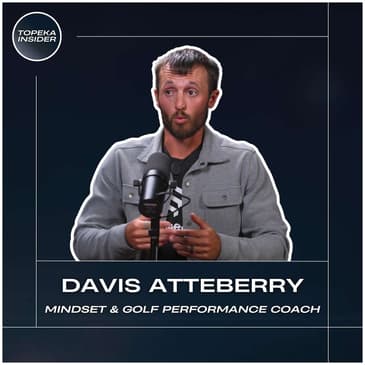
The episode with Davis Atteberry delves into the intersection of mental performance and golf, emphasizing how mindsets shape outcomes on and off the course. Through practical strategies like the four-step method, Davis illustrates how shifting language, breathing techniques, and awareness can facilitate deep personal change and resilience.
• Introduction to Davis Atteberry, golf mindset and performance coach
• Importance of mindset in enhancing performance
• Effects of language on emotions and performance
• Overview of the Four-Step Method for changing mindsets
• Techniques to manage emotions during play
• The concept of generational change in personal growth
• Practical advice for golfers and non-golfers alike
• Final thoughts on connecting mental fitness to overall well-being
________________________________________
0:00 - Mindset and Performance Coaching in Golf
10:14 - Changing Mindset Through Words and Stories
17:33 - Empowering Golfers Through Mindset Coaching
23:55 - Unlocking Potential Through Self-Empowerment
37:15 - Transforming Self-Love and Generational Change
51:18 - Shifting Mindsets and City Living
58:05 - Free Mindset Coaching Sessions Offered
________________________________________
Beyond the Podcast: 🎙️
Be sure to follow our Topeka Insider Socials below and check out our website for additional stories and articles pertaining to Topeka, KS
Website // Facebook // Instagram
Follow Your Hosts: 📱
Follow both Justin & Jon on their personal socials to get connected. They would love to connect and answer any questions about the show or their day to day.
Jon Griffith // Instagram
Justin Armbruster // Instagram
For Any Inquiries, please DM @TopekaInsider on Instagram!
For a long time, generational change to me really just meant I'm not going to have kids and I'm going to stop this lineage from happening. We think faster than we speak. Why are we afraid of failing? I'm going into the dragon's den with them, right, yeah, standing by their side as they slay their dragons, and we're going to walk out together with the elixir.
Justin Armbruster:Davis, thanks for joining us today. We have davis atterbury on the podcast.
Davis Atteberry:Davis, tell us a little bit about what you do I do a little bit of everything in the sense of I help take people from. Maybe they're feeling a little stuck, unsure of where they want to go with their goals, whether they're a golfer or a non golfer. They're trying to come back from an injury. They have a thing that's just pestering them that they just haven't been able to get over for a couple months, a couple years since childhood. So what I do is I take people through a process to dive into those things by looking at the root level the root being the words that they're using to go into what is happening to create change. So it's a observation to start, and then action comes after the observation occurs.
Justin Armbruster:So you said you're a golf mindset and performance coach. It's like golf therapy Golf therapy. I need all sorts of golf coaches.
Davis Atteberry:A lot of people start playing golf and they say it's a therapy to them, and a lot of people leave the course feeling like they just went through 12 rounds. Right, I feel rounds Right.
Jon Griffith:I feel that Absolutely. Yeah, I feel like golf maybe for some people it does therapy for them. On the other hand, some people it's the opposite. It like brings up all your rage, you know.
Davis Atteberry:And for a strong mix of the both it's. They're unclear of what it's doing Right and unsure of how then that is impacting, whether it is their game that they're trying to improve or their life outside the course. Maybe they're leaving the course and feeling grumpy, and then they're going about the rest of their family time and being a downer.
Justin Armbruster:You know why are we letting an amateur Guilty?
Davis Atteberry:Again. That's it. I took these observations onto myself. I made the reflection into my own life of what I was doing, what I was creating for the people around me, based on what I was doing and centered around golf and also centered around habits outside of golf and so taking what I've been through and changes that I've made through different processes and systems being able to introduce that to my clients to again go whichever direction they're looking to go in.
Jon Griffith:That's super cool, okay, so can you maybe give us like an example? So, like we know, you coach Andrew, which is how we heard about you, andrew Beckler and you're probably client privilege or something, but like what are some things that you're doing with a, with a
Davis Atteberry:golfer. So pro golfer, collegiate golfer, amateur golfer, high school golfers I have experience working with all of them and currently am working with a person in each of those categories doing a variety of this work, and that's why I you know, asking about titles earlier golf performance I look at the holistic side of what's happening. So I spent five years working at Lake Shawnee as an assistant pro, and majority of that time was giving golf lessons on the range or going out onto the course and playing. In that time, though, I was recognizing that people had issues that were affecting their game that was more than swing related. It was at the time I was looking at the body what is their physical capacity to move this golf club around in the way that they actually want to do so, and so I started taking my time and researching into golf fitness. Started taking my time and researching into golf fitness, and that was also a passion of myself, because I was going through my own health journey in that time. So, again, what am I doing for myself and how can this be reflected outward into these people that I'm helping? So, golf fitness I'm working with people on their mobility, their strength, power, while again at the driving range in these lessons I start okay, well, I'm going to communicate with you a lot outside. What are you doing day to day, working with an app system to again give them more of an experience versus? Hey, I went to an instructor for an hour on the range, right, that's the tips, got spoken to a lot, and then that it just goes away. Maybe it sticks, maybe it doesn't. Right again, I spent years doing that, yeah, to then understand how that was a failed model, to learn from it, to then reapply my coaching model into what I have today to be again more effective and more stick worthy. And that is again asking more questions instead of giving answers.
Davis Atteberry:Marriage advice yeah, questions pull, answers push, and so, if I'm trying to get stuff from my clients, I'm going to ask them a lot of questions and let them lead the way. I'm going to pull on threads If I start telling them immediately which, again, as a golfer, hey, what's wrong with my golf swing? When they would come up to at the driving range, they would want that, and though, if I give them that in that moment, I'm taking away their power to have any self-discovery in themselves to do that in the moment, and so I'm feeding that side of it. In that role, I started to observe that and learn that for myself, and so, okay, replacing the statements with questions what do you feel? What do you experience? What are you doing before? How are you doing it?
Davis Atteberry:Just simple questions, letting them start coming up with the answers for themselves, and so, whether they're an amateur golfer or a pro golfer or one of those in the middle, we can themselves. And so, whether they're an amateur golfer or a pro golfer or one of those in the middle, we can take what it is that they're trying to get to. Trying to lower their handicap from a 30 to a single, it's possible. Trying to go from a college golfer to a pro golfer it's possible. Again, are you aligned with your actions that you're taking to get there and what is influences?
Justin Armbruster:that is your mindset would you say that and I'm sure the answer is going to differ, but, you know, from a collegiate athlete to a pro or from an amateur, or from a high school to a collegiate. Would you say that, uh, the majority of work that an athlete needs is mental. You know there's gonna be some times like, yeah, your swing sucks, like you need to go put in some work. But would you argue like, hey, yeah, that's 50 of the problem, but the other 50 is you're a head case and you need to figure that side out. Is that kind of what you're?
Davis Atteberry:seeing yeah, there it's, it's is a. Is there an awareness around? It is important. Again, do they even have a thought that maybe there is because me saying and coming in hey, you need to work on your mindset, they're not going to receive that. Because they don't even realize. Like that's the thing?
Davis Atteberry:right, no, no, I just need some tips on my so it's like, hey, how many putts are you having in a round? Okay, and what if you could shrink that down by 5%? What would that do to your score? Just start that conversation. Well, what are you thinking about when you're over the ball and you're putting? Well, I'm thinking about I need to get it in this three-foot circle. Oh, well, what if, instead of thinking that you need to get it in this three foot circle, you tell yourself that you can put it in that three foot circle, shifting the one word? What does that do physiologically to the body?
Jon Griffith:So instead of I need to say I can do that One example OK, yeah.
Davis Atteberry:Taking one word need a pressure language word and replacing it with an affirmative, something that you can do. We're replacing it with an affirmative, something that you can do, and so the language has influence on the body, has influence on the physical state, the mental state, the emotional and the breath.
Davis Atteberry:So when you can get to those very minor things and that's where what I do a lot of people is asking them to write things down, so then we can stare at the words, we can see what these are, and so I think this is a good time to just say ask to you guys, when you hear mindset, what is it? What is mindset? How do we get better at mindset?
Jon Griffith:Well, I'd love to hear your thoughts, but I mean just off the top of my head. Yeah, mindset like, obviously, the way you think about things, your responses to things, your like underlying preconceived ideas about how things should work, so that you know when things go your way or don't go your way you're responding emotionally a certain way. You know those kinds of things. Um, you know, do you see failure as failure or as like an opportunity to learn? You know, all those kinds of things are like mindsets, you know.
Justin Armbruster:I think, kind of like when you're, when you switch your mindset on something, it's what's your default reaction to when a situation comes up. You know, like when I you had to, whether it's make a putt or something in work, you know my default is this wasn't a failure. You know we're going to grow from this. This is great, versus maybe having to work my way to that. You know, my first initial thought is I need to get this put within three feet. That way, you know, I can count as a gimme and I can pick it up, or it's hey, I'm going to put this within three feet, I know I can do this versus having to kind of work your way there.
Davis Atteberry:And it's not saying that just because you change one word, it is going to make it appear and make it happen Right. And though, what blocks are you pulling down by changing that? And so, and the Enlifted definition of mindset, enlifted being the coaching certification that I went through Again, it starts with personal development and then it turns into coaching, but it's tech, it's tools that you use and their definition of mindset, because if you Google it, you're going to get 15 to 17 different answers on what is mindset. Their definition is mindset is a story that you tell yourself.
Jon Griffith:Yeah, it's great.
Davis Atteberry:Mindset is a story that you tell yourself about yourself.
Jon Griffith:Right.
Davis Atteberry:And so what is my story? I'm telling myself around golf. So what is my story I'm telling myself around golf. What is the story I am telling myself around the relationship with my wife? What is the story I'm telling myself around the relationship with my parents? What is the story I am telling myself around my relationship with money? So, again, mindset is a story that we tell ourselves. Stories are made up of words and so when we get in, get down at the word level of things. That's how you shift mindsets. It's not about changing mindsets, it's about changing words to create that shift for a new mindset.
Jon Griffith:Yeah, that's actually like practical, like you tell someone to change your mindset. Yeah, what do I do Like, what do you mean? How should I do that?
Davis Atteberry:Exactly. And again my experience. I worked in the mental health field for five years and being on that side of saying a lot, of telling a lot but not being able to have that real, practical thing Again. Having this tool for myself in the teenage years, in the early college years, would have alleviated a lot of feel, neglected feelings and emotions, and though those are now learning opportunities for me to use. But by going into these stories I can again go into things that happened when I was 12 and release emotion that was still in the body. And that's what this stuff does, because the thoughts that we have attached with the emotions that we had in the moment, and so that thing that happened in high school is still feel real when you think about it Now. A lot of people numb themselves out to those things.
Davis Atteberry:Again, I was great at stonewalling. I was an architect at putting stone walls of emotions up. People would not know what was happening on the outside At least that was my perception of it, that I was rather good at it. I could wear the different masks and again, at age 27, I said I'm tired of wearing these, I'm tired of these walls being here. If they don't come down, what am I even possibly able to do? What type of future can I live if I have all these stuck things here that I created just from years and years? But I didn't want to talk about it. I talked about it with people before. What was that going to do?
Jon Griffith:Sure.
Davis Atteberry:Went in circles. I want to change. I found a technology that provided me that change as listed tools that has given me daily practical changes to continue this to where again I have been able to shift myself from going to not seeing a future to creating a future, to thinking I'm a victim of my past, to again my past is my past and I have learned from it. So being able to dispel the victim mindset around what has happened and even though in the time it could have felt like being a victim was the thing, I don't have to carry that with me, right.
Davis Atteberry:If I choose to change the words and the way I think about it, and it's a lot easier to look, think about things when we put the words on paper.
Jon Griffith:Right. So what was the technology that you're talking about?
Davis Atteberry:And so that's what Andrew mentioned briefly in his interview with about uh, and so that's what andrew mentioned briefly in uh, his interview with you guys, and that's the four-step method.
Davis Atteberry:The four-step method is this process of taking thoughts and memories in our heads, whether they're true or untrue, putting them on paper and creating this emotional detachment from it. So, so, when we are thinking about things again something that's just been annoying us for the past month work task, whatever it may be it's right here in our face. When we get it on paper, it starts to pull away. And then, when we read it out loud, that second step pulls away just a little bit more. Then, when we slow that pace down by 70%, now it's out here. Now we can have a little bit more bigger vision of what's happening. And when we add that breath in there at every period, commas and sometimes other sentence breaks now we're sitting in the theater watching what's happening. Observer mode no longer in the story. Again we can be able to observe, learn from it now, take away points and then again choose to reframe our thinking, reframe our mindsets.
Davis Atteberry:Okay and so the four-step method is the process of taking what's in here that is infinite, and swirling around, putting it on paper and creating a finite story. There is a start and there is an end to it. You title it like it is a title of a movie. You write it conversationally Bullet points don't do it. You write it out. You describe the feels again as if you are telling it to someone. But we speak faster than we write, we think faster than we speak, so we slow down the storytelling process and so again, if we struggle with just making decisions.
Davis Atteberry:I have all this stuff going on. I just don't know I'm going to handle it all. Pick up a pen, write all that you have to do down. Make the list Cool. What do you feel after that were unaware of before you did? And again the unaware of it because we're just used to what we've been experienced, what we learned from when we grew up, how we were exposed to different things. Some people may have more things to work on than others. Some people have more calluses in their life than others and some people have these. If you, if you work out, you understand, you know if you tore a callus before, like how irritating that can be. Well, some people are just going and just picking out those things and just because they're just rethinking about it, versus again taking that time to smooth it out, stop running into it so much. It's not about forgetting the past. We make clear of it, put it aside and then you can look back on it and speak of it.
Justin Armbruster:That's super interesting, super cool. Here's my question as you said, you are a golf mental and performance coach. Are you doing that like over Zoom or like I feel like you know having a conversation with you one-on-one is so much easier to you know process this out, but how does that work? You know online?
Davis Atteberry:Yeah, zoom and Google Docs is how I operate my business for the majority part, so I can do this work in person. I could. If there's something that was bothering you top of mind here, I could. If there's something that was bothering you top of mind here, I could slide this notebook over to you and have you write it out If we were in different States, like I have quite a few clients on.
Davis Atteberry:Last night I was on a client call with a girl that's in South Carolina and zoom and Google docs we were able to go through our process of for her. She was looking at what it was she was trying to achieve, so she wasn't feeling stuck. She's in her third year of playing collegiate golf. She again, she knows she's good and so she was just struggling getting results for all three days of competition and so I had her write out what do you want the outcome to be. She never puts in those words on the paper before, and so we did the four step method there and we go from a feeling of a little bit of confidence, slightly unsure if it would actually happen. To ownership power yes, it can happen. And surrendering if it doesn't happen. And to golfers how can you surrender to the results and just be out there and be present versus thinking about three shots ago or three shots ahead from now. And so, as again as golfers doing this, when I can get the words on paper on a google doc, again it slows down the process so they can see it.
Davis Atteberry:I'm in tune with this stuff because I've been learning it, so I hear the words when people speak. They're not observant to it yet and even if they've been learning it in the real time, their nervous system is hijacked. If they're doing it a lot, they go into amygdala hijack, and that's just when, again, their reticular activating system is focusing on all these things that are going wrong versus, again, things that can go well. And so it's retraining your reticular activating system to look at what you do want Again for her. What is the outcome? What does it feel like? So we wrote a letter from her future self. It was a day after competition. Describe it to me. What are you feeling? What did you experience out there? And so again it's her experience to have. I helped create the space and hold that space for her to have it. But again it's her versus me saying, hey, you need to go out there and think positive for yourself to play better golf. Right, right, yeah.
Davis Atteberry:There's coaches that do that and some people respond to that. I'm here to again give people the tools to take this stuff now, not just this one time, but I can do this every time. And so a lot of people journal, a lot of people write things down. How many people actually read out what they wrote? How many people write things in a journal? That is more? Woe is me.
Davis Atteberry:And again so now you're just writing down your problems. Sure, you're going to stare at your problems. What good is that? And that's where I was again as a college kid who I was like I'm trying to get past stuff that I went through, but I just can't. And I tried journaling and I wrote down my problems.
Jon Griffith:I'm like, no, like this, isn't it Like?
Davis Atteberry:nothing changed Add them more. I'm going to just go numb it out some more and instead, again now write it out, read it out some more and instead again now write it out. Read it out loud okay, I bring some. My coach says peppers burn twice they burn coming in and they burn coming out.
Davis Atteberry:And that's what I, that's what this method is like. It is because, again, that burn coming in is that initial moment, that initial story that we have about whatever it may be, and it burned and it's just been simmering in there ever since. So it burns again when we rewrite it on paper and because, again, going back through it, we're going to remove those emotions that have been stuck in the body, body. We're going to create a shift in the nervous system as we get the breath included in there, to release it from the body to where, then, the body is no longer holding it. For however many time I've used this stuff with people and have complete postural changes with someone.
Davis Atteberry:And again, just no hands on body. I'm over zoom screen and they're describing to me their physical changes that they have, and then checking in with them two weeks later, still there. Still on the positive, they haven't had it. And so again, the power that we can hold in ourselves when we can reframe and rethink about our stories that we're telling ourselves on a daily basis.
Jon Griffith:That's great. So again, so, just so you can. So what are the four steps?
Davis Atteberry:So you're writing it out, you're saying it out loud yep, step one is title it and write it, write it out okay and step two is read it out loud, slowly, with breaths and stuff, or is that?
Jon Griffith:that's three?
Davis Atteberry:yes, step two is just read out loud, okay, and then I asked some magic questions of what did you feel when you read it out loud, right, okay, where did you feel it?
Jon Griffith:so you're basically walking them through hat, you're forcing them to process and walk through. Something happened, instead of just compartmentalize it.
Davis Atteberry:File it away. I'm going into the dragon's den with them, right yeah, standing by their side as they slay their dragons, and we're going to walk out together with the elixir yeah that's.
Davis Atteberry:That's what we're doing in this process. If a person does not want to go there, I don't want to go there. If they're wanting to go there, I will gladly go there with them because I have the tools, which is all. It is again asking questions, and the most important one is low and slow breathing, by keeping the breathing regulated low and slow and not becoming trapped and entrained to what how their breathing pattern is, because more than likely, if they're feeling emotional, their breath is going to be up in their chest, maybe through the mouth and shallow.
Davis Atteberry:They're feeling some tension in the shoulders and you can again see it in there right again some we've been in rooms with people who are like that and maybe we can imagine a time where we actually kind of took on that feeling that they were feeling. You know, their worked up, overwhelmed feeling came on to us and I'm kind of feeling a little tense and tight right now. Yeah, yeah, can you be the low and slow breather? Can you be that and actually regulate the room around you? Because in the laws of entrainment you send off energy and people can pull into that. So if you're regulated, low and slow breathing, it can help them kick it in. And then again, trusting the process of, if they write it down and do the stuff, it's going to happen.
Davis Atteberry:Again my then is going in and changing words. How can I take this story of hurt and creating an affirmation out of it? I don't know Like we can again go on Google and get a list of affirmations, but they have no meaning to a person and that's why they don't usually work. And so I can take a sentence that came out that they wrote, and look at the words because there's not all this other mess around it, right, and it could be a self-empowering sentence of I made it through that, and then that's a sentence that they can read and breathe every morning. Right, right, and again, change, I make it, I am making it right.
Davis Atteberry:Crafting it to how they want to be powerful. I'm a person who makes it through it, yeah.
Justin Armbruster:That's so funny. You say that I read a book in the last year, a business book pertaining to real estate. Um, that was talking about goals and setting affirmations and they talked about how goals are. You know, hypotheticals. We all have goals, you know. But there's a difference between having a goal Like I want to sell this many houses versus he encouraged us in the book and I did it this year and I saw a huge difference to not say I want to sell X amount of houses. It's, I am an agent who sells this many houses a year and part of what they had us do is write it down 10 times a day, fill up a page on it and every morning I wrote it down I'm an agent who sells this many houses, yada, yada, yada, and it was empowering. How many houses? Don't worry about it.
Jon Griffith:John Not enough.
Justin Armbruster:Not enough.
Jon Griffith:Do you hear that? Do you hear that language? Come on, Davis. Not enough houses.
Justin Armbruster:Let's put it this way we're going to make the affirmation a little bigger next year.
Davis Atteberry:There's no unrealistic goals, there's just unrealistic timelines. And if we haven't achieved a goal, we try to negotiate the price of what it would take to achieve it. Say that again there's no unrealistic goals, there's just unrealistic timelines. I think it's a Tim Ferriss quote. Is who said that and if we didn't achieve a goal. We tried to negotiate the price it would take to get there. Love it.
Jon Griffith:Clip it yeah, okay so what were you?
Justin Armbruster:So, anyways, the shift from cause we've all set goals before but the shift for me from saying you know, this is my goal, I hope I can do that one day to like already setting up like I can do this, I'm going to do this, I you know, I. I am this kind of person who sells this many homes.
Justin Armbruster:It changed my entire perspective on maybe, because what it was, too, is like you know, we set goals, but we also we have a goal we write out on paper, but we also have a goal that we know is maybe realistic. You know, my goal is to sell this many homes. You know that's what I'm putting on my whiteboard, but I know I'm probably going to sell this many, and you know I'm okay with that. And so there's a separation between you know what you really think you are versus what your goal is, and so this thing is telling you hey write down.
Justin Armbruster:I am this agent who's going to sell that, who sells this many homes. Like you've already done it past, tense Cause, then it will help you actually get there.
Jon Griffith:Well, it's like atomic habits, like identity based yeah.
Davis Atteberry:Yep.
Jon Griffith:Yeah, that's good.
Davis Atteberry:A hundred percent and again it's all great. And so when you can start to be accurate and intentional with the words that you're using to create all those sentences, the word hope, it's soft talk. Hope maybe, think, sort of kind of possibly, perhaps. Anytime you insert soft talk into a goal you're, you're take, again it goes back to that power thing, the chance of you doing it go less likely. The way to eliminate soft talk is just scratch out the word. So again you took out the word hope and you said I am doing this, so that's it. So when we can understand that these soft words in our language are creating conflict, because it basically says oh, maybe, how? Probably not. So it's not a big deal if I don't achieve that, when some part of you inside deep, and that's the soul side, wants that and it knows it's possible. But this soft talk that we use is the way for our ego to try to say and don't try for that.
Jon Griffith:I'm comfortable with what we have on here, and so you find that's like like hedging against failure, like I don't want to fail, so what is like?
Davis Atteberry:why are we afraid of failing?
Jon Griffith:Well, right.
Davis Atteberry:Yeah, I again, in reinterpreting it, I have reinterpreted failure as I fail forward. And so if I come across something I'm failing forward, I'm not going backwards, not negation, acknowledge, I am going forward. And so, when you can pay attention to again like and it's easy to say like, oh, it's a learning opportunity failure like failure, still failure you, you didn't quite achieve what you wanted to do right it's things. It's a road bump right again.
Davis Atteberry:it's just, it's up to you on how big of a bump you're making it, and the words we use either create mountains or they create molehills, and so again I have this huge. How am I ever going to get over this? How can I get over?
Justin Armbruster:this Interesting, I think a lot. What I think is most interesting about this conversation that we've had so far, and where it is headed, is most of our listeners aren't golfers and I think there's so much about what you do that goes. You know. You said golf is your niche, but I think there's so much of this that goes beyond golf and there's such a wide target audience for what you do. You know whether you're a business owner, a pastor, you know just a husband who you know has, you know wants to be a better husband or a better father, and so you said you work with lots of different clients. Golf's your niche, but you have others. Can you share what kind of industries or what you know? Yeah, a hundred percent what they?
Davis Atteberry:do, yeah, so I have people that are business owners, business operators. I have therapists that I work with and, again, as a, as a uh great workforce that often take the load of what their clients have onto themselves, being able to have self-care routines for themselves. Like, again, that's we. We take this stuff, we clear themselves of it to where it doesn't impact their own lives. So again, um, yeah, business owner, I blew some blue collar workers uh again. Uh, wood cutters, uh guys that, wow again, are trying to. They came to me initially because they had to make some pains in their body and they were looking for some mobility routines, and then I give them this other thing as well. You know, give them what they come to you for and then sprinkle in the extras.
Davis Atteberry:That's something I've learned as being a business owner, and in doing that it's hey, what if you say this sentence before you start your mobility routine? And what if you do it with some breaths before Cause? Then you can start to unlock your body instead of just hopping on that foam roller every night and bashing out your quads because they're tight and so down. Regulate your body first. Let your body know hey, we're about to get some movement in and I'm going to take care of you right now and then go about whatever it is you're going to do. And so it's building a connection with oneself is what I'm doing with this work, and to have a full connection with yourself. It starts, it's the physical body, it's the mind, and when you have those online, you can connect with your soul.
Davis Atteberry:And so, if I can have people set certain practices for themselves again, not my practice, it has to be their own. They have to decide. I can give them options, I can introduce them to different things, and that's what I love. I feel like I'm a middleman for a lot of things. Hey, check out this resource. It's been impactful for me. Hey, here's this uh, I know I'm not a mom and I have clients who are moms. Hey, here's this, uh girl over here, this coach I highly respect. She's great with pelvic floor exercises. You should follow her and check it out. I don't have to have the answers and I can be that person in between there. So again, maybe that's the biggest thing I learned two years ago was that there's so much outside of here in Kansas. There's so many other things that you can learn, and that's when you know COVID hit and everything was online and you realize like connection outward for me actually grew, and then that's what allowed me to grow in my own skills personally and professionally.
Jon Griffith:I like that, I like the how practical it is. Like I like that You're the uh, how practical it is. Like I like that you're right, cause it can be easy. I can't even just think about my kids and how, like I have a six year old and, um, you know, sometimes I can get a little little dad on him. You know where I'm frustrated, like hey, man, come on, why don't you like take this risk? Why don't we try this thing? And I can get on his case. And sometimes you know, like what you're saying about maybe an athlete, like hey, why don't you just be more positive? And you can just like drive that into the ground and it doesn't really help you know, like, why don't you do this, why don't you do that?
Jon Griffith:And it's like, hey, give me some like very practical steps and I can try those. But if you just tell me to be a different kind of a person, it's really hard to do that. But if you say, hey, why don't you like stop and take some breaths, or why don't you write out this story and why don't you like read that story out, those are all so practical, but they are accomplishing what you're saying, like you're rewriting the story you're living in and which rewrites the way you see yourself and and all that it's. I like that. I like how practical that is. Um, I have a question.
Justin Armbruster:My wife probably won't watch this. Who knows, maybe she will. Something I always get hit with is my wife or someone saying I'm so stressed, I'm emotional right now, I'm so stressed out. My go-to answer is never good.
Jon Griffith:You should stop being stressed. Don't worry about it, just relax.
Justin Armbruster:What's got you so stressed? You know what's going on. What is there to even be stressed about? What are you talking about? We're great, this is awesome. This, what are some? Oh, how naive we are as husbands. Exactly, no kidding, what are some? I think you said empowering questions that I can. You said, pull out of her. You know what she's going through. What would you, how would you handle that?
Davis Atteberry:Yeah, communication with spouse, that's again. I have leveled up myself and my ability and it's allowed our marriage to survive and again go from it survive those early years and now it's in that thriving mode. Simple starting point Do you want support, support, solutions or space? That's the initial question. So they, they come at you and they say that cool, can, can I give you support, can I give you solutions, or can I give you space right now?
Davis Atteberry:So again, whether give them the option, tell you if it's space, then you're gonna be there next to her and it goes back to regulating your breath and you're going to focus on not getting attached to her breathing level and focusing on a low and slow breath. So what I mean by that is that diaphragmatic expansion is starts low and the breath moves up, versus it starting up here in the chest. And so, if that's what, if that's what her answer, you just stand there and breathe and do that and grab her a glass of water, whatever, whatever, whatever it is that how space is to her. It could just be sitting on the couch next to her. If it's solutions, cool, can you give her some solutions to it. That's there, or hey, what? What do you think solutions could be what you know, are there any solutions that you want out of this?
Davis Atteberry:And just ask her that question and support again that's empathetic being tacked in in it, not that it doesn't have to be that supportive. Maybe they want that cheerleader, maybe soft talking knowledge there, but oftentimes people don't want that cheerleader. You just want that person in their corner that they know is supporting them, not bonding in that trauma that they have. So if you can regulate yourself in that moment or again you are expressing hey, I'm stressed from work. I had this meeting with the client. They no, showed me and you're up, regulated as you're telling it before that moment Again, this is practice. Can you slow down? Slow down that rate of speech to where then you're just conversing it, versus feeling that emotion of the situation and then transferring that emotion back and forth. So something that's been important for me has been creating generational change, and for a long time generational change to me really just meant I'm not going to have kids and I'm going to stop this lineage from happening.
Davis Atteberry:So, now again, because I that is generational change. That was going to be it, that was my, that was the mindset, that was the picture in my head of my solution to it.
Jon Griffith:You really, you'd actually thought about that. I'm just, I'm not going to have kids.
Davis Atteberry:To let have this experience not happen to anyone else. Wow, that's it. And that replayed in my head for 13 years Again, when I changed and actually started to accept myself, went in and did some inner child healing work of moments again utilizing this method and others to be able to have this love for myself, that now I have love myself, I can actually love others. A lot of people are going through life without self-love and they're trying to rely on love from others to fill them up when really you're not able to accept fully accept love from others if you're not loving yourself. And so that's where I was in my relationship and why it was actually creating this conflict of she wanted to get close to me and ask questions, yet I wasn't willing to be in because I was not willing to be in on myself.
Davis Atteberry:And so doing that again, that's being able to create generational change to now, then I can teach my future kids these answers, these skills, to then prolong themselves In the meantime. I'm going to educate high schoolers, I'm going to educate college kids, I'm going to educate people in their thirties, their forties, to educate people in their 30s, their 40s. I got clients in their 60s that I'm giving these skills, because what's the biggest thing on death bed is regrets. Regrets are, a lot of times, stories kept in the head. So if we can shift a story that we have going on sooner rather than later, that's, uh, I'm going down. That road is where I'm choosing to. And so, uh, yeah, the the leadership of being a, you know, being a father, uh, fatherhood, uh, what are you passing on to kids? What are you not just passing on to your kid, but generations to come? I got into permaculture this past year, and what is that? Permaculture is a form of gardening, but you're thinking more holistic of again, what does what I'm doing to the soil today affect seven generations from now?
Davis Atteberry:How can I turn problems into solutions, and so it's using your land to your fullest ability. I have a. We have a small place here in town, a couple not too far away from here, so it's not like we have a huge plot of land, and though I treat it, though, as my duty to take care of it, because I have made this agreement with this, all that is around me, my wife that is my partner, with this, all that is around me, my wife that is my partner.
Davis Atteberry:The dogs that I bring into my house, these animals. It is on me to give them the love that I want to give.
Jon Griffith:Where does that come from? Like, how are you coming to this place of like, you know, cultivating the land, like, like, where does that? Was that just like a cool idea you came across, or no, it's again influencing.
Davis Atteberry:My dad was a veterinarian, so I grew up on farms and seeing farms and seeing different processes of how cattle were raised, and so my health journey played a big part into this, because where I was physically and where my with my health was influenced started to be changed when I started changing the quality of my foods which comes from the quality of the ground that that food is on, and so that's why I became so passionate in mind.
Davis Atteberry:Again, I started just having conversations with people who are already doing these things. Well, I can introduce this practice here. I've seen what you've done with your third of an acre. My coach, dave, has this amazing homestead on a third of an acre in Virginia and again he can become self-reliant on food and produce and have a connection with all that he is consuming, versus just going out and getting some burger from a random place because that's food.
Jon Griffith:Not all food is equal Right that's food.
Davis Atteberry:Not all food is equal Right, and so that that's that's why my passion is, because I physically, have changed how my body feels, uh, again, going from chronic pain, uh sick and disconnected, to connected and thriving for myself, and food and what I've consumed has played a huge part into that and will continue playing a part into that.
Justin Armbruster:As a full-time realtor, you know, business owner. What is some generic mental coaching you could give me on the spot?
Davis Atteberry:how many clients do you have today?
Justin Armbruster:I'm probably working with 10 to 15 right now okay, how are?
Davis Atteberry:is there any that you're just not really looking forward to getting the phone call from? Absolutely?
Justin Armbruster:okay, what's?
Davis Atteberry:their name.
Davis Atteberry:His name is john yes, I had an idea that could be, and if there is one, okay cool, write that out, because you keeping that inside again, whether it's just like, uh, they're him and his wife just kind of, are always on different sides of where they want, and so it's kind of a headache of trying to kind of just get it get the information that they want, and so you can just kind of write down, kind of just get it, get the information that they want, and so you can just kind of write down your initial thoughts around it, because that allows you then to show up in conversation without this running around floating around TV show that's just playing in the background.
Jon Griffith:Right, you've got it out.
Davis Atteberry:You've turned down the volume on it and so then it turns into okay, well, what if you could actually take this into your clients? Have your clients ever written down what they're looking for and going through? Okay, hey, I want you all to write out what is this house that you're wanting to get? What are the aspects of it? Don't talk about it. Get it on paper for it there.
Davis Atteberry:And so again, real quick, real time, right there, no-transcript day, versus just thinking, oh, it's like maybe it'll happen, maybe it won't. It's like, no, you wrote it out, so it can happen. Yeah, it's again getting the frequency of your body to be in alignment with the frequency of your words, and then the things around you appear as you want them to be I love that.
Justin Armbruster:Yeah, I'm gonna do that. Actually, I love the idea of you know, it's not in my line where it's not always a numbers game. Sometimes it's what kind of quality of life do you want to have?
Justin Armbruster:you know you need to sell you know this many kind of homes. You know serve this many clients. But it's also what kind of realtor do I want to be in five years? Well, I'm the kind of realtor that I want to be, the kind of realtor where you know I'm not chasing and begging for business. People want to work with me. You know I have time to go coach my kids' soccer games or go do other things and you know writing down, you know being a pastor and another way to look at it.
Davis Atteberry:Just change, change the view of how we look at it. Ask yourself these three questions who have I been? Who am I now? Who am I becoming? And again, who am I as a pastor? Who have I been as pastor? Who have I been as a realtor? Sure, who am I now? Who have I been as a father? Who am I now as a father? Who am I becoming as a father? Who am I as a son? Who was been as a father? Who am I now as a father? Who am I becoming as a father? Who am I as a son? Who was I as a son? Who am I becoming as a son?
Davis Atteberry:You see, we can ask these three questions into many, many different areas of our lives to begin create a script that we want to live by, versus just some unconscious thing going on in the background that is based off of different experiences we have been through or put through by others.
Justin Armbruster:What are three things amateur golfers need to be doing to have a better mental game out on the course?
Davis Atteberry:they need to be practicing golf at least one time a week.
Davis Atteberry:Meaning they need to be just touching a golf club. If that is a goal of theirs, they have to have just some sort of connection with this club. It could be juggling golf balls at home, it could be chipping some wiffle balls, things like that, but building just a confidence with your clubs and these things that you're holding. Because, unlike your other sport, you know you have your racket sports, but you know there's no reaction time really in golf, it's the all the time in between. So to be a better in that mental state, you have to just have confidence with that equipment that you're using as you come up to it. So the second thing is is being able to say what you want to do. What are you trying to do in this moment? You know, is it I don't want to go in that water, or is it I'm hitting it over here in the fairway?
Davis Atteberry:Two different statements could be this exact same hole in the same thought. But someone you're thinking the don't you're thinking of, that negative and reticular activating system is more than likely going to bring that about or you'll double cross it and miss it way over. So think about what it is that you do want. And then, lastly, it's breathe. Know how you're breathing and it starts practicing it off the lot more movement in the top hand and in the bottom hand. Then you're in a spot where your nervous system is upregulated and your number one goal is to get that nervous system downregulated, getting it again low and slow. I've said that a couple of times now and that's because low and slow creates the flow. High and tight creates the fight low and slow creates the flow.
Jon Griffith:High and tight creates the fight.
Davis Atteberry:If you're trying to a little takeaway, if you are trying to rotate, which golf is a rotational sport. It is not lift the club and right throw the club with the shoulders.
Davis Atteberry:We use our body and our torso to rotate oh, lots of ladies to swing a golf club 100, so many, but you get a breath that's trapped in the chest. You turn, you're going to have some restriction there. So if you have a breath that's slow and slow, it's a lot more easy, a lot more fluid. And what I'm getting at, though, is that you're going to make so many golf swings over a round of golf, and if, one time, your breath is slow and slow, one time your breath is high and tight and is up and down, jumping around, you're going to have an inconsistent golf game. If you can bring consistency to your breath, every single shot you take, you will bring consistency to your golf game, because, whether that's score or reactional or responding, that's what you're doing, in that you're able to change that moment, and so something different is going to happen, and again, to go about a round of golf reacting better, and responding better compared to poorly to some, that correlates a better round of golf. Maybe the score didn't adjust, but they said oh, I didn't throw my clubs three times. I said. I said good job to myself four times this round. Yeah, that's awesome, and that's where I get people to track. You know, fairways, greens, things like that. That's what people are used to. Counting putts.
Davis Atteberry:Now, when were moments that you felt uncomfortable over the golf ball? Mark that down on the on your scorecard and then, after your round, you go in and say, okay, what was I feeling in these moments? What happened? And because again, that is where answers occur is when you can go into those experiences. But just neglecting the experiences, how are you going to learn anything? So I'm going to give one more for golfers what did you, what did you learn on the golf course? And again, non-golfers what did you experience in your day-to-day? What did you learn in your day-to-day? But without acknowledging the experience first, you're going to have a altered image in that learning moment, because maybe you're trying to learn something from an upregulated state and you're letting your emotions dictate what you're learning versus what reality is.
Davis Atteberry:And that's what people who have a victim mindset do and it's all based on language, right, and, and that's and I want to I want to share the definition of the victim mindset, because victim mentality is within everyone. People have different levels of it, though, and we can turn the volume down on it, and we can also turn the volume up on it with the words that we use, and it's not to say that there are no victims to situations. It's, again, it's this mentality of different words that we use, and so, if I can share that definition, with you.
Davis Atteberry:So the victim mentality is an acquired personality trait where a person tends to regard himself or herself as the victim of negative actions of others, even in the absence of clear evidence.
Davis Atteberry:The victim mentality depends on a habitual thought process and attributions. So if you heard that, I want you to pause, I want you to rewind and I want you to listen again. And then I want you to pause, I want you to rewind and I want you to grab a pen out and write that sentence down, along with the following one, Because you writing that sentence down is going to create instant change. You are going to become aware of something that has a definition to it that maybe you were unaware of before, and now that you know it's there, you are no longer nescient to the idea, the unknowing of something. You are choosing to be ignorant if you do not choose to make an option about it. And so nescience and ignorance, the not knowing of something and making a mistake, the knowing of something and making a mistake. We often use ignorance when really we just didn't know.
Davis Atteberry:So we're not ignorant to that. But now that I've given this definition out two times, that, now they are aware of. Oh, there's this thing called victim mentality, mindset, and sometimes my words feed that and I can turn the volume down on it and I have it, I get it, we all do, we're human, and it's not about killing it. It's again, it's about turning the volume down on it and then recognizing if that volume is getting louder and when it's getting louder, what situations are happening to, where then you can again prime your system to be its best and most fluent self. And this is working out your mindset, just like you work out your body. And that's what is I'm wanting to create the habitual habits for people.
Jon Griffith:Right yeah.
Justin Armbruster:I remember Andrew mentioning that in his episode where you know he hits a ball super, super well, just goes a little right and you're behind a tree. You know, don't be a victim of that circumstance. I'm going to punch this out. I'm going to get up and down. I've done it before.
Davis Atteberry:It's not going to be a problem and again it goes to the word level, because how do I change Now? How am I not a victim of it? When my dad was sent to prison, he did that to us was a sentence that I had going on in my head and I had written down, and in that sentence I am the victim of what's happening. When I cross out that word us and I replace it with the word him. He did that to him. That, really, again, was one of those releases. For me, it's like oh yeah, that is it, and so that is how I choose to no longer have the victim mentality. I went through my experience and I again, now 30. That was two years ago when I had that story. Translation can now be main character versus this npc. That life is happening to them versus life is happening by me. Yeah.
Jon Griffith:Well, it's interesting that, like in reality, both are true, right, in some ways.
Jon Griffith:Like things do happen to us.
Jon Griffith:Like you should have grown up with a father in an ideal world and that is something that happened to you.
Jon Griffith:You know what I mean. You didn't choose that, but the reality is like it seems like the victim mentality is puts you in a place where you aren't able to do anything about it, where like, yeah, like it is true, like your dad did do that to you, like he went to prison and left you without a dad, but you still have agency, you still have the ability to do something. You're not like you don't need him to fix it, you can still move forward 100% Right, yeah, cause I think that's where a lot of people get stuck is like, like some people might be legitimate, like victims of some bad thing, but they get stuck in a mindset where it's like, well, now, because I'm the victim, now you have to solve this for me before I can do anything with my life. And you're like, well, no, yes, we can acknowledge that what happened was bad, but you still have the ability to move forward and make something with your life Right.
Davis Atteberry:Yeah, it's. Identifying with diagnoses is a common thing that I saw in the mental health field. I'm anxious, I'm depressed. I'm feeling anxious. I'm feeling depressed. Those are all feelings that people have. I am currently feeling anxious. I'm feeling depressed. Those are all feelings that people have. I am currently feeling anxious. I am currently feeling depressed. What story am I telling myself now?
Davis Atteberry:So, instead of, as a professional, trying to tell someone, oh, you shouldn't be depressed. Or getting them to expel all the reasons why? What if we start just getting people to shift the words that they're saying to themselves, one thing at a time? And what change could that bring?
Jon Griffith:Well, davis, appreciate it. Man, we just want to ask you a few questions about life in Topeka. Let's do it. So, first off, what are some things you would like to see more of in the city of Topeka?
Davis Atteberry:I'm a big fan of outdoor recreation that doesn't have to be involved around sports. I like parks. I want well-kept up nature areas. Let's go. How many potholes did?
Jon Griffith:you hit on the way here.
Davis Atteberry:Potholes or overfilled pothole filled spots or underfilled pothole filled spots.
Jon Griffith:That's when they know it's going to be a while, so they overfill it. They're like we're not going to get to this one again for 10 more years, so let's just overfill it, my drive was under a mile and I had over 10 bumps. I was having to swerve around. How often are you hitting construction these days?
Davis Atteberry:I tried to go to my sister's house the other day and out by Lake Shawnee and I had to reroute myself three times because Fika Boulevard had three separate spots of traffic on and I couldn't get across.
Jon Griffith:Yes, yeah, so so we're in central Topeka right now and I same. I was trying to go to Lake Shawnee for my kids soccer games and I have to drive around and zigzag around all the main roads because, like three of the biggest intersections are all closed at the same time. You're like, come on Topeka, like I'm glad you're trying to fix stuff, but let's think about how are people going to get places Like come on, let's use our planning skills.
Davis Atteberry:Let's write about this stuff to make some clear plans versus thinking about the plans. We should have the city planner on.
Jon Griffith:next We'll have the city planner on next. We should have the city planner on next. We'll have the city planner on next. All right, so are you a coffee guy? I'm a coffee guy. Yeah, Favorite coffee place.
Davis Atteberry:The one I frequent the most is PT's in Wheatfield Village. All right, because it's close to my home Gym, my garage. I have had a home gym for over nine years now. I've been developing it.
Davis Atteberry:Yeah, using a single car garage. Let's go Again. My gym walks with me because I always have my body, that's right. I have learned how to use my space efficiently to again, whether it's making videos for my clients or having clients come over and training in session. I also utilize parks over and training in session. I also utilize parks I do. I'll take clients out to parks crestview park oftentimes it's close to my house and get some time out there in the sun, in the grass yeah, it's great favorite restaurant in topega favorite restaurant is I really appreciate uh, jake king and the tea box and way the food, the food that he has there uh, he, he's got got good food um.
Davis Atteberry:Close second is zhong's thai kitchen.
Jon Griffith:That's, that's probably every week, literally every interview. That's where my wife and I are going, getting our, getting our food from that's why. That's why no one can get a reservation. All our guests are getting reservations.
Davis Atteberry:Oh, I've never had a res, I bought. We only do take out there oh yeah. And it's great. It's always a pleasant conversation. I respect them and, yeah, it's good Thai food.
Justin Armbruster:I love how you said the tea box under restaurant, not even from like a simulator or entertainment, it's like I just love their food yeah.
Davis Atteberry:Their food is great Lunchtime for events. They do catering. Yeah, their food is great Lunchtime for events.
Jon Griffith:They do catering and Jake is very much wanting to serve and help and create that positive experience and he is so good at it with his team that he has with him. I agree, they're really cool people. I really like them. Home Depot, Lowe's or Menards.
Davis Atteberry:Lowe's this year, because that's where the majority of family got us gift cards too, for christmas okay, let's go. Yeah, and so that's where I was leaning at this past year, dude the, the, the, like you know tool uh place. Gift card is a is a game changer it's such a hey, what can we get you?
Jon Griffith:yeah, because I'll find something to use there, absolutely.
Davis Atteberry:Absolutely.
Justin Armbruster:Yep, love it, love it. Awesome Davis, thanks so much for joining us.
Davis Atteberry:Appreciate it Appreciate, you guys Appreciate you guys for having me and giving me the space to talk.
Jon Griffith:Oh, where can people find you on social media?
Davis Atteberry:Yeah. So Instagram, you can find me at davisatterburycoaching. You can find me there. And, as an extension outward, I would like to gift three free sessions to the first three people that hit me up after listening to this session to experience what this method could be like. So, again, whether you're trying to move away from something that you're stuck in or you're trying to figure out how to get somewhere that you're trying to go faster, it could be for you. So reach out, you get a free session with me and experience what this process is like. And again for being grateful hosts, I'm going to extend that out to each of you two as well.
Justin Armbruster:So thank you for your time.
Davis Atteberry:I greatly appreciate it, really appreciate your time.
Justin Armbruster:Yes,