
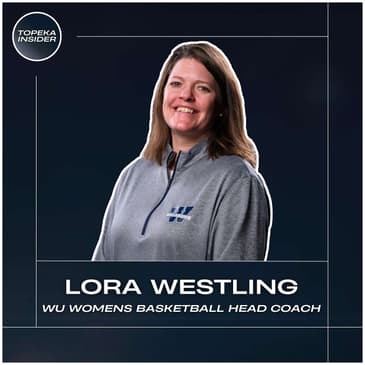
We talk with head coach Lora Westling about building a program on high standards and real care, recruiting with intention in the portal era, and why joy and discipline can live side by side. Stories span Wyoming winters to Washburn wins and the energy of a campus that shows up.
• Path from Wyoming to Washburn and coaching roots
• People-first coaching and teaching the college athlete
• Defining success beyond social media and comparison
• Discipline as care and meeting players where they are
• Recruiting tips, film, camps and playing with energy
• Transfer portal, NIL and shifting roster realities
• Multisport development, injury prevention and burnout
• Women’s sports stereotypes challenged with evidence
• Topeka life, trails, food spots and recruit visits
• New arena, fan experience and campus momentum
Come to a game: “Ichabod WBB on Instagram and X. We hope to get people to games, especially with the new arena… I’m just so proud of the fan experience we have at home games right now.”
________________________________________
0:00 - Coach Lora’s Journey To Washburn
2:40 - Cold Weather Stories And Laughs
5:00 - Why Coaching Is A People Business
9:30 - Teaching, Generations, And Meeting Players
13:30 - Social Media, Success, And Belonging
17:30 - Expectations, Discipline, And Care
20:00 - Best Parts And Work-Life Integration
24:30 - Coaching Women And Busting Stereotypes
31:00 - New Leagues, Rule Changes, And Fun Ideas
38:00 - Soccer Year, Joy, And Perspective
42:00 - Recruiting Advice And Playing Hard
48:00 - Transfer Portal, NIL, And Retention
________________________________________
Beyond the Podcast: 🎙️
Be sure to follow our Topeka Insider Socials below and check out our website for additional stories and articles pertaining to Topeka, KS
Website -- https://topekainsider.com/
Facebook -- https://www.facebook.com/topekainsider
Instagram -- https://www.instagram.com/topekainsider/
Follow Your Hosts: 📱
Follow both Justin & Jon on their personal socials to get connected. They would love to connect and answer any questions about the show or their day to day.
Jon Griffith's Instagram -- https://www.instagram.com/thejongriffith/
Justin Armbruster's Instagram -- https://www.instagram.com/armbruster_jd
For Any Inquiries, please DM @TopekaInsider on Instagram!
And I played with probably one of the most competitive human beings on the planet.
Justin Armbruster:You can know everything out there, but it's not going to be receivable.
Jon Griffith:I don't think they care.
Lora Westling:I love working with young people.
Jon Griffith:It's one rule you would add to a sport to make it more exciting.
Lora Westling:I'm just so proud of the fan experience we have at home games right now, the energy of our campus.
Justin Armbruster:This podcast is brought to you by Washburn University, a tight knit college in a city of opportunity.
Jon Griffith:Washburn offers small classes and big experiences. It's public prestigious and has the lowest student debt in the state.
Justin Armbruster:Above all, Washburn delivers a personalized education that you won't find at larger schools. Learn more at washburn.edu.
Jon Griffith:Welcome to Topeka Insider. We've got head coach Laura Wesling, head coach of the women's basketball team at Washburn. And you played on the 2005 national championship team. Addition team. Come on, let's go. Welcome to the studio.
Lora Westling:Thank you. Thank you. I'm really excited to be here.
Jon Griffith:Yeah, it's so good. So can you just give us a little background? I kind of stole a little of the thunder, letting people know you were on the team in the past, but um where where are you from? How did you come to Washburn?
Lora Westling:Yeah, so um I'm actually from Wyoming, Casper, Wyoming, grew up there and uh had a uh pretty wild path to get here. I was playing in a random tournament in Kearney, Nebraska. Ron McHenry, the coach of the s at the time, saw me there, recruited me, um, and kind of visited colleges all over the country. Really, Wyoming, there's only, I mean, probably three high schools in the state with over 500 people. So it's not obviously there's not a lot of um we weren't super educated in how to select or how to select a basketball school. Um, but just love the relationship I built with him, loved my visit when I came, ended up here, um, got my MBA here, graduated uh from here twice, played four years of basketball, one year of soccer, and then fell in love with coaching. So coaching has led me, I was an assistant for about 10 years in in Missouri and uh Kansas, and then a head coach uh in Illinois, and then six years in Colorado, and now I'm here in Topeka.
Jon Griffith:Wow. Wow, that's awesome. So you you're from Wyoming, were the winters a little less harsh when you got to Kansas or Yeah, it I mean it was a little wild because like you're just so used to it, Wyoming winters.
Lora Westling:The only thing is like the wind in Wyoming, it'll drift you like 10 feet of snow.
Jon Griffith:Yeah.
Lora Westling:And then Kansas would have it was the wintry mix I never knew anything about, like the ice and snow at the same time that will like coat your car completely.
Jon Griffith:Yeah.
Lora Westling:That's its own beast.
Jon Griffith:Yeah, turning into an ice shell on your car.
Lora Westling:Oh, like trying to figure out how to get that thing detawed. I remember in college like trying warm water or de-icer, all these things that you're probably not supposed to do.
Jon Griffith:It just makes it worse. You know what's really nice now is the credit cards that are made out of metal. Oh man, those are nice little ice scrapers.
Lora Westling:Well, see, these are things I did not know at 18, but it was uh so a little adjustment, but it was um yeah, I loved it.
Jon Griffith:I would be interested to know, like from the audience, if we did a poll, like like jank ways you scrape your car. You know, like like what are like the the DIY you know tips for getting ice off your car?
Lora Westling:I've got 10. I got top ten that can rule, you know, like I'm I'm telling you, we tried everything, and then every time I tried something, somebody would be like, Well, you're gonna break your glass or you're gonna scratch your paint or you're gonna do all these things.
Jon Griffith:What are do you what are a few you remember?
Lora Westling:Um the continuous hot water was one that was really s silly because it would melt for a second, and by the time you could get the next thing of hot water, it would just refreeze, so you're just looking ridiculous. Uh the chipping away at it was a problem because I did actually um crack some glass once. Oh shit. And then you um putting the towel over the glass so you can just pull it off. I don't know if you've ever seen people do that.
Jon Griffith:You mean like before it snows?
Lora Westling:So you know it's gonna snow and you put the towel down.
Jon Griffith:Um that does work or that doesn't work?
Lora Westling:Well, no, because the wintry mix it just iced the towel into the glass.
Jon Griffith:So it soaks into the towel, freezes it to your car.
Lora Westling:I mean, it's uh like I said, if it's just never something I really thought through. I just kept trying different things.
Justin Armbruster:Yeah. Uh I was known in college for uh just getting that hole. You just need a little hole in your windshield. You know, I crank my windshield wipers up all the way to start to try and get it there, death frosting.
Jon Griffith:Pretty far with a hole this size on your windshield. You know, looking this way, trying to get through. That's funny.
Lora Westling:Yeah, it's amazing. Before here, I was in Gunnison, Colorado, which is the coldest valley in the um in the country. Whoa. This is like negative 25 pretty regularly in the winter. Oh my goodness. So my skills were very far advanced by then. So that was a breeze.
Jon Griffith:You leveled up.
Lora Westling:Yeah, I completely leveled up, and I really credit my education here at Washburn for that.
Jon Griffith:You know, in addition to coaching, you could have like a 101 class for freshmen, how to de- ice your car.
Lora Westling:Yeah. See? Yeah.
Jon Griffith:How to survive to Pika Winters. Yeah.
Justin Armbruster:I like it. Okay, so you've been a head coach for 10 years, you've been coaching for 20, the past four at Washburn. Uh tell us a little bit about why you love coaching so much. What because you told us off air you weren't planning on coaching when you got out of school, but you got into it and you've clearly made a career out of it.
Lora Westling:Yeah, I was planning on opening uh a restaurant. I worked in food service when I was in college and all throughout, and I kind of had this master plan, but it just had this transformational experience being a student athlete here. I think as a high school student athlete, I had this uh unbelievable high school coach named Mike Carey, and he was for everything that um there is to be said about the genius side of basketball, he was the genius side of building people up. And so I had this like um incredible resource, incredible mentor in my high school coach. But at that point it was just I just felt very blessed. Yeah. Well, then fast forwarding to college, and I played for probably one of the most competitive human beings on the planet. And seeing that level of discipline and what it takes to be really good and to develop in that mindset, I just felt like um I had a lot to offer other other people. Right.
Jon Griffith:Yeah, with those two different sides.
Lora Westling:Yeah, just kind of the two sides of it. And so, really, anybody that's in it knows coaching is a people business. As much as you love the sport you're playing and and as much as you love competing, if you're not in it for people, then you're you're probably gonna miss. Sure. And so um that's why I love it. Um I love working with young people. I love working with fellow coaches, I love learning uh about how to try and be better in all of those areas, and uh just feel like I'm always trying to be to be better, and I think anytime you're stimulated like that, you're probably somewhere where you should be.
Justin Armbruster:What's the what would you say is the hardest part about working with young people? Because you know, every year that you're another coach, you're still coaching the same age 18 to 22. Yeah.
Lora Westling:Yeah. I think that's the challenge of when you're a young coach, it's really you're trying to show everybody what you know. And sometimes, at least for me, um, as a young coach, I was just really like, I had to put it out all out there all the time. And it was probably a little more intense, and it was really kind of my way or the highway. As I've gotten older, um, I've really tried to focus on being a better teacher. And so I think leveling into more relationship building and how to, you know, be a better teacher in those things. But to that, the more you learn and the more you feel like you're competent in what you're doing, um, you know, we joke all the time. Like I've gotten a lot older since I started coaching, and however, you know, my players are still 18 to 22. So um just making sure that I think that's the biggest challenge is is meeting people where they are, even though you keep moving down this continuum, you know, of life and professional uh development, you've still got to bring it back to where people are.
Jon Griffith:Yeah. Do you feel like the challenges for young people to be successful today are different than they were when you were in school?
Lora Westling:Yeah, I think I mean, on the surface, yes, because of, you know, we all know social media and exposure and awareness and and what happened through COVID and the anxieties and in, you know, there's a a million uh fantastic books and and studies about it. But I think really young people at the core, I don't know how much that's changed. I think they still want to be seen and heard and understood. I think they still want to succeed in whatever you know. I I don't know as a society if we do a good enough job of really defining what success can look like for them. You know, I think that's one of the problems with social media is is we just compare ourselves to everything true or untrue. Right. Yeah. So really they still want to be successful, they still want to be a part of a community, they still want to be valued, they still want to be, you know, cared for, and it they still want to make an impact. So some things just haven't changed.
Justin Armbruster:Yeah, being a coach, uh uh I think this applies to a ton of different professions, but I think of the quote that they don't know uh they don't care what you know until they know how much you care. And you know, being a coach, you can know everything out there, but it's not gonna be received well if they don't think that you care about them.
Lora Westling:Yeah, and I think the the harder part of coaching now is there's so many more layers to get to the young person that you have to go through that can be sometimes impossible. Of you know, in our world in basketball, you know, we have the young person, but we have parents, we have trainers, we have high school coaches, AU coaches, we have uh friend groups and all of these things that are um kind of layered on top of these young people. And so as they're trying to find their identity, you know, we're trying to meet them where they are, and that can be a a challenge. And so um, you know, I think I'm a big believer of they're gonna rise to the expectations you set. And and I still believe in in discipline in the areas of like this is how we're gonna do things, how you do anything is how you do everything, and we're still gonna operate in a way with with high expectations. Um and that that also means I care. You know, and and I think sometimes we get into that uh caring is feeling good all the time, or it's comfort. Yeah. And we uh my job is certainly not to keep things comfortable.
Jon Griffith:Yeah, absolutely. What are the best and worst parts of your job?
Lora Westling:Um the best parts are just the people I get to work with. I mean, I have an unbelievable staff, not just I mean, in my program, my two assistant coaches are unbelievable people. And then the people that work at Washburn are really special. Everybody wants to be really good, everybody cares, everybody's generally funny. I mean, there's a few that aren't, but um generally like I mean, I have to keep them in check. But no, they're just a really great, um, humble group of professionals that I get to learn from every day. Um and so I think that's and then I the people in this community care about Washburn and care about my family and care about me, and and that's really rewarding. Uh the worst part about my job, um, it's it can be uh you have to really keep in check because it can be overwhelming. The accessibility it takes to be a good coach and has been something I've really had to manage with having a young one now and in in my life and in my marriage of just making sure like it can't be all on all the time. Sometimes you have to close a laptop, sometimes you have to put the phone away. Yeah. Um but it's just different than most jobs because that's not very often. Right.
Jon Griffith:Right. Yeah, it's easy to just be on the clock all the time.
Lora Westling:Yeah, it takes what it takes, you know, and I think that's we we try and at least in our house, try and keep good work-life integration. Um, I think that's really important. And then understanding like it might it's never gonna be 50-50 with your schedule, but there's gonna be times throughout the year that maybe things are a little lighter.
Jon Griffith:And yeah, so um just integration or balance.
Lora Westling:Yeah, we're there's no work-life balance anymore, boys. So it's just uh trying to integrate where you can, and and part of that's maybe bringing my daughter to practice. Maybe part part of that's I have to do my film a little later in the night than I want to. Um but you find ways to make it work.
Jon Griffith:I like that word a lot better because balance always felt misleading.
Lora Westling:Yeah.
Jon Griffith:Balance always felt like 50-50. Yeah. And you're like, life's literally never like that. Right. Like even like if if you are a coach without a child, there's a certain out of balance to that. But then you add a kid to that. Well, now your life's out of balance in this direction with your family. And no question. But that's how it should be, you know. And so it's always out of balance in some direction, but that's can be really good.
Lora Westling:Yep.
Jon Griffith:I like that in integration. Like, hey, I'm a whole person in everything I do.
Lora Westling:And it's been challenging, yeah. Like you said, even when I was single or and young, it was hard because you're still having to work on self-care and you're trying to get going and trying to learn and do all these things. Um, but yeah, it's I think that's been a game-changing kind of realization for me.
Justin Armbruster:That's cool. Here's a question, and I've never coached anything in my life, so this might be the answer might be nothing. Is there a way that you approach coaching a women's team that uh you do differently than coaching a men's team? Do they respond to different things better? Are you able to be harder? They can't be as hard on the women, or is there is there something different about coaching women that you do intentionally?
Lora Westling:Yeah, I have never coached uh adult men. I've coached like youth, boys. So I don't I don't know quite the answer to that just because I've never been like in the thick of it with the same age group I am now. Um I've had we've had I've had probably thousands of conversations about this over the years, and there's books written about it. From my perspective, um you know, from coaching women, I have never and will never say anything of like, oh well, you know, it's girls. I mean, I think I think people write off um, you know, some of the stereotypes that come with that. Right.
Jon Griffith:Yeah.
Lora Westling:Now we also know some of that's true, but it's a lot of it's individual based. So for us, like you know, what I said, it takes what it takes. And what we found is young women are incredibly tough. Yeah. They're very tuned in. Um, they're very they want to be successful, they want all of these things. Um and so I've never ever used coaching a women's team as a scapegoat to allow anything that wouldn't allow if I coached a men's team, you know, of just as like an excuse, you mean? Yeah, well, just like accountability like we don't have drama in our locker room. We are we focus. I think that's uh if we talk stereotypes, sure. Yeah, that if you coach women, you're gonna have drama. I haven't found that. If you coach women, um, you're gonna have to deal with uh you know them not being as physically tough or or capable of handling as much. That's I haven't found that. Um I'm trying to think of some of the others that they don't care as much. I haven't found that. Yeah. Now individually, sure. Sure. There's some you know, women that don't, but I yeah, there's both sides. Um you know, I would anticipate there are differences, but I've never I adore coaching women because of all the positive attributes that we just talked. I mean, they're they're incredible.
Justin Armbruster:Yeah, that's funny. I actually uh my wife uh played college soccer and I actually learned a lot from her just talking about our past athletic careers and you know, coaches that we've had. She took constructive criticism way better than I did. I had always, when a coach would yell at me or something, I'm like, he hates me. Yeah, he's being so he's being so mean. It's like I yeah. Or he doesn't know what he's talking about. Yeah, it's like, gosh, why did he yell at me? And you know, my wife was on the other side. It's like, well, did you do something wrong? He probably doesn't hate you. You probably just didn't feel that ground ball like you were supposed to, or whatever. It's like, yeah, but why do you have to yell at me? And she took it very well. She got yelled at all the time and she didn't care. So I she was a terrible athlete and got yelled at me all the time. No, I know. My wife doesn't listen to these, so I can on air say that she was a better athlete than I was. Uh but it was uh uh I thought that was interesting from my own personal perspective. I didn't know if you had anything.
Lora Westling:No, and I think uh to be honest, um one of the things that's shocking to me is I mean, we see so many men coaching women, which great. I there's a lot of incredible coaches that coach women. I'm a little surprised we don't see more females on staff in men's sports. Yeah. Um, only because if you're looking at how many different backgrounds young men are coming from and like again, some of the perspective that quality coaches period can bring, I think when you have some of that um you just add to the capability of your staff in the locker room. Uh I'm a little surprised we don't see it. Again, maybe the stereotype of what goes on, you know. But I just I think we'll s I think it'll happen. I mean, we keep seeing some women's coaches' names brought up in MBA searches. We're seeing sideline, but um, you know, I'm obviously a big advocate of women coaching women.
Jon Griffith:Yeah.
Lora Westling:Um, but that doesn't mean that men wouldn't do a great job. On the flip side, I know men coach men well. I would love to see what it looks like when more women women are involved in coaching men.
Justin Armbruster:Yeah. Are you uh you follow the NBA? Are you a college basketball girl? What's your go-to?
Lora Westling:All the sports, big, big athletic household, yeah. Um, both growing up and now, so try and follow as much of it as can.
Justin Armbruster:Yeah, what's your team of choice?
Lora Westling:What were we talking here? Whatever.
Jon Griffith:Uh, yeah, what are just the big like three teams of any sport you guys follow?
Lora Westling:Um if we're talking uh NBA and Big Nuggets fan growing up in Wyoming, they were close and now gotta love Joker and those things. WNBA, big Aces fan, um, big Asia Wilson fan. Um football, I'm a Chargers fan, which is hard to see around here. But yeah. Um LA Chargers fan. Was now it's not anymore. Um but yeah, big Chargers fan. Um hockey, I'm a Blues fan. Oh. Lived in St. Louis for three years and started going to those games. Um I'm really I love the unrivaled uh league that's going on with three on three basketball right now on the women's side. And I could go for days. Yeah, I'm just we love that.
Jon Griffith:I'm not familiar with that. What is that?
Lora Westling:So uh Fee Callier, uh WNBA player kind of broke off for WNBA, it's a summer season. And so a lot of those athletes have to go overseas to really make money. And they're in a huge collective bargaining debate right now, but she with some other investors started this three-on-three um league, and and it's gone into like there's a bunch of different rules and things on it now, and short court, and it's some really cool scoring now of a team, but it's called Unrivaled. And they blasted it with marketing. It's it's been insanely successful and profitable. Wow.
Jon Griffith:And it's in the offseason?
Lora Westling:In the offseason, so now you've got players playing it. And yeah, we don't know.
Jon Griffith:Are there a lot of teams developing in that league?
Lora Westling:Yeah, it's starting to grow. And I think that's been one of the as they're still getting all these kinks worked out in the WMBA and and doing that, it's been just another reinforcing factor of hey, um, there there it can work. Women's sports can be marketable and they do work and and can make people money.
Jon Griffith:Okay, all right. This is an off-the-wall question and might be unfair because you're obviously you're so down the rabbit hole of a very legitimate professional level of a sport that it would be asking you to, you know, mess with it. But is there is there any sport? Oh, how do I even ask this? What's what's one rule you would add to a sport to make it more exciting?
Lora Westling:That's a great question.
Justin Armbruster:I don't even know. I'm trying to think of an answer myself.
Jon Griffith:Or entertaining.
Lora Westling:I'm trying to think of when I get bored, and it would probably be be respectfully I like the pitch count clock they add in baseball. That really helps. But if we could spice that up a little more, like um, if you don't pitch it before the pitch clock, then the like the batter gets to pitch it at the pitcher. Something like that. Like dodgeball there becomes some sort of like assertive counter. Uh that would be good.
Jon Griffith:Or um yeah, or you just turn baseball into dodgeball if you just hit them with the ball, they're out.
Lora Westling:See, now we're talking. Um yeah, or something with I don't know about the rule changes in football this year. Um, there's gotta be one there too, like some rugby beast. I don't know, I'd have to think about that. But baseball is my first mindset.
Justin Armbruster:Yeah, I have a hot take. Yeah, and I've this isn't an original thought. Yeah, I got this from Joe Feisty, Joe Burrow. If you are a professional athlete, yeah, taunting should not be a thing. As long as you don't put your hand on the other player, you talk yourself. You can say whatever you want to. You mean it should not be against the rules. Should not be against the rules. You can get 15-yard penalty. Say whatever you say, celebrate however you want to celebrate, as long as it's not, you know, uh inappropriate or whatnot, and you know, you're not mic'd up or whatever. You know, do whatever you want to do. You celebrating as a pro athlete because you had an accomplishment, you scored, you made a great play, talk your stuff. Yeah. You know, don't put your hands on the other guy, you can't spit on him, Jamar Chase. Yeah. If you saw that. Um you should be able to taunt however you want.
Lora Westling:I'm not opposed to that. I like a little stuff talking myself. We've got a um, it's always funny. That's one thing, like players either lean into it or it is something they don't do at all. There's no like mild, you know, talkers. And so zero or a hundred. Yeah, it really is zero or a hundred. But yeah, I I think it's when you get into big emotional games or even practice, like that's something that helps practice not be boring. That's one thing. It just people really struggle with the yeah, the response to it.
Justin Armbruster:You should hear me chirp on the golf course.
Lora Westling:No, golf. Now that might be where the the fun gets out.
Jon Griffith:Yeah, like in uh Happy Gilmore 2, they just went crazy with the the course and everything. In soccer, one of the things I like about soccer is they don't stop the clock. And it's amazing because you know pretty much you know, unless there's uh you know, allowance for overtime, which uh your average games don't even have overtime. It's just like 90 minutes over, you know, you move on. So you know exactly how long. Game's gonna be. Whereas football, they stop the clock every two seconds. Like, what would it be like if they didn't weren't able to stop the clock?
Lora Westling:A little more urgency.
Jon Griffith:Yeah.
Lora Westling:The tie is also something you gotta get rid of.
Jon Griffith:Yeah.
Lora Westling:Like in soccer, you gotta have a shootout every game. Yeah. If it gets to that ball, you gotta like make the quarterback kick a field goal or something. Like just go through the lineup until somebody misses the field goal or something.
Jon Griffith:Well, it should be more heavy-handed with yellow cards on flops.
Lora Westling:Yeah.
Jon Griffith:You know, like when it's like, dude, everybody knows. He just you fell on purpose.
Lora Westling:Yeah, they added that rule in a two or two years ago in the game of like the flop warming warning. Or if you flop you get a warning, then it's a tech. Yeah. And that's been like it's great when it's used because it really is not just annoying, but can be dangerous when people are falling under people's ankles and stuff. Right. Um, but it's it's surprising officials don't like to use it really uh generally. Just kind of do it but they just kind of yeah, it's just um because then they have to like be sure in it and then they have to walk. But it's um we've had a couple games both on our group and the other group where it it helps it stay a little truer to the actual game.
Jon Griffith:Yeah. It is funny when you see clips of like professional, you know, soccer players fall, they're covering their face, and then they're like looking up to see what the reaction is before they get up, and then they get up and they're fine. You're like, bro.
Lora Westling:Well, there's this like viral clip of the high school official. Have you guys seen that? Yeah, a high school official in Kansas on a in a girls' high school game. Um, like double-teed a girl, and then she went over to him and he like he flopped. The official flopped and laid, like it's bizarre. You gotta watch it. Like she put hands on him and he felt like it's like. I get I mean it is it is bizarre.
Jon Griffith:So you guys she pulls out a yellow card. Flop war.
Lora Westling:I mean, you see her in her gun, and who knows? You don't hear the audio, so I'm I'm not saying she didn't deserve attendance. Yeah, yeah. But the actual flop itself is a wild um that's funny. Acrobatic. That's hilarious.
Jon Griffith:So you played one year of soccer in college. What was the dynamic of was that before? Was that after you played it? It was after.
Lora Westling:So at the time with the NCAA, you get um five seasons, just four in one sport. So I had a year to burn, and I was I was gonna um get my MBA anyway and GA with the the basketball team, but I was I was out of high school, I was probably a better soccer player than I was a basketball player, just really basketball more. Um and so the soccer team was fairly new at the time still, and I had um spoke to the coach a little bit about him. I'm like, I'm gonna be here anyway. Do you wanna do you mind if I uh try out or come play? And and he was all for it, and I had a blast. Oh, that's absolute one of the most fun things I've ever done is playing that fifth year of soccer, just because you know, your whole life's committed to basketball and that and how intense that gets. Yeah. And soccer, I was just like, I'm here, I'll help any way I can. Like, let's see how it goes.
Jon Griffith:And you feel like it was more fun, there's like not as much pressure on it.
Lora Westling:Yeah, I don't know exactly what it was. Also, I don't know if you've seen soccer players, they're like half my size. So I look like this giant on the field. So I didn't even have to be yeah, I didn't even have to be that skilled. I could just go and like, you know, um, and not worry about fouling out. So uh, but an incredible group of women that I got to play with and and just had so much fun that year and and we got uh got things going a little bit.
Justin Armbruster:Yeah. Let's uh talk about recruiting a little bit on the basketball side. What is there anything, uh any piece of advice you would give to high school students trying to get recruited to play basketball? What's the best what should they be doing? What are best practices to get noticed? Yeah, I think Washburn, a proud sponsor of this podcast, wants to keep its homegrown talent here at home.
Jon Griffith:Graduates of Shawnee County High Schools and homeschools can be eligible for the Thrives Scholarship.
Justin Armbruster:Other local graduates can qualify for the Promised Scholarship, meaning you can go to Washburn tuition-free. Learn more about these amazing opportunities at Washburn.edu. Washburn is just right. Just for you.
Lora Westling:Um, you're gonna get a a a thousand different perspectives on this based on who you ask. Like again, going through the club coach, a trainer, the parent, all these. From my perspective as a college coach, the best thing you can do is get yourself out there. Um, you know, film and sending your schedules out, making sure um that coaches know when you play. And if if maybe that's not on the forefront, just make get to an elite camp or a summer camp that that they work, or just make sure you're getting in front of the coaches that um you know might want you want to evaluate you and that you might want to have an opportunity with. But the the biggest piece of advice I would give players is then to make sure that you are playing in a way that and I and I don't mean not making mistakes, but you're playing with a level of energy and work and passion that would get you noticed. And I think that's something it it amazes me. We go to these giant summer events with hundreds of teams, and a lot of them have players that look like they're they just don't want to be there.
Jon Griffith:Yeah.
Lora Westling:So I'm like, you told me to come watch you play, and now it looks like it's you don't have a lot of interest. That's a wild concept to me. So I would say make sure you love what you do, um, make sure you're putting yourself out there, and then play hard and and and be open to feedback and you know, the right and find the right fit. Yeah. And I think everyone's pumping, oh, you gotta go division one or you gotta be in the MIW or you gotta no, you have to do what's best for you and what your goals are. And so um I think that would be my advice, play hard and get yourself out there.
Justin Armbruster:As far as like putting yourself out there, do you suggest players, you know, pick five to ten schools and they're you know, sending stuff to those schools? Is it just kind of a put yourself out to the world and see what comes? Is there is there a strategy to that?
Lora Westling:Yeah, you can do it several ways. And honestly, it's so much of it has to be catered to what your situation is. Like it's no, I mean the club scene now and the AU scene now is is expensive. It can be. You know, the top tier kids usually go and they're funded. But some of these, you know, EYCL or second, third teams, I mean, it's a lot, not just what the registration fees are, but to travel and the impact that it makes on these families. I'm like, maybe before you get all into that, uh really kind of ask some people that might know what level um or what and be honest with yourself, what level do you really want to play at? Like what's top goal and what are you good with?
Jon Griffith:Yeah.
Lora Westling:And then I think starting your process realistically is helpful. Um now it's all changed with the transfer portal and all these things, but like really what are your priorities? Is it to go to the highest level you can? Is it to play? Is it to a certain major? Like hash that out realistically and then um yeah, find the schools where kind of everything kind of comes together.
Jon Griffith:Yeah. So how is the transfer portal affected your job as a coach?
Lora Westling:It's just it's wild and it's ever changing because it's it's affected us different last year than it did the first year. It's gonna be different this year because of the new windows that division one players can go in. That window just changed. So that's gonna prolong everything for division two because um, you know, it just it all kind of caters to division one right now. Yeah, but it's it's one of those things like it's adapter die. Like you don't, I can't I can have all my thoughts on it that I want, but here's where we are, and it's been very good to us. Um, we have a couple transfers that we've gotten out of the transfer portal that are making really positive impacts for our program. And it's given a few of our players that wanted more minutes or wanted something different for themselves a chance to go and not stress or you know, be stuck here angry. So I think it's it's really positive. Um, you know, I think we're in a different world with NIL and and RevShare and how that's all affecting the transfer portal. That's a whole different deal. But I think it's it's generally, you know, it is what it is, and we're just trying to make the most of it.
Justin Armbruster:Are you seeing in the transfer portal portal in your world is it a lot of as far as from a recruitment side, you're recruiting a lot of division one players that aren't getting playing time and you're trying to recruit them to come down to D2? Is it a lot of D2 to D two? What are you seeing there?
Lora Westling:Uh a little bit of both. Uh the thing is that it's gotten so crazy in the division one level that you're seeing players that aren't playing elevating into their next stop. So they're they're not playing at a school and then they're getting offered, you know, $20,000 to go into another school. They might still not play, but everybody needs to fill their roster with somebody that has experience at that level. Um so it's I think the bigger thing we're dealing with is having to realize that our best players are currently getting recruited by Division I schools. Yeah. And so, you know, trying to provide an opportunity for our players, you know, give them a reason to stay. But ultimately, what even on the women's side, the amount of money we're talking about now is like, all right, what can we, you know, hopefully do in the future to help you, but we're never gonna be able to pay, you know, the six figures and stuff that some people are gonna be looking at.
Jon Griffith:That's wild.
Justin Armbruster:You probably won't be won't be able to say it as uh as aggressively as I'm about to say it, but that would suck. Like having to every year, you you know, it's hard to build a culture when you don't know who's gonna be there next year.
Lora Westling:Yeah it's hard Yeah. And and I think that's the thing now is like, you know, we used to really value, even professionally, we were evaluated by retention and these things. And it's like that's just really it's so far out of our hands in a lot of areas anymore that it's like, okay, so now what are we valuing currently? And it's it's something that we you know have to have open conversations with with our administration and with our staff and even with our team of like you have to be open about you have to, you know, it used to be like, I don't want to know if anyone's thinking they might want to leave, and now you better be ahead of it or you're gonna miss out.
Justin Armbruster:Yeah. So I heard I heard that uh a lot of the big Division I programs, you know, especially some of the football teams with such massive rosters, they're hiring uh GMs for college programs now that would, you know, used to fall under the head coach's uh role is just kind of managing the the player side of things. They're having full-time positions for GMs to come in and do recruitment, try and retain all this stuff.
Lora Westling:Well, nearly every uh athlete that's in the power force scenario is i has representation now, has an agent and those things. So that's something that they're dealing with. And then at our level, maybe not a a fully employed agent, but they certainly have somebody that's helping them operate. Right. That's a former AU company. So there's a lot of money to get a lot of this.
Jon Griffith:Yeah. That's it.
Lora Westling:And now at our level, um there's a lot of positives to NIL, I think, because there are some things that young people just need help with, you know, like to be able to fix a car or those things. And we hope to to make sure that, you know, it we're seeing a lot of that money flowing into our league starting to happen. Not again, not the six figures and the major money we're looking at P4, but little amounts that you know, we have to stay competitive and get ahead of the game with. Um, but at the at the P4 level, you're looking at a you know, yeah, and not just the amount of money, but the creativity now that they're using with it. Um retirement funds, insurance premiums. Like it's wild.
Justin Armbruster:So that is wild. Name, image, and likeness. That can spread across a lot of different things.
Lora Westling:Yeah, right. And the Rev share is, you know, at that level is is its own beast. So yeah, the rules keep changing. I mean, literally last week more rules changed, and so just do your best and yeah, keep plugging.
Jon Griffith:So, what are you most excited about looking forward from this point right here?
Lora Westling:Uh for my team. Yeah. Or I think we're just in a really fun time of year with um, you know, our players, we've kind of got roles figured out. We know where we can go, we know what we can and can't do. Um, and so it's you now you're into the routine of like, here's what your practice layout's gonna look like. It's gonna be, you know, probably 90 minutes or less. We can't drag legs out throughout, you know, two hours, two and a half hour practices and stay competitive. Um you know, everybody's kind of hitting a fun rhythm. Your freshmen aren't as scared, and your new kids are kind of into the fold, and your seniors are kind of feeling you know that urgency that you get when you're a senior. And so it's just a really exciting time of our of our season right now.
Jon Griffith:Yeah, yeah, that's awesome.
Lora Westling:Yeah.
Jon Griffith:Wow. I would like to maybe shift to the Topeka a little bit. But um something you said, oh, it was when you were talking about being on the soccer team and how basically, as uh basically kind of like a you're built to play basketball playing with like smaller soccer players. It made me think of the hypothetical that people ask sometimes like which professional athlete, if you could switch them to a different sport, would just like terrorize, you know? Like you put LeBron on the American Olympic soccer team or something like that, you know, like he'd be an insane tight end.
Lora Westling:I feel like a lot of basketball players move into football. I feel like a lot of like you know, gymnasts could probably figure out some crafty things in like soccer or something like that, where you use speed and agility in those things.
Justin Armbruster:And I think it's probably not as far of a stretch as most people think because a lot of those pro athletes were on a division one scholarship to uh, you know, maybe different schools, but whatever sport they wanted to pick. Yep. And so it's like, you know, they could have gone and played uh, you know, football at Alabama or they could have gone and played basketball at KU. It's like, you know, and so it's not like they don't have any experience, they probably would be able to move over just fine.
Lora Westling:There's so much debate about sports specialization. Right. You know, and I'm somebody who still values our, you know, our high school athletes that play multiple sports, just one, what it does for them physiologically. But you know, if if we're recruiting someone and they tell us they play tennis, I'm like, yeah, it's you know, or soccer. Yeah. It's you know, it's just different muscle groups and you get in basketball a lot and it's um so you feel like that benefits their game on the court.
Jon Griffith:Oh yeah.
Lora Westling:Because they're more versatile or yeah, just injury prevention, they're more developed. I think some of their they're more, you know, um, if you get into one sport, you're really training the same muscles over and over, and that can lead to some kind of depletions in other areas. And and then just one uh outside of like I said, physiologically, just burnout wise, like they're they don't they're not burned out by the time they get to college, they actually are kind of excited to hone in on just one thing.
Jon Griffith:What if they're an esport athlete?
Lora Westling:You know, I have a lot of this is I uh my former school had esports as a sanctioned sport, like on our website, full roster and everything. Yeah. And I would get into these long conversations with our esport coach about like what what's like okay, I know in basketball what is kind of makes one player better than the other, but like what's your differentiation in esports? And there's like it was really fascinating. So I have nothing but respect for my e-athletes.
Jon Griffith:Interesting. Yeah. What would what would transfer from esports to basketball? I mean injury prevention in the fingers.
Lora Westling:I was gonna say, uh, probably like it's yeah, reaction time, right? Yeah. They'd probably get a lot of deflections on inbounds or like some things like that.
Jon Griffith:But at least with their hands. Yeah. Their legs aren't going to be.
Lora Westling:We're not gonna go guard it. We're just gonna deflect it initially.
Justin Armbruster:So I I heard I think it was someone we had on, and I don't remember who, so maybe you can help me. Talked about the uh multi-sport athletes and how when they're young, I'm gonna make up ages, but you know, from five to twelve, uh, they have a window to develop their athleticism. And after age 12, again, making it up, it's it's hard to become more athletic. You just kind of are what you are and you hone in on your technicality, the technicality side side of your sport. And so encouraging your kids to go go play three or four different sports when you're young will help them be a better athlete when they get older, and then they can hone in on their technical side as they get into high school and college.
Lora Westling:Oh, yeah. I think and you see a lot of that with like even younger than that, like getting into tumbling and just like where they're working on motor school, motor skills and some of those things, and then get trying out different sports and seeing where their aptitude lies. And um, you know, it's no different than educate. I think that's the hard part about being a basketball coach. Like, you don't, you know, I I hope that my daughter loves basketball. It's probably the irony of the universe, she won't. But um hopefully she finds out. Yeah, she 100%. She's gonna be I'm just sitting here talking up esports and I'm gonna be in an esport jersey here soon. But like, I think allowing your your, you know, or just young people in general to find their aptitude because that's where they're gonna find fulfillment. That's where they're gonna find desire to want to train and do those things. And I think as a society, sometimes we just put people where we want them and hope for the best.
Jon Griffith:Let's say hypothetically, your daughter has an aptitude for athleticism. Okay. And she's in the future. She's three, you said she's three years old. Awesome. Such a fun age. Yep. Uh what hypothetically, she has an aptitude, you know, as she develops. What would be kind of the way you approach that at the different age groups?
Lora Westling:Yeah, I think um I would the the balance is key, and I think um I'm so bad at this of just like the milestones of those things. But getting her getting her excited about it, getting her into competitive situations in that sport, like say if if it is basketball, like introducing her into um, you know, competitive basketball environments or places where she is because training, you know, individual development is is key, but there's so many skills in basketball you just can't train individually. Timing and spacing and reads, like those are all things you have to play the game to do. Right. So trying to put her in where she can play into those situations, I wouldn't uh probably worry so much about the training and trainers and no disrespect for for training, but like until maybe a little more into junior high, high school, and even then pretty limited, because I would want there still to be seasons. Like I said, I I I would be a big advocate for my own daughter to play other sports. Um now when you have the downtime, it goes, and I I certainly don't want them to feel like you know, or her to feel like she has to do something all the time. Sure, right. But you know, I I think just making sure that at least there's other activities. It wouldn't even have to be a sport. Maybe you're in basketball and piano, or maybe you're in basketball and science club or whatever it is, like just making sure that there's other interests. Yeah. Like just other interests where their whole identity isn't wrapped up into one thing.
Jon Griffith:Right. So that's awesome. Yeah. Yeah, it's interesting. Well, we have some rapid fire questions related to just kind of life in Topeka. Love it. Uh may or may not be influenced by you know your role at the university. But just as a person who lives in Topeka, um, what is one thing if you could bring anything, whether it's an activity, a business, or anything, what's one thing you would bring to Topeka that's Topeka's missing?
Lora Westling:Um I think just more of a a like a trail system where you could get out and like ride or or run for longer periods. And I know Shunga Trail, like back when I was in college, like was there. Um but I think just something maybe a little more um, not that Shunga Trail's not nice, but just maybe a little more out in the open where people feel really safe and it's you can go for miles and you know that you have access to. I know they've started that in Lawrence and it's a really cool system. Yeah, yeah. Um, and I love I love the governor's mansion trails. I love going out to um some of the other areas, but I think just having access to something where you can just get out. Yeah.
Justin Armbruster:Yeah. Uh go to date night. You're going out. Uh where are you going? What are you doing?
Lora Westling:We are probably going out to eat. Um, we really like the Knox, that area down there for a little like um if it's a date true date night, maybe uh a nice cocktail down there. Then going out to eat, probably gonna my wife and I we're one of those people that want to try everything. Yeah. So we're we're not like back to the same thing all the time. So we'd probably try and find a new restaurant that we like.
Jon Griffith:Okay. Yeah.
Lora Westling:Explore a little bit. Yep. And then probably, I mean, I feel sorry for her, but we're probably going to watch a high school game or something. You know, like obviously if we do the if we do drinks and dinner, that's one thing.
Jon Griffith:Yeah.
Lora Westling:Um, but then our typical date night is really probably if I get popcorn, if she gets popcorn at the high school game.
Jon Griffith:Yeah, what is the Knox? Have I I've never been, but it's how you gotta go.
Lora Westling:Yeah, it's just a really cute, it's attached to the white linen or like across the hall from the white linen.
Jon Griffith:Yeah, yeah, okay.
Lora Westling:And just uh yeah, really cool.
Jon Griffith:Like K N O X. Uh-huh. Okay. Yep. I've been here next. Yeah, really great. Love it. Yeah. Do you have any other favorite local restaurants?
Lora Westling:Well, I I mean, yes. I love a burger at Bobo's. I mean, you can't go wrong with that. Let's go. Um I love, I'm a little partial because I I bartended and uh worked at Tailgators when I was in college. Okay. Um, you know, worked for Stacy and the crew up there, and we live up there, so we love to dip in there and nice um how some food. We love trying all the new things as they come in, all the breakfast spots, and things. Uh-huh.
Jon Griffith:You got to. Are you a uh oh shoot, it just fell out of my head. What's the new breakfast place on Wanamaker? First watch. First watch. Yeah, person.
Justin Armbruster:First watch or Big Biscuit.
Lora Westling:Oh, don't you do that to me. Uh-huh. Um if it's just me, I'm going to First Watch. If we're feeding the team, I'm going to Big Biscuit.
Justin Armbruster:Big Biscuit. They're big fans with the Big Biscuit. Smart. Yeah. John, do you want to tell her your hot take on Big Biscuit? Uh do you remember what you said? Because I will tell you. You can say it.
Jon Griffith:You can say it. I don't remember exactly.
Justin Armbruster:Johnny Boy over here, my co-host, my good friend, compared Big Biscuit to IHop. Yeah. Zoom in zoom in on that face. Yeah. That's what I said. Unbelievable. I was uh we almost had a meltdown here on set. But but that's for another time.
Jon Griffith:This is like this is like uh the situation. I'm in a situation with my wife's family where I have been pigeonholed where I like I am obsessed with mint chocolate chip ice cream. But it really, everyone in their family hated mint chocolate chip religiously, and I like it and I appreciate it as one of many good flavors. But because I'm the only one who likes it, now it's the only thing I'm allowed to eat. Now I like I like it, but this is kind of what happened here. I have a pretty like four out of ten opinion on this. But because you guys feel so strongly about this, now it's like he believes. I mean, I don't feel as strongly about it, you know? So yeah, whatever. But I will double down. It is the Applebee's of breakfast. Feel free to prove your unbelievable.
Lora Westling:It is hilarious that bringing up that point. Like if you say something in any group one time, like that's their like term of endearment, is that one thing for the rest of your life.
Jon Griffith:Oh yeah.
Lora Westling:Oh, okay.
Jon Griffith:I didn't feel that strongly about it.
Justin Armbruster:Moving on before I kick John out. I hit a sacred cow over here.
Lora Westling:Yeah, yeah.
Justin Armbruster:Uh, do you hit any potholes on the way over here today?
Lora Westling:Um, you know, the biggest one that caused my uh car a lot of problems over the last few years, they filled, which is right on 21st. Like, or I'm sorry, right in Burlingame, right? Um, in front of like when you turn on the law school from 21st. There was one that would really derail you. And they filled that in, which was beautiful. I appreciate that.
Jon Griffith:Apparently they're filling like 600 a week.
Lora Westling:Well, let's do it. Because there's probably a need for that for several reasons.
Jon Griffith:Who's creating 600 a week to like that they're not able to keep up? Like, where are these coming from that quickly? This is crazy.
Justin Armbruster:Yeah, we had uh what's his official? He's like the PR guy for the city of Topeka. I had him on, his name's Dan Dan Garrett told us that they fill about 600 a week.
Jon Griffith:Yeah.
Justin Armbruster:Yeah.
Jon Griffith:And there's an app you can like submit, like, hey, I found a pothole.
Lora Westling:I need to find that.
Jon Griffith:Yeah, it's crazy.
Lora Westling:But now they're taking just out, taking out whole streets at a time. So that probably there can't be a 600. Yeah, I think it's over a foot big.
Justin Armbruster:I'd say I should take the whole street out.
Lora Westling:Yeah, we got 75 on the street. Let's just dig the whole thing up. That's how I feel like it is right now moving around.
Justin Armbruster:So home project. Are you a Menards Home Depot or Lowe's?
Lora Westling:Uh Lowe's. Start at Lowe's. I do. Um, I don't know why. I just I I dabble. I like to price shop and things and make sure I've got that, but I generally find the most success at Lowe's.
Jon Griffith:Love it. Okay. Uh what else we got? Uh are you a coffee person?
Lora Westling:Love it.
Jon Griffith:Do you have any favorite coffee places in speaking?
Lora Westling:Well, um, a lot a lot of the women on my team work at local. I've got a couple at Dutch Bros, I've got uh one at Blackbird, I've got um, you know, and we have some some Washburn connections over to Circle. Love that. Um so I gotta give shout-outs to those guys. They're employing my girls. I'm gonna give shout outs.
Jon Griffith:I think I met uh one of the tennis assistant coaches works at coffee bar, I think.
Lora Westling:Oh yeah, yeah, could be a sweet connection. I think per capita, the quality of coffee shops in Tobeka is excellent.
Jon Griffith:We have a lot, we do have a lot, yeah.
Lora Westling:And they just open a new uh uh dialogue location on campus. Really? Uh which is really cool. And yeah, seems like it'll be a big hit on campus. Yeah, yeah. Um so yeah, love. We we take a lot of recruits, you know, around uh usually circle, it's really convenient. They have a great lab.
Justin Armbruster:That's a good question. Recruits coming in. Yeah. Where are you taking them? What do you do on a recruit visit?
Lora Westling:Um just kind of depends on the recruit, what they're into. Uh we're really fortunate right now at Washburn. Everybody's so competitive. We try and get them to another team's game because they've, you know, everything's doing really well. So just love kind of showing that vibe a little bit. Um, and then we always ask kind of what they want to eat, if they're barbecue fans, if some recruits you have are you know will be up for a little dive. Yeah, some you better stay in those chains, you know. Like you better stay high-end on Wanamaker.
Jon Griffith:You want a big biscuit.
Lora Westling:Yeah, yeah. That's really living.
Jon Griffith:I just want to really common, cheap chain to go to. Oh, I got one. Big biscuit. Jesus, Applebee's correct. I just like to troll my friend here. That was good. That's fine. What if uh recruit is like, hey, I'm really into esports, what can we do?
Lora Westling:So let me um find somebody on campus that you can talk about or find a guy who hasn't left his dorm room in six months. I think, I mean, yeah, that's that is one world I'll be honest. I don't know. Other than the conversation I've had with the my friend, the esport coach, I don't know anything. I'm just not a my gaming tapped out at like Sega, you know, like loved a traditional Nintendo to dabble in the Super Nintendo Sega. Once we got past three buttons, I was kind of out.
Jon Griffith:Um once you get to two joysticks.
Lora Westling:Can't I even over break we stopped? We went visited some friends and did um like Mario Kart, but it was like there was a multi, like you had to tilt and do those things. Oh yeah.
Jon Griffith:Yeah, I'll say that's really hard. Yeah.
Lora Westling:Cool.
Jon Griffith:Rocket League. Do you guys play Rocket League? No. No, okay, never mind. I think that's like an esport game. Yeah, I think it is.
Lora Westling:I mean, I it's something I should get more into. A lot of my girls' game. I just haven't gotten I don't know if I have the aptitude.
Justin Armbruster:Any other final questions?
Jon Griffith:No, it's great. Laura, thank you so much for your time. This was so good.
Lora Westling:Yeah, guys, thanks for having me.
Justin Armbruster:Where's where can people find you at if they want to follow the women's team, follow you, young socials?
Lora Westling:Uh we're on social media, Ikabod uh WBB on on Instagram and uh X, I guess it is now. Um anybody we hope to get people to the game, especially with the new arena. Yeah, I think it's an unbelievable fan experience right now with the arena itself, but also the the product that our marketing guys are putting out and in our in our campus as a whole. Like it really is a fan experience, which isn't the case at this level all the time. And so I'm just so proud of of the fan experience we have at home games right now. So hopefully people can come out and catch a game. Obviously, we're doing well, 12 and 5. Our men are number one in the country, so it's a great time to get into Washburn basketball and and then just Washburn as a whole. I mean, just it's just the energy of our campus and the direction we're going is is second to none. So cool.
Justin Armbruster:Thanks, guys.
Lora Westling:I appreciate you.