
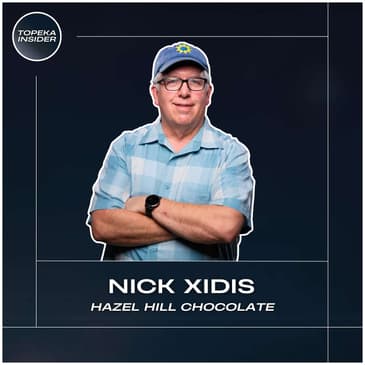
We sit down with Hazel Hill’s Nick Xidis to explore award-winning bean-to-bar chocolate, the craft behind single origins, and why serving people is the true business model. From sensory tasting tips to cocoa market shocks, we dig into flavor, process, and community.
• family heritage from Greek immigrant chocolatier to Topeka maker
• where to buy Hazel Hill and seasonal gifting cycles
• single-origin cocoa, inclusion bars, and flavor terroir
• full bean-to-bar steps from ferment to temper
• how to taste chocolate like a pro with simple method
• small business mindset: service before product
• cocoa price spikes, tariffs, hedging, and inventory strategy
• community support, local advocacy, and making a difference
• rapid-fire local favorites in food and trails
________________________________________
0:00 - Awards, Names, And A Sponsor Shout
0:40 - Meet Nick Xidis Of Hazel Hill
3:16 - Origins Of Hazel Hill And Family Roots
7:56 - Where To Find Hazel Hill And Busy Seasons
11:45 - What Hazel Hill Makes And What They Don’t
16:05 - Enjoying Chocolate And What “Best” Means
19:45 - Tasting Award Winners And Single Origins
24:05 - Whiskey And Spice: Inclusion Bar Deep Dive
28:10 - Why Chocolate Is Harder Than Coffee
29:44 - From Fruit To Bar: The Full Process
36:10 - Cocoa Butter, Cocoa Powder, And Use
38:18 - Business Wisdom: Serve People First
44:10 - How To Taste Chocolate Like A Pro
51:00 - Date-Night Tasting Kits And Palate
53:20 - Immigration Story And Candy land Legacy
1:00:00 - The Hard Part: Cocoa Prices And Tariffs
1:06:15 - Hedging, Inventory, And Advocacy
_________________________________________
Beyond the Podcast: 🎙️
Be sure to follow our Topeka Insider Socials below and check out our website for additional stories and articles pertaining to Topeka, KS
Website -- https://topekainsider.com/
Facebook -- https://www.facebook.com/topekainsider
Instagram -- https://www.instagram.com/topekainsider/
Follow Your Hosts: 📱
Follow both Justin & Jon on their personal socials to get connected. They would love to connect and answer any questions about the show or their day to day.
Jon Griffith's Instagram -- https://www.instagram.com/thejongriffith/
Justin Armbruster's Instagram -- https://www.instagram.com/armbruster_jd
For Any Inquiries, please DM @TopekaInsider on Instagram!
So these are one awards. So that one just scored a bronze in the Americas competition. That'd be every chocolate company in the North, South America, and the Caribbean.
Jon Griffith:Is there a specific method for eating chocolate to get the most out of it?
Nick Xidis:It's like really long because if I were a young entrepreneur, this is a town where you can really make an impact.
Justin Armbruster:This podcast was made brought to you by Choose Topeka. If you're thinking about making a move, choose Topeka can get you up to $15,000 to relocate.
Jon Griffith:Whether you're buying or renting, Topeka and Shawnee County are ready to welcome you. Apply now at chooseTopeka.com. All right, we've got Nick Mystery Last Name from Hazel Hill. Welcome to the podcast. Nick, how do you say your last name?
Nick Xidis:Excitus. Exitis.
Jon Griffith:Exciting.
Speaker 1:Exciting.
Justin Armbruster:That's awesome. Nick Exitus. This is going to be an exciting episode.
Jon Griffith:Okay, so before, yeah, before you got here, we were like, man, we're taking bets as a team. So we got gay behind the desk. The three of us were like, I wonder how do you say this guy's last name? And we all took very different wrong approaches. I thought it was Zidis. I thought the X was silent. Yeah.
Justin Armbruster:I thought it was Zidus.
Jon Griffith:Yeah, so we all went with the X and the Z approach today. It's pretty close. It's X I X I think. No humorous Nick.
Justin Armbruster:We know it was staying close.
Jon Griffith:So you are you started and you currently operate Hazel Hill.
Nick Xidis:Yep. With my wife Terry. Come on. That's awesome.
Jon Griffith:Can you tell us about that? What uh what's that been like? How did you get the idea to start a chocolate company?
Nick Xidis:So um it's a long time ago. We we this 2026 will be 20 years for us. Wow. Um yeah, I'm old. Um our both my wife and I, our our first career was in um software technology and and that kind of stuff. And uh it was actually Security Benefit that brought us to town.
Speaker 5:No way.
Nick Xidis:Um I I was hired there as part of the group that spun out a company called SE2 that became Xenia now, I think is what it's called. Um and we we had bought the uh assets of a failing chocolate business, not really knowing kind of at the time what we were gonna do with it, but it seemed like the right thing, and the guy was my co-worker and having a hard time, so we um jumped in and bought all the hard assets of it.
Speaker 1:Wow.
Nick Xidis:And um we had kind of some idea that it would connect with our family heritage. So uh my grandfather is a Greek immigrant, came here in the early 1900s. Wow, and um one of the things the Greek ethnic community could teach you was chocolatier and confectionery.
Jon Griffith:Wow.
Nick Xidis:So we had kind of some family tradition in that of maybe how to do stuff in the not the most modern of ways. In the blood. But that's amazing. So yeah, Hazel Hill is a a somewhat of a recreation of of what my grandfather's candy shop in Clinton, Iowa was. Wow. That's cool. Wow. It's actually named for my wife's grandmother. Hazel Hill is her her grandmother. Okay, that was my next question. Yeah.
Jon Griffith:Is it like a Greek style of chocolate or it's just uh there's no such thing as Greek style chocolate chocolate. It's just good, John.
Nick Xidis:It's just good. No, it's uh everything he learned about can candy making and confectionery came when he was in the um New York. He apprenticed for 10 years from 1919 to 29, and then when the crash came, um he made his way to Clinton, Iowa, and opened his own home shop there.
Justin Armbruster:2006, you know, we're coming up on 2026, almost 20 years. Uh I mean Hazel Hill, that's a that is a well-known name throughout Topeka. Is it? Okay. Yeah. Oh, I don't know. I'm not an active customer. But when I think of how many people know of Hillary, I'm serious. When I think of I'm not an active customer, I don't go all the time, but when I think of local chocolate, it's Hazel Hill. Good I mean, that's the that is the name I think of.
Nick Xidis:I mean, we still get people who come in and say, Oh, I didn't know you were here. Yeah. And we're like, okay, what do we gotta do?
Justin Armbruster:Yeah, yeah. For people who aren't familiar with the name brand, Hazel Hill Chocolate, where can people find you out? Do you have stores in Topeka? Do you sell in different places?
Nick Xidis:724 South Kansas, right in downtown is is the store. Um online is also a thing. And um right now we're cute up for Christmas and manufacturing. And uh a lot of that volume is gonna be um business gifting, like client gifts and that kind of thing.
Justin Armbruster:Sure, yeah, yeah.
Nick Xidis:Going out.
Justin Armbruster:Yeah, is the winter your your busy season?
Nick Xidis:That's when you do a Christmas and Valentine's are like the rock and roll time.
Justin Armbruster:So we Super Bowl.
Nick Xidis:Yeah, we're starting to manufacture Christmas chocolate now. Oh, that's crazy. Wow. And um kind of in round numbers, uh about a third of all of the volume we'll do for the year is delivered in the three weeks before Christmas. That's crazy. So that's wild. Do you have to hire like a bunch of temporary help? Yeah, we do. We we're bringing on seasonal help. Um as we roll into October and November, we'll be doing two shifts a day manufacturing, and then as we get into late November, December, it'll go to three shifts.
Jon Griffith:Is that all made in the store or is it all made somewhere else?
Nick Xidis:Most of it is made in the store. There's a couple of things we can't do. We we don't pan candy, so the the stuff that's like an MM, it's a shiny coated thing. We we don't do that.
Jon Griffith:Um in the store or at all?
Nick Xidis:We don't do it at all. We we don't have the equipment for that. And and it's boring and I don't want to do it. So maybe that blunt. Yeah, yeah, absolutely. It's made in a machine that looks a lot like a cement mixer. You just spray stuff and you're it's just never been something that I want to do. Um so when we bring something in, if the if we're not making it, we bring it in from another family company. Wow. Does that make sense? Yeah. That you're not gonna find industrial.
Jon Griffith:You're not gonna sell actual MMs.
Nick Xidis:Well, we have actual MMs because uh those are our brothers here in Topeka, right? Yeah, yeah. Okay, and we got some Snicker bar action going on. Okay, yeah. Right? And uh good. We're not dissing on our friends down at Mars because they're our neighbors, right? Yeah, yeah, love it. Okay, so if you're getting a uh an apple with caramel, we we made the caramel from milk and cream and sugar. Wow, right? And then the stuff on the outside, those Snickers bars came out of that plant down south, made them, right?
Justin Armbruster:Oh, that's so funny. Have I told you I have a you you probably know this, so you'd be in around Mars, but I have a couple buddies who work at Mars. They're engineers. Do you? Okay. They're engineers down there. And when I was first introduced to them, I asked them, you know, what they do. You know, like, oh, I'm an engineer over at down at Mars in the Snickers department. I'm like, in the Snickers department? Like that's a thing. He goes, Oh yeah, you know, my buddies over in the MM's department, my you know, someone else is in the Reese's department. Sounds like Elf. Yes, it does. I was like, that's hilarious. So that's funny. You refer to them as the brothers down south. You kind of work with them a lot.
Nick Xidis:Absolutely. I mean, we're using their stuff in and what we deliver, and likewise, we've had them over for events. They bought stuff for their employees from us. So um, that's cool. Wow. And that's kind of a Topeka thing, right? People here are tight like that. That's awesome.
Justin Armbruster:That's super cool. I guess my initial thought was I wasn't gonna mention the M word in this interview. That's our competition. But it sounds like you know, you you do two different things, yeah, you know, two different kinds of businesses and you collaborate on a lot of things.
Nick Xidis:Yeah. And and there's room for all of it, right?
Justin Armbruster:That's awesome.
Nick Xidis:Right. We we we can compete without being exclusive. Yeah, yeah. Does that make sense? Oh, for sure. Okay.
Jon Griffith:Yeah, that's really cool. Uh so I always wonder, um, I should have thought of a more seamless way to say this, but I've always wondered about people that, you know, let's say like you have a five-star chef who spends all day cooking meals. When he comes home, is he spending an hour making a five-star meal for himself for dinner after work? Or is he just doing like I'm exhausted microwave macking? Yeah, so are you do you love eating chocolate yourself, or is it kind of like, hey, that's work, you know, I would rather, you know.
Nick Xidis:No, I I um so I'm gonna bend your question just a little bit. Yeah, yeah. Because the the part of the business that really kind of gives me my life energy is the craftsmanship of making things. Does that make sense? Yeah, yeah, yeah, yeah. So I really enjoy enjoying what we make.
Speaker 5:Cool.
Nick Xidis:Does that make sense? I I don't ever get tired of it. And um, I mean, we can talk about how chocolate's made and all and kind of some of the backstory of all that, but yeah, um, but no, I never get tired of enjoying the stuff that we make. And and it can go anywhere from you know, uh just some nuts and some chocolate to some of the kind of higher end stuff. Um, and I I think we should be inclusive about that, right? You can enjoy some. I mean, we brought some stuff that's that's won international level recognition. Really? And but there's nothing wrong with saying, look, we're gonna dive into some MMs and we're gonna get a little sugar rush going on.
Jon Griffith:Gift Oreos or something. Yeah, yeah.
Justin Armbruster:So here's a question, and maybe this will lead us to what's in front of me here. I'm not sure. But if money was no object, you have a customer comes in and says, I want to buy the best, you know, client gift chocolate piece that you guys can sell me. You know, I know money's no object. What would you tell them to buy? What would you recommend as the owner of Hazel Hill? Like, this is what I would say.
Nick Xidis:I would probably ask him some questions first. Okay, ask me some questions. I'm this hypothetical. Because like best could mean a lot of things. Does that make sense? Yeah. Yeah. So I'd probably ask you like, what are some of your other favorite foods? Okay.
Jon Griffith:Okay. So you're basing it on taste. Okay. What's your taste? Trevor Burrus, Jr.
Nick Xidis:Does that make sense? I want to know a little bit about are are you a straight black espresso kind of person or are you the mocha latte with the whipped cream person? Yeah. Yeah. Does that make sense? And and they're all legit, just people's palates run in different directions. I guess that's a good point. There's nothing.
Jon Griffith:Okay, so you're kind of reinforcing what you just said. It's like there's not necessarily one best. It's just kind of there's room for everybody to enjoy what you enjoy. That's kind of what you're saying. Yeah. I was gonna ask, what's your what's your favorite? Yeah. What are some things that you enjoy personally the most?
Nick Xidis:So the the the one I have been eating the most is that bar that's right on the top. The Tamako. Oh, yeah, let's show it. Okay. What do we got here?
Jon Griffith:Is this like 99% dark chocolate? Uh it's 68%.
Nick Xidis:So it's not got a lot of sugar in it. Oh, lots of different kinds. You got a high level.
Justin Armbruster:Yeah, he's got uh a 68%.
Jon Griffith:This is wow. So these are one awards, international chocolate awards.
Nick Xidis:Yeah, so that one just scored a bronze in the uh that's this year. The Americas competition this year. Okay, we'll we'll open this up.
Justin Armbruster:All four of us, we can we can have a little taste of that.
Nick Xidis:That'd be every chocolate company in the North, South America, and the Caribbean that we really competed with.
Jon Griffith:This got silver in 2021.
Nick Xidis:Yeah, and that would have been in the Chocolate Alliance. That's a global.
Speaker 1:It's like Willy Wonka. It is a chocolate bar.
Nick Xidis:Where's my golden ticket at?
Justin Armbruster:Oh, that's super cool.
Nick Xidis:So yeah, we probably three, four hundred companies in that competition. Oh, yeah, I'm in.
Justin Armbruster:Catch, man. Oh yeah. Okay, so this one won bronze. This is okay. What's the name of this one and what did it win? Tell us the backstory. Tomaco. Tomaco.
Nick Xidis:Okay, and it won the bronze in the International Chocolate Awards. That's probably the most um stringent competition in the U.S. There's there's an equivalent in Europe, but that's I mean, this is pretty serious um, yeah. So what is this apart?
Jon Griffith:Like what makes you kind of alluded to how chocolate's made. Like what makes this so good?
Nick Xidis:So this is a single origin chocolate, meaning all the cocoa in there came from one place. In this case, it's a a cooperative in northern Colombia. And they spent decades basically with a genetic garden coming up with this variety of cocoa. Wow.
Justin Armbruster:You've taken a lot of these before. This is the other one. So this next one, which one's this? Semaluki Forest from Uganda. I wasn't even gonna try try to pronounce that name. So Gabe.
Jon Griffith:So it feels like we're in the same world as like coffee. Yeah. Like coffee competition, single origin coffees.
Nick Xidis:We're in that we're in that same zone. And um, as you're tasting this, like there's some flavors that we don't normally associate with chocolate in here. There's there's some fruit acidity and there's some stuff going on here.
Jon Griffith:In the tomaco, yeah. Oh, really good. This one's definitely more smooth.
Nick Xidis:Yeah, the semaluki's gonna be smoother and more earthy tones. And it kind of finishes with almost like a milky yogurt kind of thing. And like I don't know if you guys are interested. Like that milky taste at the end of that one. So the semaluki forest is uh their national park in Uganda. It's up in the mountains on the western side. It's very wet and cool there. And um that so I guess we didn't say this. Like cocoa's fruit. Did you know that? Yeah, tree fruit. Right. Yeah. Okay. So the fruit ferments and it cooks the seeds.
Jon Griffith:So this is very similar to how coffee this is. Yeah.
Nick Xidis:And in a cooler location, those ferments go a lot longer, and you get a lot more lactic acid buildup in a long ferment. And that's what you're tasting is a flavor that's derived from the place that it came from.
Jon Griffith:Wow, and the length of time it takes to ferment it.
Nick Xidis:Yeah. So so that's kind of our challenge as chocolate makers find interesting cocoa, and then how do we bring forward the environment and the culture where that came from in a sensory experience that you have? Does that make sense? Yeah, for sure.
Jon Griffith:Yeah. I don't I mean, I don't want to get all foo-footed. No, no, no. So it's like wine and coffee. It's like very similar the way people describe and like whiskies and stuff, too. Yeah. The way people describe.
Justin Armbruster:Speaking of whiskey, this next one is what's this one called? Whiskey and spice. Whiskey and spice. So um that's an inclusion bar. Don't worry, Gabe.
Nick Xidis:I got you, babe.
Justin Armbruster:I got you, babe.
Nick Xidis:It means there's more in there than just chocolate. Oh, okay. So when we process this one, once once we've got the nibs, basically we shelled all the cocoa and got nibs. Um, we soak it for a few days in Union Horse bourbon. Nice from our buddies in Lanexa. I don't know if you know the Union Horse.
Jon Griffith:I've not heard of Union Horse.
Nick Xidis:Um so we get some of their three-year-old reserved bourbon and we soak it and then we redry it. I was gonna say this is my favorite. Yeah. This one's good. And then we grind a little bit of Vietnamese cinnamon in it.
Jon Griffith:Yeah, you can taste the cinnamon.
Nick Xidis:Yep. And I think it's as close as I can get to making chocolate taste like an apple pie.
Justin Armbruster:Yeah, it does taste like that. I was just gonna say that. I can taste the fruit in all of these. And that one, especially.
Nick Xidis:So the Tanzanian cacao in this one has a lot of kind of red fruit and malic acid apple tastes. And then when you you put that with the kind of caramel and brown taste of the bourbon and a little bit of oh, yeah, that cinnamon.
Justin Armbruster:Oh, that's really good. That is, that is a very like that's a little more elaborate than a milk chocolate bar. A little bit that maybe our friends at I think we like the M-Werb the most. Yeah, uh Semaluki. Semaleuki fora. I think Nick needs to hang out with for an hour, and you just have an absolute ball, Jack Hishma.
Nick Xidis:Yeah.
Justin Armbruster:I don't know, Jack.
Nick Xidis:Tell what what's up with this uh the coffee guy?
Justin Armbruster:Oh, he's the joy light guy? Yeah, I do know him. Yeah, yeah, he's a good buddy of ours. We had him on in the early episodes of when we were getting this going, and he was speaking some foreign language just like you about how about how he makes the coffee, and they do this with this, and it creates this taste. Notes and flavors for whatever. Yeah, the only difference is I am a I really like chocolate, and coffee is I can just kind of like so I can appreciate this form of I would assume the you'd if you have a palate for this, you'd have a palate for that and like wine and stuff too.
Jon Griffith:No, no. No, John, not at all.
Nick Xidis:Not my jam at all. And um but look, the coffee guys are actually a lot smarter than chocolate people.
Jon Griffith:How so? What do you mean?
Nick Xidis:They import their stuff, right? And then they throw it in the roaster and they curve in temperature and airflow, and and then they throw it in a bag and they sell it. Like we're just getting started when we roast it. We still have to grind it up and refine it and temper it and mold it and package it. Make it taste good as a bar. Yeah. So like from a cocoa bean to a finished bar, that's like a week of work for us. Uh coffee guys are smart, right?
Speaker 5:Yeah. Right?
Nick Xidis:20, 30 minutes in the roaster, pop that baby out, cool it off, in the bag, out the door, money in the pocket. Those are smart guys.
Jon Griffith:Walk us through what is the beginning to end process of making chocolate. So obviously you highlighted some of uh, you know, the single origin. It's a fruit, it's grown on a tree, it ferments. What do you do from that point forward?
Nick Xidis:So it's it's tree fruit. Fruit goes in usually boxes, but a lot of places just on the ground under a.
Jon Griffith:I was gonna say, is it picked or do they let it fall naturally at the end of the day?
Nick Xidis:No, you've got to cut it off the tree.
Jon Griffith:Okay.
Nick Xidis:And and then you split, there's a pod, you split it open, and inside there's a white fruit with seeds in it. Like like an apple is white fruit with seeds inside. Okay.
Speaker 5:Yeah.
Nick Xidis:And then they under controlled circumstance um ferment the fruit, and that heat from that fermenting cooks the seeds over three days, maybe a week. Wow. The f it's like cooks in its own fruit. And so are like the farmers doing this?
Jon Griffith:They're the ones doing this?
Nick Xidis:Well, a lot of these come from really small family subsistence farms, so they usually are joining in cooperatives to do this and to get enough scale to make it so they'll come together, ferment all their fruit together.
Jon Griffith:You got it.
Nick Xidis:To get enough scale to do the ferment and then to do the import-export that uh one farmer usually doesn't have enough volume to do that. And then when we get it, it's basically that dried seed, and then we roast it. Same thing as coffee. It's a drum roaster. We have a time and temperature curve we develop for that based on flavor. And then they have to be shelled. So we have another machine that's called a winnower. It basically shreds the whole thing and it blows the husks off and the heavier nib part drops out the bottom. And then once we Is that like the seed basically? Yeah, it's the inside of the seed. Okay. Um and then it goes in a stone wheel grinding machine where we can control heat, temperature, and pressure. And it it both grinds it and and it's also aerating it. So the really volatile chemicals in there, acetic acid and some of the stuff that's really unpleasant, we can force that out in the air as it refines down. Wow. And then that's where we'll put sugar, milk, if it's milk chocolate or cinnamon or whatever, we'll go in during that refined. Refining down. Yep.
Speaker 5:Wow.
Nick Xidis:Then once that finishes, it goes in another machine because we have to temper it because chocolate won't set up right if it's not heated and cooled and manipulated. Sure. And then from there we can temper it and mold it into bars and then pack and wrap it.
Jon Griffith:Okay, so in the second to last, the grinding one, is that if you add nothing to it, is that where you would you just get like cocoa powder?
Nick Xidis:No.
Jon Griffith:No.
Nick Xidis:Stupid question, John. No. So when we get nibs, the the nib is about half oil and about half vegetable solid. So there's oil in there.
Jon Griffith:So it's gonna turn into like a paste.
Nick Xidis:So when we grind it, it's gonna turn into a liquid.
Jon Griffith:Yeah.
Nick Xidis:And then we also have a press where we press some of them and we wring the oil out of it. And out one end of the press comes cocoa butter, oil, and the other end comes all the vegetable solid, which is cocoa powder.
Justin Armbruster:Oh. I say stupid question, John. Like I'm just nodding my head like I'm following. Yeah, he's over there all chill. I knew that. Yeah, exactly.
Jon Griffith:It's like all of do you use both of those two separate things for does for something? Do each of those have a purpose? Like cocoa butter and cocoa powder.
Nick Xidis:Depending upon what cocoa it is, some of them need a little more oil in the chocolate to make it feel right in your mouth. And there's a number of reasons why. Yeah. So we manufacture cocoa butter for that. And then the cocoa powder, we do sell it, um, but it's not like your grocery store stuff. We don't grind it down into dust.
Jon Griffith:Okay.
Nick Xidis:It's like shavings almost.
Jon Griffith:Okay. Okay, yeah. Um, but you can use it to cook with and cool.
Nick Xidis:Yeah, it's it's cocoa powder.
Justin Armbruster:It's the same. That's awesome. So doing this for almost 20 years now, yeah, and being successful at it for 20 years. What piece of advice would you give to a a small business just getting going, struggling? I mean, you've clearly not only had a great product, but a successful business for 20 years.
Nick Xidis:Do you have any advice for we're very, very lucky, aren't we? Sure. And I'm old.
Justin Armbruster:You know, you know what luck is? Luck is when preparation meets opportunity. So you're doing something right. Okay. Okay. Do you have any advice for business owners?
Nick Xidis:Like people think this is all about chocolate, but it's really not. Chocolate is really a means to an end. Um, and can I just tell you a brief story to kind of illustrate the point? If I go too long, you like wave me off. Bring it. Um, early when we opened, and we've been open a couple of years, and a mom and a daughter, maybe 10 years old, come in on a weekday. Um, I was cooking caramel up in the front, and they came in, and like it was clear the girl like something was wrong, right? It was not a good day for her. And she's there in the middle of the school day, and like you just could tell that like something was off. Um, and they were looking at stuff, and um I asked the girl if she wanted to see what I was doing. I mean a big three-foot diameter kettle. And yeah, um, she was a little hesitant, but that eventually we got a stool out and she came and sat next to me um while we were just stirring the kettle. And by the way, Carmel's like three and a half, four hours of stirring the kettle, so this is not um and it turned out she had just had a rotten day at school, and some things had just really gone wrong for her. And um, she left a different kid. Does that make sense? Yeah.
Speaker 5:Yeah.
Nick Xidis:Her troubles were behind her, and she was able to leave kind of as a different person.
Speaker 5:Wow.
Nick Xidis:And that's really the point.
Speaker 5:That's cool.
Nick Xidis:Is connecting with other people and finding ways to love and serve somebody else and and to change their circumstance. And it doesn't matter what business you're doing, if that's the goal to really connect with another person and to find a way to serve them and to love them where they're at and and to change their world for the better, then then you're gonna be okay as a business idea. Does that make sense? Yeah, then you just gotta figure out all the finance and I mean you can figure that part out. Yeah. So chocolate is the way that we deliver that making people happy experience and making people feel better about what's going on when they come and interact with us. So that's the point. Does that make sense? Oh, for sure. This is just how we get that done.
Jon Griffith:Yeah. And it also happens to run in your family. It does. Which is amazing. It does.
Nick Xidis:You want to talk about that?
Justin Armbruster:Yeah, I was well, did you have a follow-up to that? No, no, just that uh I I love that. I think the same about my work all the time. You know, houses are just houses are great. It's just a byproduct of what I get to do. And I remember asking my dad years ago what he loved most about his job and you know what he sells. He's an entrepreneur. And he and he said, you know, I don't actually really care for what I sell. I just I love what my job allows me to do. Yeah. You know, yeah, be with people, serve people, manage people, and do that. So I just hear a lot of that in uh your story as well, which is really cool.
Nick Xidis:That emotional and human connection, like that's what matters.
Justin Armbruster:Yeah, yeah. Does that make sense?
Nick Xidis:And if you serve people and you really care for them and take care of them, like what product you deliver, that'll work itself out. And but people will will flock to and thrive that connection even more in the day of like computer AI.
Speaker 1:Right.
Nick Xidis:Right. In in my opinion, that makes things that are handcrafted, that are done with that human connection in mind more rare and more valuable. Yep. Love it.
Jon Griffith:That's so true. I mean, the reality is people crave real human connection.
Nick Xidis:Yeah.
Jon Griffith:And they're looking for it in all kinds of places, like social media or whatever. And the reality is you don't really get that until you get actual like physical face-to-face human connection with people.
Nick Xidis:Right. So so if if we're really selling an experience of being with us and with those that work with us, like that informs product decisions, but it also informs who do you hire and kind of how do you train them and what do you make the experience when they're in your business? All that gets informed from that that purpose of look, how am I gonna love and serve those people that I interact with?
Jon Griffith:It's interesting because you know, you see, sometimes uh you know, yeah, you get like young, ambitious business guys. This is like a little bit of a stereotype, but you get young ambitious business guys who are like, how do I succeed? Like, how do I build a successful business? And you're like, you know, like advice like this, like, hey, you need to care about people and serve them. And sometimes I think what young ambitious guys hear is, okay, I need to make my clients think I love them and care about them. And you're like, no, no, no, that's not what actually we said. We didn't say we need to like pull some tricks so that they think that you care about them. You know what I'm saying? Like this isn't just like a uh this isn't just like some tips and tricks. Like you actually have to become the kind of person that does this. You know what I'm saying? Yeah. Like that actually cares about people and actually like wants to elevate the people that you're working with, you know. Um because you can feel that. I think like all of us probably have had experiences with, you know, people where you're like, I think this is all like a costume you're putting on, the way that you're interacting with me. You know, you can just kind of sense it sometimes, you know.
Nick Xidis:Yeah, we we got humans have like really good sensors for that kind of BS, don't they?
Jon Griffith:Exactly. Like you're telling me what you think I want to hear, and it's working, but I also can kind of see through it, you know. So yeah, that's awesome, man. That's so good.
Nick Xidis:And it it takes a certain maturity to like accept this is who I am, right? This is what I can do, and I can't do these other things. Right. And when you're starting out, I I don't think you always have that maturity yet to say it's okay to be me.
Speaker 5:Yeah.
Nick Xidis:And it I and I don't have to game the system to win. Yeah. Right? I can just be me. I can do what I do in the right place, and I can succeed. And if if over here is not the right place for me, I can let that be. When when you're young, you're sort of sorting that out. Yeah. Sometimes you you kind of try and game the system or manipulate people, and it maybe you short-term gain when you gain when you do that, but it never lasts. It it always kind of equals out.
Jon Griffith:Yeah. Yeah, it'll bite you in the long run. Yep. Yeah. Uh can I ask a short question before we get to like family history stuff? Um so like wine and coffee, there's like ways that you're supposed to partake in order to enjoy it in the most ways to kind of draw out flavor. Is there a specific method for eating chocolate to get the most out of it? Yeah, you want to you want to like legit taste what would like a professional taste tester be doing?
Nick Xidis:Give me a piece of tomaco. Okay.
Jon Griffith:Which one are you eating?
Nick Xidis:And if I run long, you like wave me off. This is tomaco. So I'm gonna practice with this middle one. I'm gonna practice with this one. It's actually something you go to school for, believe it or not. What's it called? Um, there is sensory analysis training that you go through. This is a thing. It so this is not uh and and look, you eat hundreds and hundreds of samples, and you learn to calibrate your taste so that you can come up with objective standards. Wow. And then there's scoring protocols you go through to actually rate stuff. And we do it all the time when we're developing. Developing new recipes, or we have a new origin in.
Jon Griffith:So have you done this? You're like trained?
Nick Xidis:Yeah.
Jon Griffith:Wow. Yeah, yeah.
Nick Xidis:That's awesome. Um so it's it's not like the pretentious thing that maybe you see on TV. Yeah, because what's the wine one called?
Jon Griffith:Sommelier. A Somalier, yeah. So this is the chocolate version of this.
Nick Xidis:This is legit, and and there are people that do it for a living. Wow. And they are amazing. I mean, I remember the first one I sent to a lady who does this, she was not only telling me what the flavors were and all that, she could tell me what kind of equipment I refined it on. She's like, Why, what in microns, and she was within five microns of the particle size that we measured in.
Jon Griffith:Wow.
Nick Xidis:I mean, it's legit.
Jon Griffith:Could they guess where the beans came from just based on tasting a chocolate? Oh, yeah, that's easy, but it's child's play. That's crazy. That's that's like this was made by farmer Pedro in uh Colombia.
Nick Xidis:Yeah. So it's it's legit. I mean, there are people who are legit experts in this stuff. That's awesome. Um I am not at that level. But um so chocolate it is a fat and it's solid, so it's crystallized, so there's a crystal structure, and entrained in that fat crystal are the cocoa solids and a bunch of chemicals that make taste. Does that make sense? Yeah.
Speaker 1:So Science. Yes. Science. Yes, this be science. That's right. Okay.
Nick Xidis:So the first thing I would do if I were inspecting this or analyzing, I'm looking at the surface shiny, right? And I'm gonna snap it. It should have a firm snap, it shouldn't crumble at all, it shouldn't break with a little bit of pot. I don't know if you can pick it up. Do we get it, Gabe? Okay. It shouldn't be any kind of crumbly, it shouldn't be mushy, it should have a firm snap to it. And then the next thing I'm gonna do is put it right here in my you see what I'm doing? In that kind of that squishy part between your thumb and your index finger. Because we need to kind of loosen that fat matrix up a little. Oh. So you're kind of like melting it a little bit? Yeah, because if it's stone cold, you're gonna swallow it before you really taste it, because the heat of your mouth won't won't break that fat up. Yeah. So you don't want it to get gushy, but you want it to soften a little bit and then cup it in your hands. Okay, I can do that. And in through your nose, out through your mouth. Now it's a solid object, but there's an aroma there, right? Mm-hmm. I want to eat it so bad. I know. Hang with me, brother. You'll be okay. Okay? So that's where we're gonna start analyzing what is the aroma? What are what are the things I'm experiencing that remind me of something else?
Jon Griffith:Yeah, because it's your like strongest memory sense, right?
Nick Xidis:It it is, and and your your most of your taste receptors are actually in your nose. Okay. So can you smell it? Something there, even a solid object. Okay. To me, this almost has a little bit of almost a leather note to it.
Jon Griffith:And you have the uh I have the semiluki. Semoluki flux.
Nick Xidis:I have the whiskey space. Okay. So you're gonna have a different thing. And then there's a little bit of acidity there, right? And after I've done that, I'm gonna put it in my mouth. I'm gonna pay attention to the bite force that's required, and that it should it should melt just from the heat of my mouth. It shouldn't there shouldn't be any sort of grit or roughness. So take some and push it on the front of your teeth and rub it with your tongue. No grit, no rubber. There shouldn't be any like toothpaste sensation, any of that kind of grit or roughness. That'll tell you how well refined it was. And then look for there's a beginning, middle, and end set of tastes. It changes while it melts.
Speaker 5:Yeah.
Nick Xidis:As that fat loosens up and different taste-affecting chemicals are coming up in your palate, it's gonna change flavors. And chocolate makers can manipulate the character, the intensity, and the order that those show up.
Jon Griffith:Wow. That's wild. Okay, so tell me how accurate I am on the how do you say it? Semaleuki? Semaleuki forest. Semaleuki. It tastes there was like acidic on the front end, fruity in the middle, and like kind of creamy on the back end.
Nick Xidis:I'm gonna push you a little bit. Fruity, but fruit like uh orange, a banana? No, not like a banana. Can can you can you like push it a little bit and oh it's all gone now.
Jon Griffith:I have to start over.
Nick Xidis:Okay.
Jon Griffith:Uh I don't I don't know. Maybe more closer to an orange than a banana for sure. Okay.
Justin Armbruster:Uh you didn't do the thumb thing on that one.
Jon Griffith:It sat in my hand for a while though.
Justin Armbruster:Okay. Just checking. Okay.
Nick Xidis:Skipping the thing. It's hard, isn't it? It it's hard to really push yourself to say, okay. Yeah, good or bad, that's kind of the bottom rhyme. But fruit, but citrus fruit, berry fruit, tropical fruit. So I'm gonna give you mine just to kind of help you.
Speaker 5:Yeah.
Nick Xidis:Not necessarily right. To me, it very much reminds me of figs. We don't eat figs here a lot, but like mine does or yours does.
Jon Griffith:What you got there?
Nick Xidis:Like fig newton, the center of a fig newton. Yeah.
Jon Griffith:That tastes I can see that.
Justin Armbruster:Yeah. I am a really good.
Nick Xidis:Okay, he's doing the equivalent of a chug stand on the cake over there with you.
Justin Armbruster:I don't I don't mean to disrespect your craft, but oh I know this is just really good. It's yummy. It's really good.
Speaker 1:That's awesome. Okay, off to practice. That's so cool. Yeah.
Nick Xidis:So what you need to do if if you dig that kind of thing, we actually make a kit that has nibs and four different chocolates and instructions and little tasting note cards. You get two of those, you get you a nice bottle of wine or something, you go find that significant other, you get some quiet time, you pop those open, and you spend a while enjoying those and and discussing what you're Wow.
Jon Griffith:And it the it comes with basically instructions to walk you through how to do it.
Nick Xidis:All the stuff I've been doing is all in. You guys sell like what that's cool. That is cool. So you for not a lot of money, you can get something and then take some quiet time with somebody you care about and that kind of sharing.
Speaker 5:Yeah.
Nick Xidis:Because there isn't really a right answer, right?
Speaker 5:Okay.
Nick Xidis:Just like we all have different eye colors, how we experience taste is gonna be different. Okay.
Jon Griffith:Yeah, I like it. It's a great like date-night in idea.
Nick Xidis:Yeah, that is really cool.
Jon Griffith:Okay, so your family came from Greece. You did.
Nick Xidis:Do you wanna No, you open my mouth full. Yeah, sorry, yeah.
Jon Griffith:Uh so the Exitis, is it with a hard S? Excitis? Exitis. Exitis? With a hard S. Yep. Excitus. In Greek, it would be Exodus? Exitis. Yeah. Nice.
Nick Xidis:Um Yeah, it's not as cool as it sounds.
Jon Griffith:I mean, it sounds cool.
Nick Xidis:It means somebody who makes vinegar.
Jon Griffith:Wow. Okay. So all right. So your family's made foodstuffs for a little bit.
Nick Xidis:At some point, yeah, we we were we must have been making vinegar somewhere to get that name. That's funny.
Jon Griffith:Love it. Um Yeah, tell us about your family history. You're you were telling us a little bit before we kind of start recording. It was super interesting.
Justin Armbruster:So my um thinking about moving to Topeka, the Choose Topeka program could get you up to $15,000. Not even kidding.
Jon Griffith:Whether you are buying or renting, Topeka and Shawnee County are ready to welcome you. Apply now at ChooseTopeka.com.
Nick Xidis:Grandfather, same name as me, I'm named after him, came to the United States in 1914. Um, he worked in the railroad kind of around Sioux City and that area in Iowa. And then um 1919, World War I draft scooped him up, and he's back um in Europe in the US Army now.
Jon Griffith:Wow. Um Man, that must have been kind of maybe frustrating. I don't know. Like, bro, I just left Europe.
Nick Xidis:Um Yeah, I mean we get a lot of young people today that get kind of the anxiety and kind of a lot of worries about stuff. I mean, this kid went from a little village, travels to the United States by himself at 17. 17.
Speaker 5:Wow.
Nick Xidis:Seven high school age kid on a steamship, through the Ellis Island quarantine, all that, finds his way to some folks in the Midwest. Then he's in in the army fighting, so he gets manages to get through World War One.
Jon Griffith:Wow, which is no small feat.
Nick Xidis:Dropped off in New York from the Army. There was no like VA or anything then, no social support. So his ethnic community took him in and apprenticed him in chocolatier and candy making and all that kind of stuff.
Jon Griffith:So there's a Greek community in New York City that he found. Yep.
Nick Xidis:And they train him in There's still ethnic communities in New York. And I mean, at that time, that's who took you in was if you were Irish, the Irish would take you in or Italian, or they take you in and kind of help you get going. Yeah. Um so he's there from 1919 to 1929, 10 years apprenticing. And uh, you know what happened in 29, right? The crash. Right.
Speaker 5:Yeah.
Nick Xidis:Okay, and the beginning of the Great Depression. So he made his way, he had to get out of New York. There was nothing there. So he uh went back to Clinton, Iowa, and um worked a couple of different businesses and saved up and started his own candy shop called Candyland. Wow and uh ran that. That's that was my little kid experiences. My grandpa owned the candy shop. Wow. So you grew up in Iowa? I did not. Oh, okay. I that's a whole other stuff.
Jon Griffith:But um But you grew up with family that did candy.
Nick Xidis:Um but like like think about that for a minute. He left his family at 17, never saw his mom, dad, sisters again. Wow. Made it through World War One, the Great Depression, World War II. Right. Yeah.
Speaker 5:Yeah.
Nick Xidis:Does that make sense? Ran his business and started it in the Great Depression. Yeah. And like he like he was okay. Yeah. Yeah, yeah. So we're gonna be okay. Yeah. Does that make sense?
Jon Griffith:That's great, yeah. What made him want to leave Greece in the first place?
Nick Xidis:Um so there was uh genocide um in the area on the southern Black Sea, which is kind of the northern part of Turkey, and the um Turkish uh Islamic population there um decided they really didn't want the Greek Christians living on that good land. Yeah. And uh so they killed them. About a half a million people died.
Speaker 5:Wow, yeah.
Nick Xidis:And the rest were fleeing um in into Greece in the northern part of Greece. And um that country doesn't have a place like Kansas and Iowa where there's just acres and acres of you can grow food here. Um so they were struggling to survive. And so um his family is trying to get somebody out to get a foothold outside of here because they're they're struggling to have food to eat. Um and um they got him over here, and then World War I started, and that kind of closed the door, and they were um had a tough time in World War I, and then World War II, um, the Serbs and the Greeks were one of the first that kind of stood up to Hitler and said, No, we're not going for that, and they paid an enormous price for that. Um I don't know, that's kind of a downer. I didn't mean to take your point. No, it's it's fascinating.
Justin Armbruster:Well, I'll bring this back up. Did you say your grandpa's candy shop was named Candyland? It was. Is it true they made a board game after him?
Nick Xidis:Uh I I don't know if that's true, but it could be. Um, but they also had a um hardwood dance floor and pinball machines.
Speaker 1:Yeah.
Nick Xidis:And it was like the high school kid hangout. Yeah. It was right by the movie theater and like a block down from the high school, and it was where you you go out and hang out and uh maybe get the attention of a girl if you were a guy or the other way around.
Justin Armbruster:Yeah, yeah. So wow. So back to your business today. Okay. Doing this 20 years. What's the hardest part about the chocolate business?
Nick Xidis:Right now it's the cost of raw materials. Um cocoa specifically. So the world supply of cocoa, about 80% of that comes out of two countries in West Africa, Ghana and Cote d'Ivoire. Really? So what happens there kind of sets the tone for everybody else. Does that make sense? Yeah. So in in uh late 2023, early 24, um there was a root disease problem with the cocoa trees in that country. And partly some government issues, partly the chemical to treat it comes out of a country called Ukraine, and there's a shooting war there. Partly the people are shooting at ships in the Mediterranean, so now there's a hard time getting ships to export it. Um the cost of cocoa has been 2,500 to 3,000 a ton since the 1970s. In 2024, um in about eight months, it went from just under 3,000 a ton to twelve thousand a ton. Oh and um it's it's bounced around lately eight to nine thousand dollars a ton.
Jon Griffith:Dang.
Nick Xidis:So our our main input is four, three, four times as expensive as it was. And um when that was going full tilt, it even availability was a problem. We we just couldn't get it right because the shortage there was driving kind of the big kids and to go to the small producers we deal with and say, look, we'll we'll buy everything. And uh so that's been the main struggle is how do you deal with a a commodity that's four times what it was, right? Yeah, right just in a very, very short period of time. And now we're kind of struggling with you know on top of that, now there's 10 to 15 percent US tariff on that. Right. So I mean, we've had to raise prices, we're probably gonna have to do that a little bit more just to keep up with that. And yeah, thankfully, people have been kind of hanging with us and and understanding of that. But um that's really been kind of the biggest struggle for us and and industry-wide. And we see a lot of um kind of small businesses like us that are newer and less established, like they're hanging it up because they you know, when you got all the startup costs and maybe you borrowed some money and all that, and you're you're a little thinner in your finances to absorb something like that. So um it's it's kind of tough times in in the chocolate making business right now. Interesting. And uh and the tariff thing is kind of weird. So if this is getting too technical, you bring it up but um so we're we're tariffing cocoa coming into the US and about 10 to 15 percent, depends on what country it's coming out of. We can't grow it in the United States.
Speaker 5:Right.
Nick Xidis:Okay, the only places it'll even grow is Hawaii and Puerto Rico.
Speaker 1:Oh okay.
Nick Xidis:Do they grow it there? Yeah, but it's the amount produced is minuscule. Right. So so there isn't like a US industry to protect by doing this. Right. Okay?
Jon Griffith:Oh, I see what you're saying.
Nick Xidis:Yeah, so but we're tariffing it coming in. And then if if you're uh let's say a European producer of chocolate, you can bring that same cocoa into Canada or Mexico, refine it into finished chocolate, and then there's a trade agreement called the USMCA that allows you to bring that into the United States without a tariff at all. So it it's kind of working backwards where it's more expensive to refine chocolate in the United States than it is in our neighboring countries because of that. And that's um I mean I'm not a policy political expert guy, but that kind of seems sort of backwards from what the intent is.
Jon Griffith:Right. Yeah. So certainly I'm sure they're you know, not necessarily basing this on like the industry of chocolate either, you know, just like one of the side effects of man, this whole thing that we're in.
Nick Xidis:Well, and that's the like you think stuff simple until you get real humans and real life in it, and then it's like way more complicated than you thought, yeah. Kind of thing. So um that's kind of the big struggle right now is how are we managing cost and availability of the raw materials?
Jon Griffith:Aaron Powell So what are some things you've done to try to problem solve there?
Nick Xidis:Well, we initially we we were able to hedge a lot of that. Basically, we bought a head on contract to kind of lock those prices down.
Jon Griffith:But you're able to keep it without it spoiling and things like that? Cool.
Nick Xidis:So I mean we did some hedge contract buys to kind of give us some running room, but that doesn't last forever. Right. Um and then lately we've just been carrying a lot more inventory in raw goods to stabilize that price. That makes sense with the volatility is just all over the place. You you can't make a business plan that deals with that. Right, right. So kind of the side effect of that is a lot of capital resources that might be used for other things are now sitting in commodities that we're holding just to stabilize the cost. And I would presume industry-wide that that's tying up a lot of what could be growth capital.
Jon Griffith:Sure.
Nick Xidis:In in just stabilizing the situation. Right. So hopefully that'll kind of sort itself out over a while, a little while here. We we did get the president signed an executive order that gave the Secretary of Commerce and the trade representative some ability to exempt stuff from tariffs if we don't make it in the U.S. And we're hoping that they'll kind of cut us some slack and kind of equalize the the playing field with us and our neighbors, if that makes sense. Yeah, for sure. That's getting kind of tacky, but no, that makes sense.
Jon Griffith:Yeah, it's great. Dude, I I'm gonna say I had no idea where we were gonna be going when we had the chocolate guy on the podcast. And all the places we've gone so far, I'm like, this is wild. I did not have any that's on my bingo card for the uh the chocolate podcast. You know, this has been great.
Justin Armbruster:Well, do you know what you did have on your bingo card probably? Some rapid fire questions.
Nick Xidis:Yeah. Before you do that, can I give one shout out? Absolutely. Yeah, yeah. The the Chamber of Commerce, the GTP group, um, they took me to Washington, D.C. to talk about this and to lobby for some relief on that. Cool. We got an awesome community here that that they would. I mean, we're not like the anchor employer in Topeka, but the fact that they would care enough to to help us have a voice with our senators and congressmen, and and we know that they met with the trade representative. And that's pretty solid that is for a little guy like us that they would do that. So I'm I'm sorry to kind of put a commercial in here, but those guys are great, right? Yeah, absolutely.
Jon Griffith:We are sponsored by them, so I think they'll very much appreciate it. They would appreciate it. Yeah. Uh although they're gonna have to pay extra for us not to put that out of the way. Uh yeah, if you want us Bob Roth to not edit that part out, it's gonna cost. Uh I'm kidding. That's great.
Nick Xidis:Well if he does Gable like put it in there subliminal or something.
Jon Griffith:Yeah. A little watermark just like subtly in the screen. No, that's it's we've really enjoyed uh even working with them. Um I mean I don't know how I don't know how much we want to talk about about with that, but um it's been really fun. They sponsor half our episodes. And uh it's been really fun. Like, you know, I mean, I had no idea what to expect, you know. I'm just kind of like, okay, like how much input are they gonna want, you know? Yeah. We just didn't know. I've never done this before. And and so we we're just talking to them and they're like, hey, we just love what you guys are doing. Just we just want to help you keep doing what you're doing really well. And if you need help, you can ask, you know, but we're not gonna like steer you in a direction you don't want to go or things like that. And it's man, it's been really, really helpful. Yeah. Um, just it's kind of a similar spirit that you're describing, um, of just like, man, they just want to lift up and support. And it's been really great. Trevor Burrus, Jr.
Nick Xidis:In a lot of places, the chamber economic development, like they're kind of swinging for the fences and they're looking out for the big kids, and the little guys kind of don't have much voice in that. Right. If you're like security benefit or A B or easy for them to support those kind of things or keep 5,000 jobs in Topeka or something like that. Yeah, but to kind of be active with the little guys and looking out for everybody in the community, I I think they rightly deserve some props for being that kind of work.
Jon Griffith:That's super cool. That's cool. Come on, man.
Nick Xidis:That is super cool.
Jon Griffith:Well, man, I'll just say kind of on that note, um, I just appreciate what you bring to Topeka, you know? Yeah. Just appreciate kind of the uh maybe culture or just kind of the sense of like you add value to living here, you know? Um, you know, it's not just like you bring jobs, you know, um, but just one of the things we've talked a lot about is um the people who grew up here have a hard time seeing the value that is in Topeka. And a lot of times it's the people that move here as adults that see, man, this is such a great place to live. Like, what are you guys not seeing here? And I think something like you know, Hazel Hill is one of many things that just adds so much value to living here that like even just the small idea that you just meant, like, you know, uh, it's my wife's birthday this week. And so already, I'm already like, well, I know one of the things I'm gonna do. I'm gonna go to Hazel Hill. I'm gonna get that like chocolate taste testing kit, and that's gonna be one of the things we do this weekend and just like hang out, get some quality time together, you know, and just like do something really super unique we would never have done before, but I think both of us would really enjoy, you know. And so it's just it's one of many things that just adds value to living here, you know, makes being in Topeka really fun.
Nick Xidis:You know, you know, it's one of my favorites during COVID. I mean, everybody's business is kind of all over the place. We had a group of just private individuals who came together and said, we gotta help the little businesses. So they came up with this idea. We're gonna buy gift cards from these places that are either way slow or had to close, and we're gonna give the gift cards to people who were displaced and and don't have a lot. Yeah, we're just gonna go from business to business and we're gonna drop some thousands of dollars in gift card purchases, and and we're gonna put that money to people who were displaced.
Jon Griffith:Wow.
Nick Xidis:And nobody like told them to do that.
Jon Griffith:It was not and it was so it's literally it wasn't an organization, it was just a group of individuals that banded together. Yep. Wow, that's cool. That's very cool.
Nick Xidis:Like that doesn't happen most places. Yeah, does that make sense? Yeah, yeah. And we even had just individuals come in our place during COVID and say, Look, I I need $200 in gift cards. Wow. And what we're like, wow, that's a lot. And they say, Yeah, I really don't need it. I just want to make sure you guys are around. Wow.
Jon Griffith:That's cool. That's great.
Nick Xidis:So I mean, there's a lot of things to think about in a community, but like that's not everywhere.
Speaker 5:Yeah.
Nick Xidis:And if you're a young person trying to like get sorted out in a town, yeah, you can make an impact here, maybe more than you can other places.
Speaker 5:Yeah.
Nick Xidis:And this place is gonna take care of you if you're participating. So they gotta rethink kind of where that fits in their value stream. To me, that's unbelievably important. And that's part of like why I'm wearing the Topeka flag. And yeah, we're pretty proud to be here because of that kind of stuff.
Jon Griffith:Come on, man. That's so cool. That's cool. I love that, man, because yeah, yeah, I won't get into it. I just I love that. I think that's very cool. Yeah. It's it's really cool. We, you know, I think we need more people like that and more of us taking advantage of that. I'll just say what I was gonna say. Um I think uh a lot, you know, a lot of times. Let it out. We're better. Well, yeah, I mean, I think we're just so trained to think, hey, if there's a problem, the government will solve the problem. The government will solve the problem. And so we're just hoping, I just hope the government solves all these problems. When in reality, it's like, yeah, I mean, the government should solve some problems, you know, but they shouldn't solve every problem. Like it need we need people just to like do stuff like that, you know, that like and that's what makes living in a community so great is people that look around and see problems and see, hey, here's how I can solve this, here's how my business can solve this, here's how my family can be a part of this, you know, not just like please, daddy government, fix everything for us, you know.
Nick Xidis:Well, and like in in the terms of the federal government and all that, like none of us here really matter. We're we're like okay. But in terms of our city, I mean you can make a real impact. Yeah. Does that make sense?
Speaker 1:Yeah.
Nick Xidis:In terms of the people who are your neighbors or who you go to church with or you're on the little league, like you can have a big effect on on their lives. You're pretty powerful in that local close.
Jon Griffith:Especially in a big small town like Topeka. Yeah.
Nick Xidis:So I mean, you post something on TikTok or whatever, that changes nothing really. Right, yeah. I mean, you might make somebody angry, you can start a flame war. Congratulations. But but helping your neighbor, right?
Speaker 1:Yeah. Yeah.
Nick Xidis:Seeing that, hey, their yard's not getting mowed, and maybe they had a baby and they're trying to sort through and you you go over and you cut their their lawn for them, that's powerful. Yeah. It's real. Does that make sense? Or you show up at the city council meeting about something that's going on, um, you're gonna have a real voice and a real ability to have input. And if if I were a young entrepreneur, this is a town where you can really make an impact. Right? It can be a big deal that you're starting a business here, and you can really make a big impact in what's close to you. So don't be thinking like I gotta solve the Nigerian thing. And I'm not discouraging, we should give money, we should be helping that.
Jon Griffith:Right, right.
Nick Xidis:But we're way more powerful and have a way bigger effect the closer we are to each of us. Right. Does that make sense? So good.
Jon Griffith:So good. So good. Well, man, I appreciate just who you are and what you're doing and your time. Uh we didn't even get to some of the other really interesting topics. We'll have to have you on again. Okay. Uh, you know, some of the things Are you gonna rapid fire me? Or we're gonna switch into our rapid fire. Absolutely. These are uh you know, just random things about living in Topeka. So just first things that come to your mind.
Nick Xidis:And will there be a grade or something? Or uh no, it's you know like it's to be scored.
Jon Griffith:Yeah, it's like hey, you have your taste, and uh your taste is not wrong. It just is what it is, you know.
Justin Armbruster:So there is one question that there's a right answer to, but we'll let you decide for yourself what it is.
Jon Griffith:It depends whose approval uh you would rather have. That's that's the answer.
Justin Armbruster:Uh go to date night in Topeka. If you're gonna take your spouse out, what are you doing? Where are you taking her?
Nick Xidis:Uh we're gonna go out to dinner. There's kind of a handful of favorites that we have. And then um we're probably gonna go to maybe the lake or just go for a walk or have a little quiet time. We we are busy enough that kind of slow down time. And uh then maybe just catch a movie at home.
Jon Griffith:Yeah. Love it. Yeah. Yeah. We're kind of boring people. Uh maybe some of these favorite local restaurants.
Nick Xidis:Uh you're gonna make me name names?
Jon Griffith:Oh, yeah. I mean, you don't have to, but one of your favorite. We'd like you to if you're up for it.
Nick Xidis:Um El Ranchito, we like a lot. I don't know if you know those guys. Um we We like almost all of the Thai restaurants in town.
Jon Griffith:Thai restaurants get mentioned.
Nick Xidis:We've got some really good Thai food here. Um are probably our go-to favorites. Um and then it's not Topeka, but we do hit the Mad Greek from time to time outwards.
Speaker 1:Yeah. Yep.
Nick Xidis:We need a good Greek restaurant in Topeka. We hear that a lot. Yeah, that makes sense.
Justin Armbruster:That is my next question. Is there anything in Topeka that's missing? Greek food? A good Greek place would be good.
Jon Griffith:Yeah. Is the mad Greek considered like authentic, high quality, Greek?
Nick Xidis:It's pretty good.
Jon Griffith:Yeah.
Nick Xidis:It's pretty good. Yeah.
Jon Griffith:I mean, I I like the mad Greek. I just don't know like from an ancestrally Greek person, is is this considered like the thing, you know?
Nick Xidis:Um I'll give you an example.
Jon Griffith:Okay.
Nick Xidis:If if you get a Greek salad and it has lettuce in it, this is not a Greek salad. The Greek salad should have cucumbers, tomatoes, red onions, and bell peppers, a big slab of feta cheese on the top, not a crumble.
Speaker 5:Okay.
Nick Xidis:Oregano, oil, and vinegar. All right. All right. If you get another stuff in there. Not a Greek salad. That's not. I mean, it might taste fine. I'm not trying to rag on anybody's.
Jon Griffith:This is a PSA. How to identify a real Greek salad.
Nick Xidis:Yeah. So I love it. Um The Mad Greek has a Greek salad, but it's not really a Greek salad, right?
Jon Griffith:A slightly Americanized. There you go. Yeah. Okay.
Justin Armbruster:All right. You're doing a home project and you gotta go run out and grab some stuff. You go to Menard's, Lowe's, Home Depot.
Nick Xidis:Uh probably. Oh, I gotta think of what their name is. The hardware store on 21st Street Waters. Waters. Waters. Good. It's probably my first stop. Yeah. Waters is my first stop. If we can't score there, um the one on Topeka Boulevard North would be the second choice. And then the big box ones. Is it an ace or something? Up on like Topeka Boulevard and Lamar?
Justin Armbruster:Yeah, I'm not sure. Up north. Good answer. That was your that was your trick. Okay, your trick question.
Jon Griffith:Which of the big box do you go into first?
Nick Xidis:Uh probably Home Depot. Come on, now let's go.
Justin Armbruster:Unbelievable.
Nick Xidis:Sometimes Menards.
Justin Armbruster:I get this sometimes. That's funny.
Jon Griffith:This is a running feud between us is which of the two is better. Yeah. Yeah.
Nick Xidis:Well it depends on what you want. Because Menard's is almost kind of close to a legit lumber yard.
Speaker 5:Yeah. Yeah, it is true.
Nick Xidis:Home Depot is kind of a wannabe lumber yard kind of place. Yeah. But if I'm looking for a. If I'm just looking for a screw or something or probably Home Depot. If I'm if I'm buying flooring, probably Minard's. He's backtracking now because he feels bad. He is backtracking.
Jon Griffith:We had such a thing going here.
Justin Armbruster:I better eat some chocolate, calm me down. Okay, you said you're not a coffee guy, so you maybe don't have a favorite coffee shop.
Nick Xidis:No, see see you guys are to keep taking me there. I'm a good Latter-day Saint guy. So coffee and wine and boo, like all that's off the table for me, right? I forget about that in the coffee, yeah.
Justin Armbruster:Yeah. Um you a golfer? Yeah.
Nick Xidis:I'm more of a cyclist, runner, walker, guy.
Justin Armbruster:Uh favorite trail in Topeka.
Nick Xidis:Hmm. From so I live downtown. Uh-huh. Um, so from downtown out the uh Shunga Trail to Lake Shawnee around the lake and back.
Speaker 1:Yeah. So it would be last week.
Nick Xidis:Kind of the first first one on the list. How far is that to get there?
Jon Griffith:It depends. From here?
Justin Armbruster:Well, from downtown.
Jon Griffith:I mean it's five miles from here to the end of Shunga. And then you go down. I forget what the other trail is called that it connects to.
Nick Xidis:Yeah, the the new one that kind of goes under the road there and around the cornfield. Yeah.
Jon Griffith:Yeah, I forget what that one's called. And then it drops you off like a quarter of a mile from the lake on 29th. Yeah.
Nick Xidis:And it's actually a really cool ride for a family, too, because you got that big park on the south side there. It's got like the water squirter thing and a bunch of swings.
Jon Griffith:The one, yeah, yeah.
Nick Xidis:And that trail takes you right there, and then you can go over the lake and where the baseball fields are, like 25th and whatever it is.
Jon Griffith:Yeah, I Adams kind of maybe 25th and Adams, maybe.
Nick Xidis:Yeah, if I if I was smart, I would remember the name. But it's right there on the trail, and it's you know what I mean? It's far enough that if kids are getting tired, you can say, okay, let's go here and play.
Jon Griffith:Dornwood. Dornwood. Dornwood. Boom, got it. We have a smart guy in the group. Good. Well, I just wrote it last week and kind of went past all of that.
Justin Armbruster:Uh final question: where could people find you at if they want to get some chocolate? Uh you guys have social medias, where can people find you?
Nick Xidis:So shops at 724 South Kansas, so right downtown. Yep. Um, and I'll just give a little shout out. If you're coming and parking is tough, the garages in the evening are free. Oh. So if you're coming to see us, or maybe you're gonna have dinner at the rail and then come see us, just park in the garage. It's free. Yeah. I've never heard it described as I like that. Um the rail. So there, hazelhill chocolate.com on the website. You can order stuff there. And uh look for us on the International Chocolate Awards sometime this fall when the world finals come through. Yeah. Send us some good energy there. Heck yeah, that is so great.
Jon Griffith:Yeah, so what is the world finals? What are you guys doing?
Nick Xidis:So everybody who meddled in their region, North, South America, Asia, Europe, um then gets the chance to compete against each other in the world finals. So that tomaco bar um Oh, because that was this year. Yeah, so it's it's we shipped it last week to the world finals.
Jon Griffith:So it's not something you you physically go to, you just sent it in?
Nick Xidis:It used to be physical before COVID, it's all virtual now. And the world finals, the judges are all over the globe. So like you send it into the collection point. Um usually it's in Germany where they collect them. Wow. And then they distribute them out for judging, and it so it takes a while.
Jon Griffith:How many bars do you have to send?
Nick Xidis:Um 400 grams, which is what, seven bars? These are I think 64 grams, so yeah.
Jon Griffith:About so it goes to seven judges, basically?
Nick Xidis:Like each seven judges get one, and they have to I don't know the answer to that because they don't tell us who the judges are. Um we get their feedback, we get their written notes and stuff, but uh no jury tampering.
Jon Griffith:Yeah, but uh that's super funny.
Nick Xidis:I have a pretty good idea who some of them are, but oh that's great.
Jon Griffith:Well, no Z bribing them online in the DMs on Instagram.
Justin Armbruster:Yeah, I know. You can't confirm that uh neither confirmed nor did I. There you go. Nick, thank you so much for being here, man. This has been a joy. I hope it's been a good time. This has been so good. Appreciate you what you're doing for Topeka, the risks you're taking and making this place a better place. Reto, thank you. Thanks, Nick. Thanks for having us. God bless, man.