
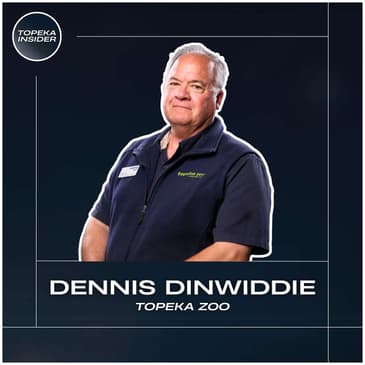
Dennis Dinwiddie shares his 15-year journey as Director of Conservation at the Topeka Zoo, where he oversees initiatives protecting endangered species locally and globally. Through partnerships with other zoos and conservation organizations, the Topeka Zoo funds rangers in Sumatra, supports black-footed ferret reintroduction, and creates habitats for monarch butterflies.
• Topeka Zoo funds a ranger in Sumatra's Leuser Range, the last stronghold for fewer than 400 remaining Sumatran tigers
• Monarch butterflies have declined by 90% in 15-20 years due to loss of milkweed, their only egg-laying plant
• The zoo hosts an annual native plant sale the day before Mother's Day offering milkweed and native flowers
• Black-footed ferrets, once declared extinct with only 18 individuals remaining, are now being reintroduced with the zoo's help
• "Dino Days" features life-size animatronic North American dinosaurs throughout the zoo until October
• Construction will soon begin on a $7.5 million tiger exhibit featuring Sumatran tigers, king vultures, and an education center
• The zoo now exclusively serves bird-friendly coffee grown under rainforest canopies without deforestation
Visit the Topeka Zoo for Dino Days now through October, and watch for the new tiger exhibit coming soon!
This episode is proudly brought to you by Choose Topeka! If you've been thinking about relocating to Shawnee County, Topeka might just pay you to move. Seriously. You could get up to $15,000 to live and work in Shawnee County. Check it out at ChooseTopeka.com.
________________________________________
0:00: Conservation at the Topeka Zoo
8:45: Saving the Sumatran Tigers
17:35: Disappearing Monarch Butterflies
26:15: Dinosaur Days at the Zoo
36:45: Prehistoric Kansas and Ancient Oceans
43:50: Why Topeka is the Perfect Size
________________________________________
Beyond the Podcast: 🎙️
Be sure to follow our Topeka Insider Socials below and check out our website for additional stories and articles pertaining to Topeka, KS
Website -- https://topekainsider.com/
Facebook --- https://www.facebook.com/topekainsider
Instagram -- https://www.instagram.com/topekainsider
Follow Your Hosts: 📱
Follow both Justin & Jon on their personal socials to get connected. They would love to connect and answer any questions about the show or their day to day.
Jon Griffith's Instagram -- https://www.instagram.com/thejongriffith/
Justin Armbruster's Instagram -- https://www.instagram.com/armbruster_jd
For Any Inquiries, please DM @TopekaInsider on Instagram!
Why do you think that, like a lot of those animals, aren't as large? We have a T-Rex fossil that's massive.
Dennis Dinwiddie:The biology of what allowed that gets kind of intricate and weird. Did you know that?
Justin Armbruster:No, I didn't know that. That kind of freaks me out, the unknown of our ocean.
Dennis Dinwiddie:You know, you show me the person who says there's nothing to do in Topeka, and I'll show you a person who never leaves their house.
Justin Armbruster:This podcast was brought to you by Choose Topeka. If you're thinking about making a move, Choose Topeka can get you up to $15,000 to relocate.
Jon Griffith:Whether you're buying or renting, topeka and Shawnee County are ready to welcome you. Apply now at choosetopekacom. Welcome to Topeka Insider. We've got Dennis Dinwiddie, director of Conservation at the Topeka Zoo, Right. Thanks for being here, dennis. Let's go, okay, thanks for being here.
Dennis Dinwiddie:Man, Glad to Thank you for the invite.
Jon Griffith:Yeah, absolutely so. You work at the Topeka Zoo. How long have you worked at the zoo?
Dennis Dinwiddie:About 15 and a half years now, cool.
Jon Griffith:That's awesome. And Director of conservation, what tell us about what that?
Justin Armbruster:means One. Can you spell that?
Jon Griffith:and what does it?
Justin Armbruster:mean.
Dennis Dinwiddie:Yeah, and you know, might be able to spell it, but I can't say it 10 times fast. There you go. But yeah, the director of conservation, basically my job is to oversee the zoo's conservation efforts locally, across the nation and around the globe.
Justin Armbruster:Yeah, have you been doing that job for 15 years or just with the zoo for?
Dennis Dinwiddie:15 years. We stood the conservation department up a couple of years after I got there, so I've been doing the director of conservation part for about 13 years.
Jon Griffith:Yeah, wow, that's great. Do you want to tell us about that? What does conservation at a local zoo look like? Sure, at a local zoo look like Sure.
Dennis Dinwiddie:Yeah, conservation is critical to zoo operations. Now for zoos and aquariums across the land. Normally, when we're talking about zoos and aquariums, we're talking about the accredited zoos and aquariums, those who rise to the standard of being able to be accredited by the AZA, the Association of Zoos and Aquariums as opposed to like Tiger King, or, exactly, as opposed to not a zoo.
Jon Griffith:Source subject John.
Dennis Dinwiddie:Unaccredited Right, and so the conservation programs for the AZA had tentacles to reach out into all the accredited zoos and aquariums across the country and around the globe. So what we do is we work hard in conjunction with, in partnership with, lots of other zoos and aquariums across the country and around the globe. So what we do is we work hard in conjunction with, in partnership with, lots of other zoos and aquariums and non-AZA partners also, to get real boots on the ground, get your hands dirty. Work being done in the field to conserve critically endangered animals of all kinds and habitats or ecosystems that they depend on for their survival.
Justin Armbruster:Wow, how did you get into this? Yeah, is this something you just had a passion for early on, or yeah, already had a passion for it.
Dennis Dinwiddie:Prior to going to the Topeka Zoo in 2010, I had spent 12 years running the W Clement Stone Nature Center and Nature Preserve, so I was already in that business of environmental education for a long time, and going to the Topeka Zoo allowed me to keep the environmental education mission going. But add to it the opportunity to do real boots on the ground conservation work, to do conservation work that makes a difference.
Jon Griffith:What was the first place that you were at before the Stone?
Dennis Dinwiddie:Nature Center. What's that?
Justin Armbruster:Where's that at?
Dennis Dinwiddie:It was a 372 acre nature preserve just west of Topeka.
Jon Griffith:Oh, okay, nice. So when you say boots on the ground, are you like going out into the field, like searching for things, like what does that mean?
Dennis Dinwiddie:No, we don't typically do that, because there are the people who are already there that have to have the support necessary to keep that going, and in some cases we are doing that.
Dennis Dinwiddie:For example, the Topeka Zoo funds the full cost of a ranger who lives and works in the lesser range in Sumatra, which is the last stronghold for Sumatran tigers on planet Earth. Wow, there are fewer than 400 Sumatran tigers left in the wild on Earth and half, or possibly slightly over half, of those live in that range, and so we fund the full cost of a ranger to be working and living in that range, in the lesser range. His job, along with his teammates, is to protect the timber, which is also of great value to poachers, protect the tigers, which are of great value to poachers, and fortunately and coincidentally, it's also the last place on earth where tigers, rhinos, orangutans and elephants all still live in the same place. So when he and his team are protecting the Sumatran tigers and we chose Sumatran tigers specifically because that's what we have at your Topeka Zoo Sumatran tigers so when he's protecting those tigers and the habitat that they depend on, he's also, um, at the same time, protecting all those other big, sexy, iconic uh species like that.
Jon Griffith:Okay, so my geography is a little rough. Where exactly is this? The lower lesser sumatran range?
Dennis Dinwiddie:the lesser uh range in sumatra. So it's uh, it's on the island of sumatra, but it's uh northern and just a little bit to the west on that. It's a huge, gigantic area.
Jon Griffith:And Sumatra is in Africa, oh no, india, you're embarrassing me, John.
Justin Armbruster:Did you know that? No, I didn't know that. Embarrassing me in front of Dennis, yeah.
Dennis Dinwiddie:But yeah, and that is a place where last survey showed that there was around 200, maybe up to 225 Sumatran tigers living there. Wow. But the carrying capacity, which means the number of them who can live there happily and healthy, is approximately 400. A Sumatran tiger surviving in that area, if we can just get control of the poachers who are killing them for their parts and the money that they make off of that.
Justin Armbruster:I'm assuming that's illegal. They can't be there Very much so yeah, yeah.
Dennis Dinwiddie:But it's also highly profitable. So you know, like so many other illegal things going on in the world, if it's highly profitable, there's going to be a little bit of find a way, a little bit of a contest.
Justin Armbruster:What's the incentive for a poacher to be killing these sumatran tigers?
Dennis Dinwiddie:is the uh the uh pieces and parts of the sumatran tiger are used in folk medicine in um countries around the globe and so you might use one part of one organ for this particular folk medicine here, and then another organ is good for folk medicine, and so basically the organs sell for a great deal of money.
Jon Griffith:We're talking about like shamans and witch doctor, like that type of thing.
Dennis Dinwiddie:Folk medicine is largely perceived to be less than effective on anything. But uh right, you know, there are a lot of places where folk medicine is the medicine that is available.
Justin Armbruster:He said less than effective. That's a nice way to put that.
Dennis Dinwiddie:I imagine.
Justin Armbruster:That's funny. I would not have thought that at all. I would think more. I don't know. Teeth and the fur, yeah for a rug or something.
Dennis Dinwiddie:Those things will not be wasted, but the real money is in the parts that are being used for folk medicine.
Jon Griffith:Wow, I would never have guessed that. Wow, that's crazy.
Dennis Dinwiddie:That is true of a lot of endangered species, really Rhinoceros. They're, by and large, critically endangered, depending on the species, because the horn from the rhino is harvested from the rhino. It's the only part of the rhino they take, but the horn is ground down into powder and then used for folk medicine. This is why rhinoceros species are endangered and critically endangered everywhere that they live, because their horn is of great value in folk medicine. Wow.
Jon Griffith:Maybe this is a slightly touchy subject. I don't know how this will go. We hold nothing back. It seems like a lot of the way this is a slightly touchy subject. I don't know how this will go. We hold nothing back. It seems like a lot of the way this is portrayed is like you have the evil, kind of like Western person who wants a rug, but that's not necessarily the main cause. It's more like indigenous peoples who want ingredients for medicines.
Dennis Dinwiddie:That is one of the larger parts of the problem and, as I said, the other parts of the body might not be wasted. So there might be the production of the rug, also from the skin or the pelt Right, right, the pelt but that's not the. In most cases that's not the valuable part. For example, back to the rhinoceros, nothing's going to be made out of that skin or pelt or other body parts. They're just after the horn.
Justin Armbruster:That's funny, because that was an interesting comment, because that's exactly what I thought.
Jon Griffith:I'm like, you know, it's us Americans that are just ruining it, or I picture the guy in Jumanji, the bad guy in Jumanji, you know, with the rifle and you know the huge mustache and the safari hat. That's what I feel like is always kind of portrayed as like, oh, that's the reason, elephants and tigers are all going extinct, but it's local medicine, yeah, for elephants of course. It's a different thing.
Dennis Dinwiddie:For elephants, it's for their ivory Right, for the tusks. So, for elephants. That might be the case. Elephants actually not the case. The tusks are not being ground down for folk medicine. That's actually not the case. Not being the tusks are not being ground down for folk medicine. The tusks are used for scrimshaw, or in other words, carvings.
Jon Griffith:Right, okay.
Dennis Dinwiddie:So they're made for ornate reasons.
Jon Griffith:Yeah Right, which is more like what I was imagining. You get kind of the foreign person coming to steal that or whatever. Yeah, yeah, crazy.
Justin Armbruster:Switching gears, something maybe a little more positive. You've been in Topeka Zoo 15 years. What is your as someone who knows everything about the zoo? What is your favorite part about the zoo?
Dennis Dinwiddie:You know, I think my favorite part about the zoo is the size of it because we are, by comparison to many other zoos across the country. We'd be considered a small zoo. But what that means is that you can bring your children to the zoo and you can cover the whole zoo in a reasonable period of time, reasonable being defined before the kids are exhausted and cranky and difficult and all that. Amen, brother. So you can get them around the zoo to see everything. But despite the fact that we're smaller, we kind of specialize in the larger animals. So I mean, even though we're a smaller zoo, we have the lions and tigers and bears oh my we also have the giraffe, the hippo, you know we have lots of the larger animal species that people really enjoy.
Dennis Dinwiddie:We also have a lot of the smaller animal species really enjoy. But being a smaller zoo means you can get to from one exhibit to the next without having to walk for 20 minutes to do it. And then, when you get to the next exhibit, the animal in that exhibit just like the last one you're able to get more up, close and personal with it so that you can look it in the eye and make that bond, make that connection, realize that it's looking me right back in the eye too. So in that way, I think we do a great job of being able to make the animals more personal to people and the experience more personal. And that's what we're after, because we want people to bond with these animals, to care about them, to care about their species and the place where their species need to depend on out in the wild. Yeah, Interesting.
Jon Griffith:So you're doing conservation. Is most of the conservation you're doing in Kansas or it's more like abroad, like sponsoring the ranger in Sumatra.
Dennis Dinwiddie:We have a combination of both. We have some right here in Kansas, some in other countries, but we have a lot of local conservation because we do like to keep it close to home. Also, we do an enormous amount of work, for example, with monarch butterflies and pollinators, creating the wild spaces they need, the native spaces they need reseeding or turning grasslands into flowering grasslands, restoring prairie, doing restoration work, creating the things that help pollinators but also that help monarch butterflies, specifically Monarch butterflies. We've lost more than 90% of the number of monarch butterflies in North America just in the last 15 to 20 years or so, really. And so the big, beautiful orange butterflies that everybody loves so much Wow.
Dennis Dinwiddie:This year, for example, it was a very slim year for monarchs and in September, when the migration comes back through, going to Mexico to overwinter, it'll be a very slim migration because there just aren't nearly as many. Do they have any idea why? Oh yeah, we know exactly why. The resources that they need to find in the wild, they're not finding them in the wild so much anymore. For example, monarch butterflies will lay eggs only on milkweed, milkweed and nothing but milkweed. If they don't find milkweed, they won't lay eggs. Well, milkweed was considered an unfavorable species for so long to places, to peoples, that it has been largely kind of disappeared over time.
Jon Griffith:And not for aesthetic reasons.
Dennis Dinwiddie:It just wasn't the prettiest flower on it when it bloomed, you know that sort of thing. But also because it grows well along places like long highways and everything where it's mowed Right. So milkweed production fell in the wild, and by that I mean the wild production, its own reproduction. We lost a lot of milkweed. Well, that's the only place they lay eggs Interesting. Now we plant a lot of milkweed. Well, that's the only place they lay eggs Interesting Now we plant a lot of milkweed.
Dennis Dinwiddie:We have the native flower sale every year that we sell a lot of milkweed. We plant milkweed with other people in other places. We're doing a lot to create milkweed places for monarchs to lay eggs. In addition to that, they depend on native flowers, the flowers that have taken eons to evolve and they evolved with it. So, for example, they can't roll their little proboscis, they're feeding tube out and suck the nectar or the energy they need out of, say, annual flowers. They need native flowers, and so we plant a lot of native flowers.
Dennis Dinwiddie:We have a big native flower sale the day before Mother's Day every year At the zoo, at the zoo, cool, and so in that we sell for a very low cost several thousand native flowering plants for people to buy and take home and plant, and then monarchs and other pollinators find those and get the nourishment they need to stay healthy. So we do a lot with monarchs. We're part of a very active part of the International Operation Monarch Watch where we take whole school groups, whole families. This happens the last two weeks of September when the monarchs are migrating through Topeka back on their way to Mexico from as far north as southern Canada Wow, and we catch them, we tag them, we release them and then between here and where they go for overwintering and when they start back north and make it to about Texas, before they lay their eggs and die, people are looking for those tags and they find those tags and that adds a lot of baseline scientific information that we use to help us know where to protect, where to plant, where to do things to support monarchs.
Jon Griffith:So if you planted, if someone in Topeka were to plant milkweed and native flowers, could they expect to see more monarch butterflies around their property? For instance?
Dennis Dinwiddie:Yeah, because the monarchs there are some monarchs that stay here in Kansas when they start, when they overwinter. Their overwintering grounds are not too far outside of Mexico City, in Mexico, and they're at a perfect elevation, perfect humidity, perfect rainfall, perfect canopy of just the right force and all that. And so they all go there every winter, from the Midwest, everywhere between the Appalachian Mountains and Rocky Mountains. And so they all go there every winter from the Midwest, everywhere between the Appalachian Mountains and Rocky Mountains, and as far north as southern Canada. All the monarchs in that entire space will fly south to those overwintering grounds and stay there for the winter. In the springtime they start north and they make it to about Texas and lay their eggs and die. Then those eggs, of course, become caterpillars which become adult monarchs, and they continue north, typically about one state around Oklahoma, lay their eggs and die, and then that generation becomes monarchs that fly north to about Topeka, kansas, lay their eggs and die, et cetera, et cetera, until they get up to as far north as southern Canada.
Dennis Dinwiddie:But in the fall, they all know it's an instinctual thing that science is still studying. How do they know this? But they know it's time to start and basically, they use the sun as their dial for when I need to start south, because I'm going to run out of food here pretty soon. And so they all go to the same place in Mexico that they've never been to before. That's insane, and it might have been four or five generations since the last monarch was there, and yet they all go to the same canopy of the same trees, in the same forest, on the same mountainside, and science is still studying. How do they know, right? How do they know?
Jon Griffith:that. But it's kind of crazy to think that a monarch butterfly could make it from Canada to Mexico. That seems like really far.
Dennis Dinwiddie:That's the super generation. You know, the ones I was describing that started north, how they only make it about a state, lay their eggs and die.
Jon Griffith:Oh, so it's only one every five or so.
Dennis Dinwiddie:Yeah, it's only the super generation that in the fall, that generation, when they start south, they're going to survive long enough to make it all the way to their overwintering grounds and then spend the winter there and then, in the spring, start north, make it to around Texas. That's crazy. Science is still studying that a lot too, and it's every year.
Jon Griffith:So there's some from that generation that are every year going down.
Dennis Dinwiddie:Yeah this September, for example, monarchs will migrate through Topeka, through all the Midwest, on their way to the overwintering grounds, and they'll arrive there. Then they'll spend the entire winter there and in the spring they'll start north and make it to about Texas. Yeah, yeah, crazy, but then after that each generation will only live for a few weeks.
Jon Griffith:Oh, wow, okay, so it's fascinating Kind of a bummer roll of the dice like either for a few weeks or like a whole year yeah, like what a brutal yep dang well, moving to, maybe one of the reasons people are watching this.
Justin Armbruster:Uh, can you tell us a little bit enough about butterflies. We want to know about dinosaurs okay, yeah can you tell us a little bit about the topeka zoo's dino days that's going on? I guess I know nothing, but I you tell us a little bit about the Topeka Zoo's Dino Days that's going on. I guess I know nothing, but I've been hearing a little bit about it. Okay, what is it?
Dennis Dinwiddie:We do have Dino Days, which of course is Dinosaur Days, and we've got over a dozen life-size animatronics. So make a lot of noise, make a lot of movement, dinosaurs all over the zoo. And then we have a dinosaur education center in our animals and man building, the building that has the that houses the elephants and the hippo, and so, as you're walking the sidewalks, these are controlled by movement. So when you get close enough to the dinosaur it kicks in the. The little laser figures out you're there and it kicks in. And just at the right time to scare you out of your shoes, it turns on you and growls at you very loudly.
Dennis Dinwiddie:Oh, that's awesome, so it's fascinating. The kids love it. We love watching the kids respond to those dinosaurs and all their movements, all their noise, and so it's a great deal of fun.
Justin Armbruster:The kids and Justin. The kids and Justin get excited. Yeah, oh yeah. The kids and the adults. Yeah oh yeah, we can see a few, a few adults. Take a few steps backward also. What kind of dinosaurs, uh, what kind of exhibits do you guys have?
Dennis Dinwiddie:oh, we have a dozen different species of the dinosaurs we had there. The favorites, of course, of at any dino thing you do anywhere in the world are um, the tyrannosaurus rex, the big t-rex big t-rex uh, got two of those in fact, um. And then we have the Triceratops. Those are everybody's favorites. Yeah, the T-Rex we have the full-size T-Rex in one location. In another location, because of the movie that made dinos a household word we have the dinosaur that the T-Rex head is just popping through the trees, and under it is the jurassic park jeep yeah, just like the jurassic park.
Justin Armbruster:Jeep, that's awesome, that's so cool and uh.
Dennis Dinwiddie:So you can imagine yourself being in that jeep. You look out the window over your head and there's t-rex head right on top of you, coming down on you?
Jon Griffith:do you have the? Uh, do you have the? Like? The iconic porta potty experience people can have too. We don't have iconic porta potty experience people can have too.
Dennis Dinwiddie:We don't have the porta potty. Experience Are these like life.
Justin Armbruster:How big are they? Life size, life size yeah, we got to go.
Jon Griffith:You do. No, my six-year-old will be demanding. We go often.
Justin Armbruster:Well, you'll enjoy it. How?
Dennis Dinwiddie:long does this go for? It will be here until October Be here until October yeah. But yeah, you got to go because, like, a couple of them are so large, because they're life size, that when you want to photograph it you have to back way up to get that whole thing in the photograph, 0.5.
Justin Armbruster:Wow, 0.5 for you.
Dennis Dinwiddie:So yeah, it's a great dino exhibit with great dinos and, like I said, animatronic. They move, they make noise. We have the education center. It's kind of fascinating, and so lots of dinosaur stuff. If kids like dinos and by this course I mean kids of all ages Right At my age I'm still a kid when it comes to dinos.
Justin Armbruster:Yeah, I'm on that. Is this Topeka's first time doing this, or have they done this in the past?
Dennis Dinwiddie:No, we actually brought dinosaurs back because we did this several years ago and they were just wildly popular Right Numbers through the roof of people coming to see the dinos and it was so popular that after a few years now we do those little informal surveys uh, what would you like to see the zoo do next? Do dinos again is what?
Jon Griffith:we'd like to see you do next, do dinos and so we did, and so dinos are back oh wow, super cool. So is there anything different this time about uh dino days than the previous time?
Dennis Dinwiddie:One of the things that's really fascinating to me is that all the dinos we have this time were dinos that were found in North America. So I've been kind of telling people that, you know, the dinos aren't just back, the dinos have come home, wow. Let's go, let's go yeah, the dinosaur species you see all over our zoo are ones that you step up to them and look at the dino, read it and you can see what part of the United States it was discovered in the bones and all the evidence.
Jon Griffith:Wow.
Dennis Dinwiddie:So, yeah, the dinos at Topeka Zoo are the ones that have come home to the United States. Yeah, I love that.
Jon Griffith:Go ahead. Well, I was going to say what do you think about? To me it seems like a controversy, a little bit like you have. Dinosaurs have always been portrayed like they are in jurassic park, like giant lizards, but it seems like now. So my kid's obsessed with dinosaurs, like he knows the most obscure dinosaur names and he'll tell you exactly what it is what's his favorite dinosaur?
Jon Griffith:uh, I mean probably the t-rex, but it changes based on the week you know it changes based on, and every now and then it'll be some super obscure thing, but it seems like a lot of the books we're getting now for our kids, like a lot of the dinosaurs that you know, like a T-Rex or like I don't know some of the other ones now have feathers like they're portrayed like birds, right, is that like? Is that a changing kind of belief about the way dinosaurs maybe actually were, or Actually, that's every year.
Dennis Dinwiddie:It seems there is more and more very solid evidence that birds evolved from dinosaurs. Ok, yeah, it's not a case of birds having just been around at the time of the era of the dinosaur, but they did in fact evolve from dinosaurs. So we have things on Earth today that were here when the dinosaurs were here 65 million and more years ago. But you know, the KT extinction event 65 million years ago was the one that ended the era of the dinosaur. What did you call it? The what? The KT extinction event 65 million years ago was the one that ended the era of the dinosaur. What did you call it? The what? The KT extinction event, kt.
Dennis Dinwiddie:That's when the giant meteorite 12 miles across hit the.
Dennis Dinwiddie:Yucatan Peninsula hit Earth at what is today called the Yucatan Peninsula and the resulting actions from that that blocked out the sun. Plants died, so the plant eaters died and the meters had no plant eaters to eat. So the series of the sequence of events that was also going along at the same time, with volcanic eruptions that put all kinds of toxic fumes into the air, and then when it rained, that took that down to the water, so everything became acid water in places. There were a series of different things that killed off dinosaurs six, five million years ago, but the big one was the KT extinction event when the meteorites. Why is it called KT? Yeah, that's a good question. Probably the acronym for the names of the people who made the discovery, he's not a paleontologist man?
Justin Armbruster:I never heard that one Back off.
Jon Griffith:Yeah, that's interesting. I I don't know why I always just pictured the there's like a big crater up in canada, like on the map, like a huge, like visible. I assumed that was the spot, but I didn't realize this yeah, the in the yucatan peninsula.
Dennis Dinwiddie:It's uh 12 miles across and ended up going like a mile deep into the earth. It was just a gigantic collision, wow, one that became a global killer for lots of species. Not all of them, but more than half the life on earth disappeared as a result of it, including all the dinosaurs.
Jon Griffith:So it wasn't just that they missed Noah's Ark. I'm sorry, it wasn't just that they missed Noah's Ark, yeah different era.
Justin Armbruster:Damn, that was today, huh Different era, I think Tell us a little bit, go ahead, sorry, no I was just going to say.
Dennis Dinwiddie:There are things that are still left from the era of the dinosaur, like what we call Chelonians, the turtles and tortoises yeah, the birds that evolved from the dinosaurs, the crocodilians, you know, like alligators, crocodiles, gharials, caimans, things like that. So dinosaurs did not completely disappear, because we still have things on Earth today that were here at that time or have evolved directly from them.
Jon Griffith:Why do you think that, like a lot of those animals aren't as large as you know? Like we have a T-Rex fossil, that's massive.
Dennis Dinwiddie:Yeah, you know, it's the biology of what allowed.
Dennis Dinwiddie:That gets kind of intricate and weird and more than what most people want to hear, like atmospheric factors, like that kind of thing. No, I mean the biology of the bodies. For example, you know the dinosaurs were reptiles, but they were. You know, reptiles today are. They're ectothermic, they're cold-blooded. They do not produce their own body heat. They have to absorb heat from the outside world. That's why you see a snake basking on the pavement after sundown. He's sucking up the heat from the asphalt and such.
Dennis Dinwiddie:But in those days, however, the dinosaurs were the exception to that. They were reptiles, but they were warm-blooded. They produced their own body heat. So the result of that was they were so large that they had to have what is called fenestra. Those are holes in their skull that allowed the brain to cool, because if they didn't, the body was so large that when it's producing its own body heat, it would produce so much heat with that much body that it would cook the brain. So that actually became a limiting factor for a lot of other species. For why aren't they bigger? Because they would cook their own brain if they're warm blooded. Interesting. Dinos had a way to not let that happen. They evolved with the ability to get that large and still remain healthy.
Jon Griffith:Well, I have some friends with cooked brain syndrome.
Dennis Dinwiddie:Okay, we won't ask you to name them. They might be listening. Yeah, exactly.
Justin Armbruster:That's funny. Yeah, they might be listening, yeah exactly.
Dennis Dinwiddie:Yeah, that's funny. Tell us a little bit about the educational exhibit that you had headed up in the A&M building about the dinos. What exactly is that variety of things in there that talk about each era or stage of the development of life on earth, including and focusing on the era of the dinosaur? And so we have also. We have things in there like, for example, we have the feathers. We talk about the connection between dinosaurs and all of today's birds. We have coprolites in there, which is fossilized dinosaur poop that's called a coprolite, and we got some of those authentic dinosaur poop you bet Hard as rock, because now it is rock.
Jon Griffith:How do they know that that is like from a dinosaur?
Dennis Dinwiddie:Well, you could actually. First, you can actually recognize shape, form and design of it. But secondly, enough of it was studied by, you know, slicing it and doing all kinds of samples on it back when they first started.
Justin Armbruster:Give it the sniff test. Yeah, back when they gave it its name.
Dennis Dinwiddie:A lot of research back back when they gave it its name, a lot of research back starting when they gave it its name and said we think that's what this is, so let's find out. But then on top of that, we have a great exhibit for what we had life on earth we had in Kansas during the era of the dinosaur. We didn't have many dinosaurs per se in Kansas because Kansas was under the Western Interior Sea. Kansas was submerged under a couple hundred feet of ocean at that time. Other parts of the country were not, but Kansas was, so we had different kinds of life from the era of the dinosaur.
Dennis Dinwiddie:So we talk a lot about prehistoric Kansas and what was here then, about prehistoric Kansas and what was here then. You know things like the saber-toothed tiger that everybody's heard of. We've got a great saber-toothed tiger skull on exhibit. We have things on exhibit from mastodon and mammoth, but older than that. We have things on exhibit authentic bones and biofacts from when Kansas was underwater and we had the gigantic mossasaurs who were swimming our seas, which the size of a dinosaur not a dinosaur, because it was not a reptile, but the size of a dinosaur gigantic teeth and swimming all over the top of what would later be called Topeka Kansas. Catching things in the water, wow.
Justin Armbruster:You know I was before you even said that I was going to ask you about this because it freaks me out and you seem like you're just a wealth of knowledge of all sorts of animals, dinosaurs.
Jon Griffith:Or I fake it really well or you fake it really well. Before we get to that, if you've been thinking about relocating, Topeka might just pay you to move Seriously.
Justin Armbruster:You could get up to $15,000 to live and work in Shawnee County. Apply now at choosetopekacom. Now back to the show. That kind of freaks me out. The unknown of our ocean yeah, you know things that are down there that we just have no idea. You said something. Swimming around the size of a dinosaur.
Dennis Dinwiddie:Yeah, the mossasaurs were. They were just gigantic creatures. They were waterborne creatures, of course, in the ocean, but Kansas was under the ocean at that time.
Justin Armbruster:Yeah, that I don't want any part of that.
Dennis Dinwiddie:How do we know that thing's?
Justin Armbruster:not still down there Like how do we? I mean, how, what do we? I was hearing some stat like we know dangerously little about the ocean compared to, like, what we know about space. Right, do you think there are lots of species in the ocean that we don't even know about?
Dennis Dinwiddie:Oh, I, you know. I think if you talk to scientists who do that for a living, exactly, they'd be the first to tell you that there are plenty of species that we have not identified yet. There are still species being identified on land, you know, and the ocean. The depths of the ocean are a lot more difficult to get to than that. Even so, yeah, there are still species being discovered originally and originally named, even today in the oceans. I think that will occur for a long time to come.
Jon Griffith:Do you still think, though, that there are like giant creatures in the ocean, like surely all the huge ones we've probably seen.
Justin Armbruster:Help me out, Dennis. I'm getting a little scared.
Dennis Dinwiddie:Yeah, not the big ones. There won't be any mosasaurs swimming around the ocean that we haven't found yet.
Jon Griffith:I know we have the giant squid. That's kind of elusive, but we've still seen it before. Yeah, but at least we know about it.
Dennis Dinwiddie:Yeah, exactly.
Jon Griffith:There's no giant animal on land, twice the size of an elephant, walking around, that we haven't found yet.
Dennis Dinwiddie:No that one would have already been found. Exactly, yeah, but it's like little things, or maybe are they like variations of things, maybe they're like oh, we didn't realize, it's actually different even in the uh depths of the ocean, where there is still so much left to learn, you're not going to find creatures of that size down there. So right, we don't have to worry about uh sea serpents um suddenly appearing or anything like that.
Justin Armbruster:Good, I can go to bed now, so now you can go back to the water.
Dennis Dinwiddie:That's right.
Jon Griffith:Yeah, that's the last time I get in the OTC. We still haven't found Nessie yet.
Dennis Dinwiddie:Yeah, nessie still hasn't been discovered. Yeah, been claimed by many, but nothing yet. Never photographed, never photographed.
Jon Griffith:It's like Sasquatch it's always a blurry photo. Yeah, so I'm convinced the Sasquatch is just blurry, like they've gotten clear photos. He's just blurry you know, maybe that's just the way he's built. Yeah, he's just very pixelated as a creature.
Justin Armbruster:So tell us. I mean, you've been at the Topeka Zoo for 15 years and you were living just outside Topeka before.
Dennis Dinwiddie:I mean you've been around Topeka for a long time? Oh yeah, I've been in Topeka since kindergarten.
Justin Armbruster:Okay, so you grew up here. You've got to see Topeka evolve, grow, change. Tell us, what do you love the most about Topeka?
Dennis Dinwiddie:Oh, you know, I think Topeka is a great city. That's why I'm still here. It will be the rest of my life it's you know. It's large enough that there's always something to do, there's always plenty of great things going on, but small enough that you still constantly run into people that you know and enjoy. And so I enjoy the community very much for the reason I enjoy the Topeka Zoo. I think it's just the right size and great stuff going on all the time.
Jon Griffith:That is actually a great analogy for the city of Topeka, the Topeka Zoo. It's small enough to get around anywhere you want in a pretty short amount of time, but it has all the big stuff that you want to see.
Dennis Dinwiddie:It is. You know, I'm still amused when I hear somebody say something like well, I'll ask do you want to go to this restaurant or that theater or whatever? And they're like oh you, oh, that's all the way across town and I have to imagine this is not Los Angeles. Across town doesn't mean anything here.
Jon Griffith:It's going to take 10 minutes to get across town.
Justin Armbruster:That sounds like the conversation I had with my wife literally this weekend. Where do we want to go eat? I'm like, oh, we should go to Iron Real. She goes oh, that's so far away. I'm like, so far away, it's like 15 minutes it is a bit of a wake-up call.
Jon Griffith:when you go to big cities like Dallas and traffic is terrible. It is or Houston or LA or whatever and it takes an hour to go three miles. It's so brutal. We have it so nice in Topeka.
Justin Armbruster:Topekans don't even know that it's taken for granted.
Dennis Dinwiddie:Yeah, they haven't been to enough big cities. It's been about a year ago since I was in Dallas, actually, and it's one of those things where you can spend 20 minutes going in one straight line but because of all the stops, all the traffic, all the non-movement, after that 20 minutes you can turn around and see where you started from Exactly, exactly. In Topeka I would have already been where I was, going out of the car, inside and having a great time.
Jon Griffith:I know I would have already ordered my meal by this point. It's so painful.
Justin Armbruster:Okay. So say you have a friend family coming into town who aren't in Topeka and you're in charge of planning a weekend and you have to give them something to do, a place to eat or something to do. You can't say the Topeka Zoo.
Dennis Dinwiddie:I can't, because that's where I would normally start. That's a given. You can't say that we asked hard-hitting questions not softball.
Justin Armbruster:If we let you say that, okay, what would you have someone do you?
Dennis Dinwiddie:know, one of the things I'm really looking forward to is the opening of the Kansas Museum of History. A lot of people from right here in Topeka might not realize that we have a world-class museum, and it was already great, and now, with the changes they're making, I know it's going to be even more extraordinary. But we also are within a very short driving distance of several different reservoirs and everything that you can do at reservoirs you can rent canoes, kayaks, boats of any size.
Dennis Dinwiddie:You can fish, you can hike, you can swim kayaks, boats of any size. You can fish, you can hike, you can swim, um and uh. So there's just uh, topeka is one of those places where there's just always something to do. Yeah, you know, you show me the person who says there's nothing to do in topeka and I'll show you a person who never leaves their house.
Jon Griffith:Well, of course you don't leave the house, it won't be anything to do. But yeah, that's so true. Wait, so the the kansas museum, right, uh, is that up on like 6th and Wanamaker, sort of 6th and Wanamaker?
Dennis Dinwiddie:are a little bit further west, on 6th from Wanamaker.
Jon Griffith:I literally just noticed that for the first time last week and it's being renovated it is.
Dennis Dinwiddie:There's a huge renovation going on for a while, but it is set to open this fall and lots of people looking forward to it. It's really looking forward to what a great exhibit they've got.
Jon Griffith:Is it a natural history museum? Is it people?
Dennis Dinwiddie:No, it's not a natural history. I mean, like normally, when you say natural history museum, you're talking back to again the era of the dinosaur, you know prehistoric Kansas and like that. So we're all waiting to see what it's going to be. Oh, so we don't know. No, I mean previously they had extraordinary exhibits on Native American history in Kansas, for example.
Dennis Dinwiddie:People's history, yeah, things like that and everything from Civil War and just all kinds of great Kansas history. This time we're all waiting to see. I know that they've kept a bunch of that, but we're all waiting to see what all they've done new. It's really going to be pretty exciting to see that. Wow, that's awesome. So things like that always, always things to do in Topeka.
Justin Armbruster:Yeah, where are you taking an outsider to eat in Topeka?
Dennis Dinwiddie:I'm going to. First of all, I take them to Blind Tiger, because then they're going to have to drink Tiger Bite IPA. Okay, and the reason for that is because every time you drink a Tiger Bite IPA at Blind Tiger, blind Tiger gives the Topeka Zoo's Tiger Conservation Fund a quarter for every one of those Dang. All right, so go to Blind Tiger. Great barbecue, great steak, great everything. Yeah, and Tiger Bite IPA. That's going to be the first beer you see on the beer list. That's cool. They're very generous, very kind that way.
Jon Griffith:That is cool, that's so cool. Wow, that's amazing, man. I like how, when you mentioned things to do, you didn't say lakes, you said reservoirs.
Dennis Dinwiddie:Yeah, well, should have said lakes too, because Lake Shawnee is a jewel in. Shawnee County. I know you're familiar with lake shawnee, right? Yeah, that's just a beautiful beautiful wait.
Jon Griffith:So what are the reservoirs then? Because I assumed maybe you were just using a more scientific term or something.
Dennis Dinwiddie:Oh, no reservoirs. They're just typically um, pretty dramatically larger, um, ah, so, uh, like perry reservoir, clinton reservoir, right, okay, yeah, so I mean, we've got several reservoirs, uh, within a short drive, like Perry Reservoir and Clinton Reservoir, right, okay, yeah, so I mean we've got several reservoirs within a short drive.
Justin Armbruster:I'm nodding like I knew that Right, yeah, yeah, yeah.
Dennis Dinwiddie:Well, we do. I mean we have Milford and Junction City and also Tuttle. Then we have the Perry and Clinton right here, only 20 minutes down the road.
Jon Griffith:So lots to do with residents at the. So, in concert in your work with conservation, are what is like the closest area um to us now that you get to work on doing conservation uh, geographically closest, yeah, uh, well, one of them we mentioned already.
Dennis Dinwiddie:We do a lot of work with poll already. We do a lot of work with pollinators. We do a lot of work with monarchs. But in addition to that, we also one of the cool things a couple of one of the many cool things that the zoo does is we work a lot with black-footed ferrets. I don't know if you're familiar with black-footed ferrets, but they are the native ferrets to the United States and North America. Here You've seen the domestic ferrets, the European ferrets, like little ferrets you could buy at a pet shop.
Jon Griffith:Yeah, the ones that burrow in your couch.
Dennis Dinwiddie:Yeah, those are the ones. Well, you know, we have native ferrets which are not those, but we have native ferrets and at one point they were actually classified as extinct. What they had been classified extinct for quite some time, up to the 70s. And then in a little town called Matitz, wyoming, the farm dog brought up a dead body one day of an unknown animal to the farmhouse and a couple who lived there looked at it and the husband said don't know what it is, throw it in the burn pile. But the wife said, no, we'll take it to the university and see if they can identify it.
Dennis Dinwiddie:And so she walked in there and said can you all tell me what this is? And a flurry of excitement because, yes, we'll tell you what that is. That's a species that is supposed to be extinct. Where did this come from? And so overnight research, emergency level research, go find where this thing came from. And they found it and it was a very small colony which scientists moved in right away. Us Fish and Wildlife Service moved in right away and said, wow, this species is actually still alive.
Jon Griffith:Wow, Was it the only colony in the US? The only colony left in the United States, which means the only colony left in the world, because this is the only place where they are.
Dennis Dinwiddie:That's crazy, wow. And so then they watched it very closely for a couple of years and allowed it to just continue, since it had been continuing. Right, it's still healthy, leave it alone. But then it suffered about with a plague that killed off much of them, and there were only 18 left. With a plague that killed off much of them and there were only 18 left. So, with the help of you guessed it accredited zoos. The 18 that were left were caught up and brought into an emergency breeding operation to save the species, so it did not completely disappear from the earth forever. And US Fish and Wildlife Service built a great reproduction center for black-footed ferrets in Colorado, and so they have been reproducing those to the point that they were able to start releasing them back into the wild in places where there were prairie dog colonies to support them, because the only thing they eat are prairie dogs. Bad day to be prairie dogs.
Jon Griffith:Bad day to be prairie dogs. No predators till today.
Dennis Dinwiddie:So we have a 10,000 acre site in Kansas that has it is a release site for black-footed ferrets and Topeka Zoo has been working directly with that site and the preservation of black-footed ferrets in Topeka ever since 2007, when the very first one was released back into the wild in Kansas area. So we do surveys every year where you go out and actually find the ferrets and trap them, take them to the medical tent so they can get an inoculation from plague, general medical checkup, make sure they're healthy, do anything that might need to be done to keep them healthy and then release them back into the exact same prairie dog hole where you caught them from. So we've been doing that, been involved with the releases of the ferrets from the Carr Colorado site, and so we're directly involved with the black-footed ferrets. Another cool thing the Topeka Zoo does your question on geographically what is some of the close stuff we do?
Dennis Dinwiddie:We have a couple of people at our zoo Joe Maloney, riley Guffey who are involved with the Salt Creek tiger beetles In Nebraska. There's a really cool little beetle, just no bigger than that, the size of an eraser on a number two pencil, and so they live in a high saline, high salt flat in Nebraska, and it's the only place left on earth that they're known to live Well. The Topeka Zoo works with a variety of other agencies from Nebraska, including the Henry Dorley Zoo in Nebraska and Omaha, nebraska, and so they're born there. They come to Topeka to a rearing chamber that we have in our rainforest where they're raised until just the right age, and then our staff take them back to Lincoln County in Nebraska to place them in little prepared holes in the salt mud flat there. Wow, so that's a species that is being kept alive, in large part because of what the agencies directly involved are doing, including the Topeka Zoo.
Jon Griffith:Wow, so the ferrets got down to 18. Do we know how many there are now?
Dennis Dinwiddie:The number? We don't know for sure because there are I believe it's 21 different reintroduction sites in the wild, from Canada to Mexico and all points in between, but we do know that the total number of them would still be measured only in the hundreds, not thousands. Okay, wow. So, I got another zoo question for you.
Justin Armbruster:You've seen a lot of zoos. You've been doing this for a while. Money's no object. If you could take an exhibit or something about another zoo, whether it's you know a big you know the Omaha Zoo, anything in New York, you know big exhibits what would you bring to Topeka?
Dennis Dinwiddie:Money's no object. You know, one of the things that we would do that other zoos are also doing now is back to the Smatran tigers. Just for a moment on that, because we're just about to break ground on a big, beautiful, amazing new tiger exhibit. Yeah, yeah, let's go, and so you probably heard about that one. It'll be approximately a seven and a half million dollar tiger exhibit. It'll have king vultures around the tigers. Wow, it'll have an education center in the exhibit on tigers, and so that's going to be an amazing new tiger experience. Yeah, yeah, wow.
Dennis Dinwiddie:So things like that and you know that's the next big thing and we're about ready to break ground on that soon now yeah, so other things would be that you know, anytime you have species that are in need of conservation, you'd like to get your hands on the real ones, because they become the ambassador for their species. And then we also have a great, a magnificent education program at Topeka Zoo. They'll do over 500 formal education programs this year, for example, one hour and two hour presentations and for an education staff of three people doing well over 500 formal programs in addition to everything else that they do also. That's a really busy schedule for them, but they also have the ambassador animals that we use for education programs. Every education program from the Topeka Zoo has multiple live animals at it, normally up to six live animals, because live animals are the ones that allow you to make that bond, make that connection with that animal and all their wild cousins, so that, so that we can always be promoting that conservation message Cool.
Jon Griffith:Wow, that's awesome. And then they're building like a penguin exhibit right, or they're going to in the uh distant future we're not sure when, but uh, we, uh.
Dennis Dinwiddie:We'll be talking about, uh, some more water related things, and penguins was one of the species being talked about okay, so it's not necessarily locked in, not necessarily locked in. That's uh, one that requires an enormous amount of um pumps, filtration chillers, all kinds of the big water exhibit things.
Justin Armbruster:Right right, I was just getting ready to ask how much money do you think it costs to put in that exhibit?
Dennis Dinwiddie:You know, it's impossible to say right now because, having not even made it to like, that's not even like drawn out on exact locations and such size gallonage, everything will play into how much that will cost. And yeah, so a lot. Right now it would just be a total guess if I actually threw a number out. Yeah, 500 million dollars, 500 million dollars. Yeah, hopefully not quite that. Yeah, that might be a deal breaker there, that, uh, yeah, yeah yeah, no kidding.
Jon Griffith:Well, man, thank you so much for coming on.
Justin Armbruster:This was incredible you want to get some rapid fires.
Jon Griffith:Yeah, yeah, we got some rapid fire questions for you. We already have to think fast yeah, yeah, well we've hit you with a few of them already, like we were asking where you'd go to eat and things like that. Are you a coffee guy?
Dennis Dinwiddie:uh, no, actually, but since you bring that up, can I make a point on that? Yeah, the topeka zoo is now uh finalizing our uh transfer over tofriendly coffee being the only kind that you'll be able to get at the Topeka Zoo. Really, if you're not familiar with bird-friendly coffee, what that means is that coffee is typically coffee beans that all coffee comes from is grown under full sun, open area, which means that coffee producers are felling rainforest so that they can plant coffee. But the problem is in rainforest regions kind of like palm oil the same issue that in only a couple of years it sucks all the nutrients out of the soil. So then the only way to keep it going is move down next door and cut down another hundred acres of rainforest and plant coffee. That's only going to last for two years before you have to do it again. Oh, really.
Dennis Dinwiddie:But bird-friendly coffee is coffee that is made exclusively from coffee beans that are grown under the canopy in the rainforest without doing any damage to the rainforest. Wow, and it takes longer for the coffee beans to ripen, which is why most of the producers don't want to do it that way. But at the same time, taking longer also makes for richer beans and better tasting coffee. And so, since you asked, are you a coffee guy? I thought I had to throw that in there. Yeah, the Azu has just finished transferring completely over to. The only coffee that we serve is bird friendly coffee.
Dennis Dinwiddie:Because that's a way of helping to preserve rainforest.
Jon Griffith:Are they going to open that up to the public? I feel like that should be a coffee shop that you don't have to necessarily go to the zoo.
Dennis Dinwiddie:You could, like you know, visit anytime. Um well, you can't come to the zoo anytime you want and get coffee, all right friendly coffee when you do, it's going to be bird friendly coffee I love it, love it so especially like during our um holiday lights program.
Jon Griffith:Uh you always sell a lot of coffee.
Dennis Dinwiddie:And then the cafe, uh, sells coffee all the time. But that was a long answer to a short question, which is no, I've actually never developed a taste for coffee. There you go. I get all my caffeine through iced tea.
Justin Armbruster:All right, you're doing a home project Lowe's Menards Home Depot. Where are you going?
Dennis Dinwiddie:You know, since I'm here speaking for the zoo, I don't think I want to get them in trouble with two organizations by saying that we use the other one. Yeah, I mean, I've had great luck dealing with all three of them.
Justin Armbruster:I'll take that as a minority, yeah.
Dennis Dinwiddie:There we go.
Jon Griffith:He's like yeah, right, okay, what else have?
Justin Armbruster:we got. How many potholes did you hit on your way over here today?
Dennis Dinwiddie:It's kind of hard to miss them, isn't it? That's a good answer. Good answer Now I can zigzag with the best of them now.
Justin Armbruster:Yeah, yeah, I love it. Are you married? Yes, you're taking your wife on a date. Where are you going?
Dennis Dinwiddie:Well, pretty soon here, hopefully, to the new Tom Cruise movie. Yeah, when there are seats available in the theater.
Jon Griffith:There we go. Are you going to sprint there like?
Dennis Dinwiddie:Tom Cruise. You know, at my age I don't sprint a whole lot anymore, but I might as well just drive an air conditioned car instead.
Justin Armbruster:Yeah, exactly, love it, dennis thanks so much for being here, man. Thank you very much. I enjoyed this very much, appreciate your time, appreciate your expertise. This has been a joy.
Jon Griffith:Thank you, appreciate what you're doing for Topeka and the zoo and, obviously, the world. Thank you, the habitat we all inhabit For the tigers.
Dennis Dinwiddie:For the tigers and we'll see you when you bring your son to see the dinos. Oh, you will see us many times, okay.
Justin Armbruster:Yeah, love it. Thanks, dennis, appreciate it.