
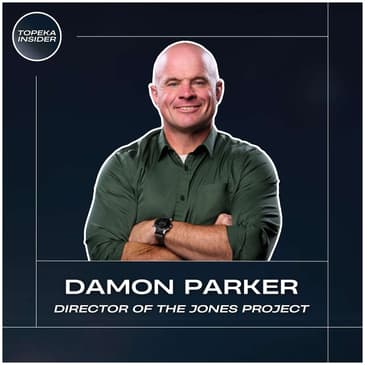
We sit down with Coach Damon Parker to trace how a girls’ wrestling experiment became the largest team in the world and why a funeral changed his path toward founding the Jones Project. The conversation moves from culture and leadership to mental health, ownership, and hope.
• Building a program that prioritized family, voice, and belonging
• Why girls’ wrestling exploded and how leadership sustains it
• Turning down trophy talk to focus on culture
• The single‑parent stat and what support looks like
• Student leaders holding teammates and coaches to account
• The resignation, grief, and the birth of the Jones Project
• Three critical steps for teen mental health
• Social media as a lifeline for students in crisis
• 29029 endurance climbs and fundraising with “bricks”
• Community, goals, and guardrails for mental health
• Topeka’s strengths, local spots, and date‑night rituals
________________________________________
This podcast has been brought to you by Choose Topeka. If you're thinking about making a move, Choose Topeka can get you up to fifteen thousand dollars to relocate. Apply now at ChooseTopeka.com
________________________________________
0:00 - Opening Banter & Sponsor
0:39 - Meet Coach Damon Parker
2:58 - Early Teaching And Coaching Years
5:02 - Rebuilding Washburn Rural Wrestling
6:31 - Birth Of Girls’ Wrestling In Kansas
7:19 - Building The Largest Girls’ Team
8:18 - Choosing Girls Over Boys Program
9:11 - The Single‑Parent Statistic And Its Meaning
11:26 - Coaching For Needs And Relationships
13:34 - Culture Over Trophies
16:28 - Teaching Real Family And Conflict
19:00 - Wanting It For Them Vs. Their Choice
22:07 - Student Leadership That Holds Everyone Accountable
25:56 - Introducing The Jones Project
27:28 - Resignation, Loss, And A Wake‑Up Call
30:02 - Launching A Free School Tour On Mental Health
33:05 - Word‑Of‑Mouth Growth And Impact
35:02 - Social Media As A Safety Net
37:10 - 29029 Everest Challenge As Fundraiser
40:12 - Carrying Bricks And Washington Post Spotlight
42:20 - Habits For Mental Health: Community And Goals
44:17 - The Three Critical Steps: Not Alone, Get Help, Own The Work
48:08 - Why Ownership Matters In Recovery
50:10 - Life In Topeka: Community And Schools
53:15 - Local Favorites, Food Gaps, And Date Night
1:03:33 - Closing And Where To Find The Jones Project
________________________________________
Beyond the Podcast: 🎙️
Be sure to follow our Topeka Insider Socials below and check out our website for additional stories and articles pertaining to Topeka, KS
Website -- https://topekainsider.com/
Facebook -- https://www.facebook.com/topekainsider
Instagram -- https://www.instagram.com/topekainsider/
Follow Your Hosts: 📱
Follow both Justin & Jon on their personal socials to get connected. They would love to connect and answer any questions about the show or their day to day.
Jon Griffith's Instagram -- https://www.instagram.com/thejongriffith/
Justin Armbruster's Instagram -- https://www.instagram.com/armbruster_jd
For Any Inquiries, please DM @TopekaInsider on Instagram!
Hey, you from that podcast with those two really good looking guys? What's that? I just remember the podcast. So you were the executive director of the Jones Project. Google, what is an executive director of the project? I feel your passion towards this. And I just think it's really cool how uniquely gifted you were to meet this opportunity at the time you did. This podcast was made brought to you by Choose Topeka. If you're thinking about making a move, Choose Topeka can get you up to $15,000 to relocate.
Jon Griffith:Whether you're buying or renting, Topeka and Shawnee County are ready to welcome you. Apply now at chooseTopeka.com.
Justin Armbruster:All right. Hey, today we have Coach Damon Parker, the head wrestling coach for women at Washburn Rule, and the executive director of the Jones Project. Thanks for being here, man. Thanks for having me, man. Excited to do this. Well, before we dive into Jones Project stuff, we'd love to hear a little bit about you, your backstory with Topeka. Yeah.
Damon Parker:How long have you been here? We moved here in 2011, so 14 years or so. I was born in Los Angeles, didn't live there long enough to really remember anything. We moved to Manhattan when my dad got a job teaching at Kansas State University and spent most of my childhood there. But then during the summers from ninth grade through college, um, had a a friend in school, uh sorry, two friends, twins in school that had a family farm in Belleville, Kansas. And so every summer I would go up there and work on the farm. And, you know, after graduating from high school, I always assumed, or from K-State, excuse me, I always assumed that I would end up in some really small town in in western Kansas or something because I just kind of liked that vibe. Uh, but then got a job teaching in Kansas City and uh spent a decade or so there, and then an opportunity came up to come teach and coach here in Topego. And we've been here ever since, and this is home and this is where we're gonna stay. It uh I I found that a lot of that small town vibe that I thought that I wanted when I was in college is here. Uh it's just a big small town, man. It's not it has some of the advantages of when we lived in Kansas City and like some some of the bigger city stuff, but then at the same time, you still see people that you know when you're out in the community, and there is that that sense of community that we were missing when we lived in Kansas City. And that's one of the things that we like so much about being here. When like when my kids and I go into the grocery store before we go, we always do the over-under. It's like, all right, 2.5 or higher. And it depends on what time of day. And it's like, are we gonna see three people that we know or less than that? You know, so uh and and you don't get that when you're when you're in a huge metro area. Yeah, and uh, but it's you can still have some some privacy as well.
Jon Griffith:So that's that's a little stacked if you know the employees at your grocery store. That's true. And it's guaranteed over.
Damon Parker:Yeah, especially when you spend a long time teaching high school because a lot of those kids like and the number has gone down a little bit since I'm not teaching anymore. But yeah, but yeah, what I it was the it was up in the sevens or eights back in the back in the day when I was actually working at the high school there.
Justin Armbruster:Were you coaching in Kansas City too?
Damon Parker:Uh very limited. I did, I was teaching kindergarten then, so it's a little different to have a you know an elementary school teacher on a high school coaching staff. Yeah. But our our building was kindergarten through eighth. So I coached middle school football, and then for a couple of years I coached basketball, having never played basketball. They just needed somebody that had a pulse and I fit the acquirement there. There you go.
Jon Griffith:Um what's that movie where Vin Diesel plays the child care person? Uh Pacifier. Was it like that? I would imagine that's you as a uh kindergarten teacher.
Damon Parker:You know, I I got that a lot. That that and and kindergarten cop, of course, depending on how old you are. But you know, it's it was one of those things people always be like, man, I bet the kids are scared of you. And it's like, man, after two days they realize that I'm not gonna spank them, you know. Right, right. Yeah. Yeah, I'm I'm just a big teddy bear stuck in a big guy's body. So uh, but no, I I loved to teach kindergarten, man. It was a hoot. But but yeah, we we had accomplished pretty much everything we set out to accomplish there, and it was time for a new challenge, and that's how we ended up here. Yeah, but uh, but yeah, I had the only the only wrestling coaching experience I had prior to this was I was a low-level assistant in Manhattan High School when I was going to K-State, and then the last couple of years that we were in Kansas City, I had a a friend from back in college that was looking for a kids club coach. And so he had me take over at Mill Valley, and I ran their kids club for four or five years, I think. But uh had never really coached with head coaching experience at all before we came to Topeka.
Justin Armbruster:Okay. Uh so then you came to Topeka in 11. Uh how long were you co were you teaching for?
Damon Parker:Uh I taught from 2011 until, let's see, my last year I think would have been 2021. Okay. So you could just write at 10 years. Yeah, I taught PE in strength and conditioning.
Justin Armbruster:Okay. Nice. That see that seems more fitting. Right. Wouldn't you say? Kindergarten strength and conditioning.
Damon Parker:Right.
Justin Armbruster:Yeah.
Damon Parker:You know, there's really not a whole lot of difference between teaching kindergarten kids and high school kids. Like all seriously, like all kids really just want the same things. But uh you know, with with high school kids, they'll cuss at you a little bit more, but they get your jokes, you know. So it's uh there's a little give and take. Yeah. Yeah.
Jon Griffith:You were telling us uh off mic the kind of story arc of the wrestling program that you're a part of now. Do you want to tell us about like what it was like when you got here versus kind of what it's like now?
Damon Parker:Yeah. Uh man, when we first got here, part of it it it's weird how the universe works, man. It's like I had no intentions of being a high school wrestling coach, but my brother-in-law, Pat Tolen, who uh now is over at McPherson Construction, um, he was working on the the new edition that they were doing back then at Washburn Rural. Oh okay. And he happened to be in a meeting with an administrator, and some administrator said, uh, hey, you wouldn't happen to know any wrestling coaches, would you? Because Washburn Rurals had just resigned. And he was like, Well, actually, I think I might. And so they called me and I applied, and it it might have been a a red flag I should have paid attention to that I think I was the only applicant for the job. Um, but they and they had had a pretty decent team the year before, but all their their senior leadership had graduated, and it was a very young team, and uh it was a good fit because there was so much work to do. Uh, because A, I love a big challenge, and then and B, there really weren't a whole lot of expectations to win at the time. And so it it takes a long time to turn around an aircraft carrier, man. And so we we really had to start from the bottom and just like slow build this thing, and it uh it started to catch fire a little bit, and then uh yeah, now we're kind of where we are.
Jon Griffith:So that you came in as the boys' wrestling coach, correct? So you're the girls' wrestling coach now. So how did that transition happen?
Damon Parker:Yeah, girls wrestling didn't exist uh back in 2011. If a if a female wanted to wrestle, she had to compete against male competition, which i is not good for anybody, you know. And and I had a couple of girls along the way that that were really, really tough that did that. Wow, um, but not many. And then in 2019, it was pretty clear that they were gonna sanction girls wrestling in Kansas. It went to a vote in 2018, um, didn't pass, but it was going to in 19. And so, you know, I'd I looked at all the data from around the country and seen how it was growing in these other states that had sanctioned years before. And I knew that it was gonna explode here in Kansas. And the the idea was let's jump out in front of this thing and and get basically a year's head start on everybody before they all realize that this thing is real and it's happening, it's not going anywhere. And so, so yeah, we went from having zero girls on the team in 2018 to having the largest girls wrestling team in the world the next year. We had 62 girls come out that first year.
Jon Griffith:Like actually the actual largest team in the world. Correct. Yeah.
Damon Parker:There's not another high school uh Olympic preparatory team or collegiate team that has a larger roster than we have over the last six years.
Jon Griffith:That is that is wild. Topega Kansas.
Justin Armbruster:Yeah, it's a uh a secret trivia question for for Topeka. Yeah. Yeah. So you said you were coaching both programs for a while, but then you ended up dropping the boys. When did that happen?
Damon Parker:Yeah, that was in 2021. So the the inaugural year of girls wrestling was the 2019-2020 season because it spans two semesters. And uh, and we were fortunate enough to win that first state title that year. And then the next year I was still coaching boys and girls, and we had uh we were fortunate enough to be first team in the history of the United States to win a large class boys and girls state championship in the same season. That's crazy. And then shortly thereafter, I resigned uh from coaching our boys program, and there was a whole lot that went into that. Um, first of all, I think we had 136 kids between the two programs, which brings a lot of challenges. Um, just I don't even know how I did it um looking back on it, because now just with the 70 or so that we have on the team this year, like the amount of challenges and parents and all the things that come along with that are substantial. And I was doing basically double that. Um so I was our practice room couldn't hold that or that number of people. And so we had to split practices and we'd I'd run two practices a night. And by the time I got done answering all the emails and doing all the administrative stuff, I was getting home nine o'clock every night. I had two little kids at home, and and I was like, man, I'm missing a fourth or a third of their childhood doing this thing because they're in bed by the time I get home, and and I was just kind of burning the candle at both ends. My mental health was not in a great place, and so I knew that something had to give. And we had we had already established the foundation with our boys' program, 10 years of putting in work there, and we had already established that culture. And we had a guy, Josh Hogan, who had run our kids' club for a long time, who wanted to step in as the head coach, and so I knew it was in good hands and he's done a great job with it. But our girls' program was so new that even though we had all of these numbers, and even though we had won a couple straight state championships, if if they didn't have the right hire there after I left, I I knew it was gonna fall apart and we just couldn't let that happen. Um because I think part of it is males have so many other inherent advantages that females don't have. And if we had to choose one, we wanted to stick with the females so that we could give these girls the not the wrestling stuff, man, but the leadership lessons and the the the community that they didn't have before. Yeah. Because the the most interesting stat that we have with our program is at our our first team meeting that we had, uh, like before it was even sanctioned, they haven't even hadn't even taken it to a vote yet. It was just kind of a, hey, I want to get some information out to you. Um and and we turned over every rock in that building looking for athletes. And we had 113 girls show up to that meeting. Whoa, wow. And I knew that we weren't gonna get them all. Uh, but if we got half of them, again, we'd have the biggest team in the world. And took down all their all their names and then went into the school's info system so I could get their email addresses, and it shows like where they live and what their household is, or the people that live in their household and all that. And out of those 113 girls, 104 of them came from single-parent homes. Whoa. And that was too far off from the average to to be a coincidence. Interesting. Yeah, and it was like, man, there's something here. Like these girls are they're missing something in their life, or they're you know, maybe they don't have a positive male role model at home, and or maybe they just have an axe to grind for one reason or another, and this is an outlet for them. And and that's a responsibility that we don't take lightly. And so it and we're we're still pretty far off the average. We're at about 80% now that are single family homes. It's changed. On the wrestling team specifically.
Jon Griffith:Interesting. What does that mean for you? Like when you see a stat, like what what do you do with that as a coach?
Damon Parker:I try to myself and put my assistant coaches in a position where we can fill whatever that need is for those kids because they all need something different. Wow. You know, and and every single kid from a a single parent home is they all have different stories, man. I some of them live in Clarion Lakes, and some of them live in Monterra, and everywhere in between. And so, you know, it it's all about relationship building within our program, and and it's my job to to find out what those needs are for those kids and then do everything that we can to to fill those needs.
Justin Armbruster:So obviously that's just Washburn rule. Do you think that stat translates uh across America?
Damon Parker:That's that's tough for me to say, man, because like we I I I really don't know because I've really only been in our room, so I can only speak to ours. Uh when when we first started this thing, it it was my intention to build the most socially diverse program in the in the building. Um because there's like there's not a lot of ethnic diversity at Washburn Rural. There's a little bit, but but not to the extent that there is in other places. But that doesn't mean that we couldn't find kids from the marching band and from the Gay Strait Alliance Club and from the cheerleading team. And like if you went through our team, like every one of those kids would sit at a different lunch table. You know, and and that was kind of our design when we first did this thing. And I mean, it's it's tough to say what other teams are like because culture builds culture. And so, you know, if you if you've got a kid that's an outstanding marching band kid that we recruited in 2019 that probably talked her friends into coming out when they were freshmen in 2021, you know, so it it could have stemmed from, you know, what we did five years ago. So who knows what's going on in other places. Right, exactly. Yeah, and we're starting to see some siblings come through now, which is really cool.
Jon Griffith:Aaron Ross Powell So what are some things that you're well, preliminary question? I assume the stat is not the same for the boys' team.
Damon Parker:Aaron Powell It wasn't when I was there. Um again, I I can't really speak to it now. Uh we were closer to the average of 50 percent when I was with the boys' team.
Jon Griffith:Um Right, just the way you brought it up made me think that that was probably the case. So I mean my question is what are some of the approaches to coaching or ways of like you mentioned like leadership development. What are some of those elements with the way that you're approaching the team as a coach that are different because of that stat than with the the guys' team where you know you said you're trying to fill a gap for people, you're trying to help them develop in a way that they're not getting that opportunity other places. What does that look like? Like what is boots on the ground, what is that?
Damon Parker:Yeah, it's it it's just different, man. They first of all, wrestling is just a different sport in general. You know, if you if you think about a football game, it's like all right, we're gonna play football, we're gonna start at 7 o'clock and it's gonna end somewhere between 9 and 9.15. With wrestling, it might start at 9 o'clock in the morning, it might start at 10.30 in the morning, and you might get done at 1 in the afternoon or 10 p.m.
Jon Griffith:Yeah, you just never like the sport itself is just different. Well, it's so individualized, too. It is.
Damon Parker:And I think one thing that that we've really, and and part of it is just me getting better as a coach. Because whatever you do for a long period of time, as long as you're actively engaged in professional development, you're gonna get better at it. And and I figured out some things that are that are have been pretty effective with this girl squad that I wish I would have done with our boys' team back in the day, regardless of the the statistics on what home life is like. Uh, but the number one thing is we don't talk about women's state championships in our program. Uh it's it is outlawed points of point of conversation. We just don't. Interesting. And I think that's a a big part of the reason why we've won five state championships since 2020, uh, is because it's not a point of focus. Like we focus on relationships and and really, really caring about other people. The I know I've coached and I have been coached on teams where you come together at the end and everybody puts their hand up and they say, one, two, three, family, family.
Jon Griffith:Right. Yeah.
Damon Parker:But I've never been on a team where somebody taught kids what family means, and that that being a part of a family is difficult. Uh, like nobody's family is perfect, and you're gonna have conflict with other family members, and that doesn't mean that you don't love that person. And so, you know, we teach these kids how to love each other and how to support each other, and and we teach them how to work through those difficult conversations. And it's I I tell folks that I'm a wrestling coach because that's what people understand, but that's not it, man. Like wrestling is just the it's just the medium that we use to teach these things. Right. Uh I tell like what it really is, is I'm just the leader of a massively happy and powerful learning organization that people want to belong to.
Speaker 5:That's it.
Damon Parker:And it it we would do the same stuff with a bowling team or with a Daily Wings team, it doesn't matter. You know, we would teach the same things. And I I think it kind of goes to what we're doing with the Jones Project, where I, you know, I tell kids when I go into schools, I really think that all kids and all human beings for real, but like kids especially, they really only want three things. Um, they want to feel seen, they want to feel heard, and they want to feel like someone like truly cares about them. Yeah, it's so good. And within our program, I tell our kids we're not gonna talk about women's state championships ever. Our goals for the program every year are always the same. And the first one is we want to give these girls a strength that they didn't know that they possessed. The second one is we want to give them a voice that they may not have heard before. The third is we want to give them a platform from which to use that voice. And the fourth one is we want to give them an experience that is so positive that someday when they have daughters of their own, they're gonna insist that their daughters wrestle for our program. And if we can do those four things, man, we found that the championships just kind of take care of themselves. And even when they don't, there's not a tear shed.
Speaker 4:Yeah.
Damon Parker:Like back in the day when I was coaching on our boys' team and we focused on like the trophies and stuff before we had them, when we didn't achieve that goal, then it was it was a kick in the stomach for those kids. And if you think about it, if there's 38 teams in in 6A, and every one of them has the goal of winning the state championship, 37 of them are gonna go home sad, and then one of them a week later is gonna be sad because they're gonna realize that it didn't solve all of their problems when they want to stay tight. Well, yep. And so we it's it's just not a point of conversation for us. And like last year we got third at state, and that was the lowest finish in our program's history. And that's I mean, honestly, it's nice to be in a position where third is the lowest you've ever finished.
Speaker 5:Yeah. Yeah.
Damon Parker:But at the same time, it's like we saw the team that won it, they got their trophy, they smiled for some pictures, got in the bus, got went home. Same thing with the second place team. We were there for an hour afterwards. Every single kid wanted a picture with every single coach and every different combination of friends and stuff. Yeah. And everybody was crying, not because we didn't win, but because it was over. And that's the kind of thing that we've been trying to develop here since day one. And I think we've done a pretty decent job of it so far. So good.
Justin Armbruster:Super cool. So you mentioned Jones Project.
Jon Griffith:Wait, I have a question before we get to the Jones Project. Uh curious, how do you navigate the tension of obviously you can't want it more than a kid wants it? You know, you see something in them, you see what they could be if they kind of jump into the program, the discipline, all that stuff, but you can't want it more than they do, right? Um at the same time, you see something really valuable, you know, in man, this is who you could be, this is what you know your future could look like. How do you navigate that tension of you know, someone kind of man, this is too hard to jump ship versus um kind of pressing in and doing something hard they've never done before. Does that make sense? Like it does. How do you navigate that tension in yourself as a coach of like, hey, I want this for you, but you're gonna have to do it too. Right. Does that make sense?
Damon Parker:They and and I think that's part of what is really special about the culture that we've built there is the kids that that stick with it for the long haul. I I tell them all, it's like this sport will give you exactly what you need. It's not always gonna give you what you want, um, but it'll give you exactly what you need if you stick it out. And they don't all because it's like this sport is not for everybody. And we tell them that up front, it's like this is hard. For most of you, this is gonna be the hardest thing that you've ever done. And some of you think you've done things that are hard and you haven't. And when you go through this, that's gonna be a stark reality for you. And and we always have a few kids that they come to me and they say, like, this this isn't for me, coach. I always say You know, give me two weeks because on the front end, if you've never done it before, it takes a couple days to get over the weird, right? Like if you've never rolled around with somebody before, that's kind of weird. It takes a few days to get used to the hard because again, most of them have never done anything that's that hard. And then it takes a week or so to learn a few moves, at least enough to where you can navigate a wrestling match. And I was telling it's like by the end of that two-week period, if you stay past that day, we expect you to stay the rest of the year.
Speaker 4:Yeah.
Damon Parker:But if you get to that two-week mark and you decide this isn't for me, just tell me. And like I won't try to talk you into staying because you know, I'm like, I can be a very persuasive person. I could probably talk you into staying. If you don't really want to be here, you're not going to give us great effort, and and then I'll probably be mad at you for not giving great effort, and you're gonna be mad at me for making you say it's just not a good situation, you know? And and we always do have a few that that decide not to stick around. And I I wish that I could pull out my crystal ball and have them see the future and what their future would look like if they stuck with it for four years versus if they bailed out.
Jon Griffith:Um what about some of the family dynamics though? Like you're talking about, like, hey, like your family culture is hard to change. Like what you're used to is the water you swim in, right? And so, you know, hey, on this team, we resolve conflict. Hey, on this team, this is how we treat one another. That can be hard to you know, there's a lot of just emotional friction when somebody comes up against like being held accountable to those kinds of elements that I would guess is probably a little different than the athletic elements of the team. How how have you navigated that? Of like a student's like, hey man, the wrestling's great, but I hate that person's guts, or I can't take your input, you know, and I don't want to get over this hurdle, you know, like man, it was that that's what's been the most rewarding part of this entire thing, this whole experience, because we have really invested in student leadership.
Damon Parker:And I tell the kids, it's like leadership is simply recognizing that everyone else around you is as powerful as you, is as brilliant as you, and has the same capacity for greatness. Your job is simply to remind them of this fact.
Jon Griffith:Wow, that's okay.
Damon Parker:And do it every single day. And at the first practice of the year, I always have them break into four corners of the room. I put the freshmen here, sophomores, juniors, seniors, and you'll look at the groups, and the freshman group is always the biggest, and then the sophomore group's a little smaller, and that's the way it works because so on and so forth until you get to seniors, and it's like because you know, some people aren't willing to do those things, some people aren't willing to like have those difficult conversations with other people, and so it's just easier to not be there anymore. And some will decide that you know, I've got too many other things going on in my life because it is a huge commitment. We don't start practice until 5 05 at PM every night, so they're getting home from school like 7 30. Whoa. So like, and these kids have other things going on in their lives too. And so I think when when we really invest in those core kids that we can see are gonna be there for four years, and we really teach them, you know, how this leadership model works. And that's not a like a one-off thing. Like we do uh what's what we call our leadership academy, where I have our juniors and seniors get together and we like every week it's a different leadership lesson, and then every week there's a a homework assignment that you go do out in the field and really teach them what leadership is and how it's selflessly taking someone from where they are to where they want to be. Wow and not not where they I'm sorry, not where they want to be, but where they need to be. Right. And because sometimes those are two very different things. And, you know, the the younger kids really quickly either figure out like, oh, we should probably do it like these older kids, or they figure out this probably isn't for me. Wow. And that's just kind of how it works. And and I wish that they would all latch on to those older kids because we have had some brilliant student leadership the last few years. Um and this year might be the best one that I've ever had. But uh a great example was last year we had I had some of our team captains came to me and like, hey coach, can we talk you after practice? And there was another kid on the team that had stirred up a little bit of conflict, and this was an older kid, and they brought it up to me and they said, like, here's here's the issue that we have with this other kid, and we're trying to keep this family unit tight and together, and here's our issue, and this was the best part, man. They were like, and here's our issue with the way that you've handled it. And so they called me out, which is awesome. Yeah, because like there was something that I was doing. I won't go into the details because it's boring, but like something that I was doing. We'll be the judge of that that uh I didn't I didn't even realize I was doing, and then I got to see it from their perspective. And I always talk to the kids about how you know it's very important that you have people in your life that'll let you see the world through a different pair of glasses. And they did that for me, and then and they told me about this kid. They're like, Look, she has a lot of value that she adds to the team. We don't want her gone or anything, we just need to correct these things. Right. And I went home and and told my wife, I was like, we did it, man. Wow, like we we figured it out. Because for them to bring that to me, challenge me, right, and but then do it from a place of love. Like that's that's what we're trying to get from the case.
Jon Griffith:Now they're carrying the culture just as much as you are. Right. Yeah, and that's my goal, man.
Damon Parker:My goal is to blow the whistle and that's it. Right. Yeah. You know, and and have them pretty much take care of that kind of stuff. And it it took four years or so to get there, but oh, really cool.
Jon Griffith:One of the principles I I heard it sounded like you were talking about was like like for leadership development, you're giving some of your best to the ones who are the most invested in the program. Right. And so, you know, n you know, I'm sure a lot of your energy goes to squeaky wheels and things like that, you know, but your best goes to the most all in who are gonna carry that forward and you know multiply your leadership investment, if you will. Right. You know, that's cool. So anyway, Jones Project.
Justin Armbruster:Jones Project. So you are the executive director of the Jones Project. To be honest, I know enough to be dangerous about the Jones Project, but not enough. Uh why don't you walk us through the origins of that, what it is, what you're doing now, and what your role is.
Jon Griffith:Excellent. Are you thinking about moving to Topeka? Well, you should be, because Topeka might pay you to move here for real.
Justin Armbruster:The Choose Topeka program is paying local individuals to relocate to Topeka $15,000. Visit chooseTopeka.com to find out more. Now, back to the show.
Damon Parker:In 2021, like I was talking about um earlier when we had a a season that nobody had ever done before. Um, shortly thereafter, like my wife was really the only other person in the world that knew that I was gonna resign. And um, Lindsay is she has always been my best supporter, and she's my assistant coach for our girls' wrestling team. And like, we do all this stuff together, and so you know, confided in her that I was like, man, I I can't do this stuff anymore. And we didn't really tell anybody else until it was time because I didn't want it to be about me. It was at the end of the season, we were having our banquet, but then at the same time, like, and if I had it to do over again, I would, and I would do it some things differently. But uh at the end of the banquet, I was just like, hey guys, by the way, I can't do this anymore, like love y'all, all that kind of stuff. And and that kind of raises some eyebrows when when you have a season like that and then just walk away from it, because especially when you've got enough years left where you could coach for another decade. And you know, at the time I just cited health issues, but coinciding with that, at the same time, Josh Jones, who is he was just a pillar of the Topeka community, he died by suicide on March 5th, 2021. And this is like right in that same time frame. And I never met Josh. Uh the first time that we were in the same room was at his funeral. But my wife works at Advisors Excel and she worked with Josh, and so I went with her to support her because she was shook, just like everybody was. And when when I went to that funeral, um sitting in the top corner, standing room only, and just kind of had this epiphany that it if if I didn't do something about my rapidly deteriorating mental health, it was only a matter of time until that was my family sitting in the front row. And that was just kind of a moment of clarity for me. And I think a lot of people that really struggle with their mental health are really good at keeping it a secret from other people.
Speaker 4:Sure.
Damon Parker:Um just because it's easier. And I had done that forever and got really good at keeping it a secret from folks, and including my own wife. And after that that funeral, like get in the car, it was appropriately pouring rain on that day, and like get in the car and had what could only be described as a total mental breakdown, and kind of told my wife about what I've been going through for the past couple of decades, and and she in her infinite wisdom was like, All right, let's come up with a plan. And so we started that whole process of me working on myself, and then I honestly don't remember how it got started, but somehow I connected with Cody Foster, the founder over Advisors Excel, and we started going to lunch every once in a while, and and I kind of told him that story, and he was like, Man, that that could be really helpful for some people if you'd be willing to tell it. And so contacted a media contact, uh Brent Maycock, who's now writing for Keisha Online, and he wrote an article that was gosh, it was like five pages long, right on the front page of the the Capitol Journal on Mother's Day, and uh and he did a fantastic job with it. And then the article kind of caught fire, and well, because not many people were talking about this back in 2021. And so it ran in, I can't remember how many newspapers nationwide, but you know, I'm I'm getting outreach from other coaches from all over the country about like, hey man, like I'm going through this, and I didn't realize how many other like people that were in my position were in my position. And so shortly thereafter, um, Cody and I meet up again, and he, you know, I don't know how well you know Cody, but he's one of those guys that he he always has a vision for the future, and he might not let you know about it, right? But um, but I think he was just getting to know me because he had this idea uh that came to him shortly after Josh's passing and was trying to see if I would be a good fit for it. And eventually he was like, We're at Johnny's, and he's like, you know, I'm I'm thinking about starting this nonprofit, and I'd like you to be the executive director. What do you think about that? And so I was like, you know what? Hold hold that thought for a second. I gotta go use the restroom, go to the bathroom, pull out my phone, and I Google what is an executive director of a nonprofit. Because like I knew that nonprofits existed, but I'd lived in this bubble of education for the last two decades. I had no idea what an executive director was. And after reading like a 30 seconds worth of a Wikipedia entry, I was like, all right, yeah, we can do that. And just went outside and was like, all right, yeah, let's do this. And so he was basically like, look, I know you're you're good at speaking, and I know you're good with kids, so let's put them together. And so what we do with the Jones Project is we go from from school to school, mainly in Kansas, but we've done quite a few things outside of Kansas. And basically I deliver what could best be described as an hour-long keynote on the topic of mental health and suicide prevention. And and we do it for free. Uh, we're a nonprofit in every sense of the word. And in in the past, when I was teaching, like during the the spring and the summer, I never did never did any coaching then outside of like off-season wrestling stuff, just because I needed to leave that schedule a little more free to go do professional speaking engagements for businesses, associations, corporations, things like that. And the thing that we came to realize is man, like schools just don't have budgets to bring in speakers. Like if you're out in western Kansas and you want to bring in a halfway decent speaker, like that's at least five grand, and that's pretty bottom of the barrel. And so I was like, let's do this thing for free. And then this is a this is a cause that a lot of people it's very easy for a lot of people to support because everybody in some way, shape, or form has been touched by mental health struggles, and like whether it's themselves, a friend, a family member, whatever. And so we survived basically just on community donations. And like frankly, like Cody has kept this thing alive through a lot of his connections and a lot of people that knew Josh. And so since June of 22, when we started, I counted up the other day. I think we've been in 261 schools or something like that. Like, we're moving, man. And and the coolest thing about it is it has all been word of mouth. There's no, hey, can I come to your school? It's like, oh wow.
Justin Armbruster:We I had an old. Oh, they're calling you. Yeah.
Damon Parker:Yeah. I had an old wrestling contact at Council Grove, uh, Jay Dornboss, and he's the principal there now. And there's an article that came out about what we were gonna do, and he called and was like, Hey, I want you there, like beginning of the year. We go there, it was very well received by the kids, and you know, principals talk to each other. And so pretty much every time I go into school, those principals call the people that they know and they say, Hey, you should have this guy come out, doesn't cost anything, it's great for the kids, all that. And so, so yeah, it's it's just kind of perpetuated itself since we started. Yeah, and uh yeah, I'm I'm very fortunate to do it, man.
Justin Armbruster:Uh I'm blessed. I I feel like that's something that, and maybe you guys already do this, but you probably go to the schools more than once. You probably a lot of them we do.
Damon Parker:Yeah, you revisit and yeah, there's some that we go to twice a year, and then there's some that we go to like once every two years, you know, it just kind of depends. And you know, and I always remind them that we can come back whenever. And the reason being, like, they think, well, we came once and we didn't want to wait for until all these kids graduate. And it's like, well, but think about this, man, like you were a very different person when you were senior than you were when you were sophomore, you know. And and in some of those schools, when I first started doing repeat visits, you know, I was like, I don't want to repeat all the same stuff that I did before. And so like I totally mixed stuff up. And we were constantly evolving and changing, but like there's some keystone stories that you know I would leave out of this because I've already told that group that, and I had kids come up to me afterwards, why didn't you tell that story? Blah blah blah blah, you know, and so it's like I it made me realize, you know, whatever we were we were saying hit with them. And so we need to come back to that, and you know, pepper and stuff that and that's the coolest thing about doing it, man. It's like it's a a never-ending focus group. I can see what lands and what doesn't and what's most effective. And the man, the coolest thing about it is the social media aspect. Because whenever I go speak to, and I'm not super active on social media, like I post every once in a while, like, but we're pretty dang busy with this. I'm not very good at it, and so it takes me way longer to put one up than it would to take a for a high school kid to put up a TikTok or whatever. But uh but what I mean by the social media aspect is when I go speak to an adult audience, it's always the same, get done, half a dozen people or so come, hey, thank great job, thanks for coming, all that kind of stuff. When I go talk to kids, they do the same thing, but it's then they add in at the end, now here's everything that's going on in my life. And I think it's it's an opportunity for them to kind of trauma dump a little bit. Wow, because it's like I'm a real person that stood in their auditorium on their stage, not just some dude on a YouTube video that they had to watch in their homeroom class. But also there's a duality of I'm probably never going to Caney Valley High School again, so they're probably never gonna see me again. And so that gives them the freedom to tell me some things that they probably don't want to tell their school counselor that they're gonna see in the cafeteria every day, or that might be friends with their mom or whatever. And so through that, we've been able to catch a lot of kids who, either intentionally or not, have been slipping through the cracks, and then I can communicate that to the council and staff there at that school. But then there's always a a select group of kids that doesn't want to get in that line and come talk to me at the end, and those are the ones that you really worry about. But we make our social media very accessible to those kids. And I've gotten man, I get so many messages, and most of them is like, hey, thanks for coming, all that. But every once in a while we'll get one that, like, I'm still a mandated reporter since I'm a coach. Like, I'll get one that's like, man, this is a red flag, this needs to be addressed immediately. But now I can screenshot that and I can send it directly to the counselor and say, in her words, this is what she said. And I can't tell you how many times we've gotten messages that were like, Man, it your talk in our school today like ignit uh ignited the spark that I had, and I decided to tell my mom about what I've been going through, and we got an appointment set up for me and all this. Like we we had one just within the last couple of weeks, man. Like, uh, and and I don't know if you want to go into the whole mountain climb thing, but I did this endurance event that they happened to write an article about in the in the Washington Post. And because of that article, we got into a lot more schools around here because I like it got shared a lot on social media. And one of those schools that we went into, there was a kid afterwards that uh, long story short, basically said I had a suicide plan that I was ready to enact. And because of the Jones Project coming to our school today, I went home and told my mom about it. She's got an appointment set up for me with a site next Tuesday. It's awesome, man. It's like crazy God. It's we went into this thing thinking, you know, if we do this for a decade and one kid decides to stick around that wasn't going to otherwise, then it was totally worth doing. And man, we've had that over and over and over again. So yeah, I'm uh I'm just enormously grateful that Cody had this vision and even even more so that he tabbed me to help see it through. So wow.
Justin Armbruster:Do you have a team that works with you at the junkment?
Damon Parker:Just so you well, kind of. Um, I have a a virtual assistant. She's a real person, but she lives in the Philippines. Gotcha. Um and she handles Mary handles a lot of the administrative type stuff that that we do. Um hi Mary, if you're watching. Um but yeah, so she does she does all of that for us. Um, but other than that, man, it's just me and my Subaru, and that's about it.
Jon Griffith:Come on, man. Let's go. Cool. Tell us about the mountain climbing.
Damon Parker:Oh man. Um, this one again was kind of facilitated originally by Advisors Excel.
Jon Griffith:Um was it the 29029? It is. Okay, yes. The what?
unknown:The 2029.
Damon Parker:29029. It's if you're not familiar with it, it's it's an event where they do it at different locations across the country, but you start at the the bottom of the mountain and you climb to the top, and when you get to the top, you ride a gondola back down to the bottom and you do it repeatedly until you've reached 29,000 vertical feet of gain, uh, which is the height of Mount Everest, and you got 36 hours to do it. So it's it's not just a uh uh physical endurance thing, it's also an exercise in sleep deprivation, because especially for a guy my size, because I like I probably have 100 pounds on the next closest finisher, you know. Um and so I have to move at a pace that doesn't allow me to sleep, and I just go into it like, okay, we're gonna be awake for 36 hours, you know. And uh the first year of the Jones Project, like uh lady named Stacey Shellman, who was running it for Advisors Excel, like they had a group of people going and she called me and was like, you know, we're gonna do this, and we're thinking maybe we could do it as a fundraiser for the Jones Project. Do you want to do it with us? Oh, cool. And I was I looked it up a little bit and I was like, Oh my gosh, that sounds impossible. I was like, uh, I'm not sure I get like I can't afford it. Like it's not cheap.
Jon Griffith:Yeah, you're just like casually climbing Mount Everest all the time.
Damon Parker:Right. And so um it's not cheap, so I tried to use that as an excuse. And she's like, Well, we have a donor who wants to take care of it for you. And I was like, Well, no, I don't have any excuses, so I guess we'll do this. Time to start training. Yeah, told her yes, and then like they had already been doing the training plan for 15 weeks. Oh gosh. I when I said yes, I looked at it and I had seven weeks left until the event. Oh dang. And so then it was like go from squatting and deadlifting every day to like now it's completely switched the way that we're training. But Um but yeah that's been kind of the lifeblood for our organization because every year we raise a bunch of money and oh so you're doing that every unit.
Jon Griffith:Yeah this last one was the fourth one that I've done was yeah I have some buddies who've done it with A part of that group. Who went with uh Bob Clifton went to the machine dude? Yeah I think he got second last year. He blazes past me.
Damon Parker:Yeah.
Jon Griffith:He did it again this year. Yeah, I've done it a few times. Yeah, that's where we were this year. Uh Danny Hottajack did it. Uh-huh. Um I think those are the only guys I know who did it. Cool. Um they love it.
Damon Parker:Yeah, it's all it is truly a special experience. Yeah. Special. That's it. It is, man. It's like I uh it's like I tell our wrestlers, it's like you have no idea who you are as a human being until you push yourself to the point where you've got both feet firmly out of your out of your comfort zone and in the growth zone.
Speaker 4:Right.
Damon Parker:And that event will put you there.
Speaker 4:Yeah.
Damon Parker:And this past year, it's like we went to uh Whistler, which is in British Columbia and Canada, and I I had been fortunate enough to get my red hat, like finish the event at the first three that we went to. And so going into this last one, it was like, man, what do you get out of doing something where you you're 95% sure that you're gonna accomplish the goal? Like, is that worth the amount of time away from the family? And okay, again, my wife is super understanding and accommodating then and lets me do this thing every year because it is a big commitment on the whole family side. Totally.
Speaker 5:Yeah.
Damon Parker:But it's like, why go through all that for something that I know I'm probably gonna be able to do? Right. So how can we up the up the ante a little bit and make this like increase the level of diff difficulty?
Jon Griffith:And so so what we did was You carried Bob on your back.
Damon Parker:Um close, not quite Bob. Um, but started selling to like some of our bigger donors throughout the year, started selling bricks. Um started selling these bricks and ended up carrying, like, started the event with 48 pounds on my back. And then after the second lap, like like a dummy, I checked my email real quick. And I had sold two more. And so then I had the load. So we so we did the last six laps of this event with 60 pounds on my back. And that was like part of it was again, it was a great way for us to increase the bottom line of the organization, keep the lights on, and all that kind of stuff. But at the same time, it was like, I want to see I'm 45, man. I want to see what I'm still capable of. Come on, man. And that taught me exactly what I was capable of. Um, if if somebody would have said, we'll give you a million dollars to do one more lap, I would have said, I'm good. You know, like I couldn't take another step when I was done. Um but again, with the weird way that the universe works, man, like at there was a reporter there from the Washington Post that was just doing a story on the event. And then word travels fast. When there's why is that guy carrying a huge military bag on his back? I went to Einstein's here in town and just got a um, what do they call it, a mollipack? Uh and so word kind of traveled on that, and then that reporter and the photographer followed me around for you know a bunch of hours at different points during the event. Oh, that's cool. And they did a story on three or four different climbers, but like Jones Project got a lot of publicity in there, and then because of that, that thing started spreading, and then we get into some different schools, and then that message from that kid that I was talking about happened because of that. Oh, you know, so it's yeah, that's that's one thing that I've really learned over the last few years is I think God, the universe, whatever you want to call it, is always working in your favor. You just gotta keep your eyes open and see those things. And and yeah, this job has really allowed me to do that.
Jon Griffith:Wow. Super cool. What have you found? What are some things that you found have helped just your consistent mental health over time?
Damon Parker:Number one is having a sense of community. Uh, you have to have that somewhere. And, you know, I thought that I would lose that when I left teaching. Um, but I really haven't, man. I get I don't have that same core group of kids that I would see every day. But you know, there's really not a ton of interaction during PE class time with that. It would happen at the end of class or like in between. And I had lots of great connections with great kids, but and I thought I would lose that, but it's like I'm still in education, I just have a a bigger classroom now. Yeah. You know, um, and there are still some kids that I keep in touch with from the very first year that we were doing this back in 22. Uh, so having a sense of community is I I think the the number one thing. And for me anyway, the second thing is always having something on the table that I'm working towards next because it is I don't know how I can only speak for myself, I don't know how other people operate, but it is very easy for me to stagnate. And if I don't have something relatively big that I'm going after, then I I can kind of backslide a little bit. Um, but at the same time, like there's it's it's a a very fine line between what I was doing with our boys' wrestling team, where I committed all of my life. Like every waking hour and a lot of hours I shouldn't have been awake went to turning that boys team around. Um and now I'm I've been doing a relatively decent job of keeping perspective on what's important, still working towards those things that are really important or that are important to me, but keeping the main thing, the main thing, you know, which is family in that sense, community.
Jon Griffith:That's super cool. Amazing. Is that some of the elements that you're talking to kids about, like when you go into a school? Oh, absolutely. Or are there other things that you're telling them like, hey, you need to be doing this, this, and this, or like what are the some of the big principles or right on.
Damon Parker:Yeah, the the the three critical steps that we really talk to the kids about is first of all, that if you're struggling with this thing, and I when I go talk to to schools, I tell them, like, you know, there's a report from the CDC that came out a couple years ago that said that in this country, 44% of middle school and high school kids self-reported. So that's not even including the kids that were like, no, I'm not gonna report this, self-reported that they persistently felt sad or alone. Yeah. 44%, that's half of us.
Speaker 4:Yeah.
Damon Parker:And I tell everybody, it's like, I'm not even here to really talk to the 44%. I'm almost here to talk to the 56%. You fortunate half in here that are never gonna have to deal with this, but through no fault of your own, don't really understand it.
Justin Armbruster:Yeah.
Damon Parker:And you know, I explain to everyone, it's like the the three critical steps for people your age, and everybody really, but uh, is number one, if you're struggling with this thing, you're not alone in the way that you feel. Wow. And I think that like the the kids that are on the 56% half of the auditorium, like they're like, okay, duh, yeah, you're not alone in the way you feel. When I explain that, it's like you know how in in cartoons when you have a decision to make and you've got the angel on one shoulder and the devil on the other shoulder, like when you're really down bad with mental health stuff, man, is that the devil's just whispering in the ear, like, hey man, like I know other people struggle with this thing, but not like us. Ours is different. There's no way that anybody could understand, so you better keep this to yourself, you know. And I I think because I know that that's the way that I felt, and I've I've gotten that feedback from kids too. Uh so number one is just making them realize, oh, you're not alone in this thing in the way that you feel. And number two, is that you're you're not alone in the fight. And I know that so many kids do the same thing that I did for two decades, which is you get really, really good at hiding it and you think you can solve the problem on your own, but you can't. But then no one comes to help you out because you're so good at hiding it. And so then you walk around pissed off at the world that nobody's coming to save you.
Speaker 4:Right.
Damon Parker:Um and so just really, really emphasize the importance of for their age, having a trusted adult, somebody that's not in their household, that works in the building. It doesn't have to be a teacher, it could be a cafeteria worker, but somebody that if if you had a crisis in your life that you could you might not want to, but you could probably go talk to that person. It's like you you have to have a trusted adult here. Um, and if you don't, you gotta go find one and give them some ways that they can do that. Um, so it's you're not alone in the way that you feel, you're not alone in the fight. And then the third critical step is understanding that there's hope. Like that things can get better and they will get better. But I'm just telling man, it's like this is where I'm different from pretty much everyone else that talks about this. Uh I really emphasize the point that there's some personal ownership there and they have to put in the work. Like the the common buzzwords around this thing are it's okay to not be okay. And I think that's absolute garbage. Yeah. Um it's just missing a couple words because to me, what it's okay not to be okay means is well, my life sucks. There's nothing I can do about it, so I might as well be okay with my life sucking. Right. No way, man. Like I'm I'm not giving ownership of my mental condition to a mental health condition. Like that I'm in charge of that. Right. And I have to be willing to put in the work, and and it's gonna be ugly and messy, and might have to cut some people out of your life, and it's gonna be a it's not an overnight process. It's a years, sometimes decades long process. But if you're willing to put in the work and you take those other two things to heart, then absolutely things can and will get better, but that's up to you. So good. So yeah, we we try to pass a lot of that ownership off to kids and make them realize like nobody's come save me, man. Like, I gotta do some of this on my own, or at least I gotta take those steps on my own so that I can have other people around me that will support me when I get down.
Justin Armbruster:Yeah. That's so good. I think it's so crazy just because we just met today, but I can just feel your passion towards this. And I just think it's really cool how uniquely gifted you were to meet this opportunity at the time you did. That was and the impact that you know you are getting to make through this organization. It's just it doesn't seem like a coincidence, it just seems really cool uh how there's not a lot of people that would be able to have the impact that you do. But I appreciate that. It's really cool.
Jon Griffith:Why do you think uh just like what you were saying about like, hey, the way I approach this is slightly different than the way other people approach us. And and obviously, you know, we're not trying to throw anyone else under the bus or anything like that, but but why do why do you think uh a lot of the conversation around mental health doesn't involve that ownership piece?
Damon Parker:Man, I honestly I don't know the answer to that. Um I think it's such a sensitive topic. Yeah. That yeah, I don't know. I th I think it might just be like these kids are in such a touchy area right now. They're like, hey, it's okay to be there. It's okay to be there. Yeah and I think that there's a time and a place for that. Uh but I also know that they that's what they're hearing from other people.
Jon Griffith:Right. Um Yeah, you don't need more of that. Right. Yeah, what you need more is what you're not getting from anyone else.
Damon Parker:Yeah, and it just goes back to like what I was saying earlier about trying to see the world through somebody else's glasses, man. It's like if they already have that perspective and I can get them to see another one and then see what works for them, then awesome. But what I what I just try to do, man, is I I've got twins, boy and a girl, they're 13, Doke and Corinne, just best kids in the world. That's awesome. And it's like if if they were in the same position that I was when I was about that age, what would I want somebody to bring to them?
Jon Griffith:Yeah.
Damon Parker:Or what would I have wanted somebody to bring to me when I was that age? Um, and so that's what we try to do.
Jon Griffith:That's so good because I I would guess a lot of the like you know the feeling of compassion that you feel towards somebody, it's like, man, you're hurting, that sucks. I, you know, I want to validate, you know, one kind of some of the things that you said earlier, like, hey, you're not alone, you know, um, a lot of people are going through this, and validating that like what you're going through is actually really hard, you know, all of that. Um but like when you don't give someone the ownership piece, it's like, well, you're doomed until something magical outside of your control happens, if you're lucky for enough for it to happen, you know, and then it'll just hopefully go away. Uh when, you know, you would hope that in the large scheme of things, like telling someone, as hard as it is to hear, you know, like, hey, you know, you're still in the driver's seat on this. Like you you get a choice in how this goes. As hard as that is to hear, because you can obviously go down the kind of shame route of like, I suck, I caused this, you know, which you know, there's things to be said about that, but is actually really empowering. Like, okay, I'm not a lost cause. I I can move forward. I have something in me that, you know, maybe I can't solve this today, but I I can move forward somehow, you know, and and I get to decide how quickly I move forward and you know what that looks like. You know, I I think there's there's something good, man. People need to know that, you know.
Damon Parker:Yeah. And that's the goal, man. It's like, because I tell the schools that we go into, it's like I'm the tip of the spear. You know, and even if you got me coming back twice a year, that's like, you know, they're in school for 188 days. Right. You know, like so I'm I'm not here to do all of the follow-up stuff. Right. But I'm here to get the conversation started. Right. And hopefully get some of those kids that are like, oh, you know, maybe I can do something about this, get them in that counseling office or get them talking to somebody.
Justin Armbruster:So you're you're primarily giving keynotes to students. Uh I think you mentioned do you give keynotes to businesses and to adults?
Damon Parker:Or man, I've got the weirdest Venn diagram for occupations ever. You know, like it's a you know, the girls wrestling coach thing, the nonprofit director thing, and then um away from the nonprofit thing, like we'll we'll speak in businesses and things like that. Okay. Um now there are a couple of things. And that'd be like sometimes it's mental health stuff, sometimes it's leadership, culture building, all that kind of stuff.
Jon Griffith:Climbing mountains. Right. Yeah.
Damon Parker:And that does play a role in it. And that's uh one other cool thing about that event is that um there is always some incredibly inspirational story that happens out there that I can then take to the stage that works great with high school. Yes. Yeah. But yeah, when I'm doing the adult thing, like uh prior to 2021, kind of with the the turnaround of our wrestling program on the boys' side, that brought some attention media-wise. And so people only wanted me to talk about leadership, culture building, all that. Sure. Yeah. After that article that Brent Maycock wrote about mental health, then people only wanted me to talk in business about mental health stuff. And now it's kind of that's kind of balanced out a little bit. But um the the stuff that we do with the Jones Project, we really only do in businesses if like if we've got a a donor that bought a couple of bricks that lives in Utah, like we'll go talk at their company meeting or whatever. You know, but um but yeah, for the most part, it's what I'm doing with the Jones Project is project is almost exclusively with kids. Cool, that's cool.
Jon Griffith:That's great. Have you guys heard of the comedian Nate Bargati?
Damon Parker:Oh, yeah. I don't know that I have. No.
Jon Griffith:He has this bit about he's hilarious. He has this bit about uh working at a corporate office when they have like an inspiring, like a motivational speaker come who climbed Mount Everest. Oh, really? So he talks about climbing Mount Everest and basically, you know, kind of turns it into a metaphor, like, hey, what's your Mount Everest, you know, and like helping you overcome your obstacles. And he's like, now keep in mind, this guy's Mount Everest was actually Mount Everest. My Mount Everest is not stopping at McDonald's on the way home, you know? Like, man.
Speaker 1:That's so funny. Challenges are all relative, that's it. Yeah, yeah, yeah. This is pretty good. Yeah.
Jon Griffith:Let's shift to maybe like Topeka specific, like life in Topeka, and then we'll have some rapid fires. Um what what are some of your favorite parts about living in Topeka?
Damon Parker:Uh just again, that that sense of community that we have here and knowing that that a uh again, trusted or adults need trusted adults too. Yeah. You know, and knowing that we've got those around here for myself or for my wife, and you know, the the support that we've had and the way that people have welcomed welcomed us in here pretty much since day one. That's that's been my favorite thing about it. Um as far as my kids go, they they go to the school at Washburn Rural Middle School, they're in the 437th district. And like I've I've been a part through my career of a lot of different school districts, and there's nowhere else I would want to send my kids.
Justin Armbruster:The new middle school or the old middle school? They're the old middle school. Okay. Have you seen the new one? I have, yeah. I haven't been in it. It's pretty cool, man.
Damon Parker:They one thing they did really well was you know, if you go into the old middle school, it's it looks like a new middle school now. Like they did enough renovations in there to where it's not like, oh, we have this one really fancy building, and then we got this old building. Like if you went in, you wouldn't know which one was which. Yeah. Um and plus that one's 90 seconds from my house. So that's why my kids still go there. But uh, but no, like dad, we want to go to the new one. Too bad. Not happening. No, they both wanted to stay there, man. And it's but yeah, the the community and the schools for our kids, and then you know, they're there are awesome opportunities for people to work here. Like my wife, like I said, has been working at Advisors Excel since gosh, she's been there for at least 10 years now. She didn't start there right when we moved here, but um, you know, with the the speed at which that company is growing, like there are always going to be opportunities for qualified people to go work for them. It's wild. It's yeah, we we love it here, man.
Justin Armbruster:So moving from Kansas City to Topeka, what do you think that Topeka has on Kansas City?
Damon Parker:Uh again, I think the one thing we don't have is food. Like I do miss some of like the Mediterranean food, like some of the Cava? I haven't yet. I've heard it's pretty good. I've heard it's pretty good, but I haven't been over there yet. Um, but the thing that we do have over here, again, is uh I hate giving the same answers over and over again, man. But like, you know, I I taught for a decade in in Kansas City, and we lived in Merriam in Johnson County, and my wife worked in Olatha, and I worked in Platt County up here. Oh wow. And then I did that kids' club coaching in Mill Valley over here in Shawnee. And so this loop every day was a hundred miles or so. Gosh, and that's insane. Yeah, it was it was bonkers, man. I just you just get used to it, you know. Like I listened to a lot of podcasts and all that kind of stuff. Yeah um but at the same time, like I didn't felt uh like I couldn't tell you what my neighbor's name was in Miriam, and I didn't know outside of the people that were like in my wing of the building, I didn't know a ton of people up in Platte County where I was even teaching, you know. And once I started coaching over here, started to get to know a little bit of those people, but never saw them out in the community and never saw um, never really talked to anybody outside of that wrestling environment, and it's completely different here. And you can't put a can't put a price tag on it.
Justin Armbruster:I love the uh the over-under metaphor that you use.
Damon Parker:Dude, that is great.
Justin Armbruster:I find myself walking into restaurants and I'm just like scanning the restaurant. I know who's here that I know. I know. I do the same one. As soon as I walk in, I'm looking around.
Damon Parker:And five minutes later, you know, they come walking in, it's like, oh hey, how we doing? Yeah. And and there's been more than once where my wife and I have gone out to dinner and we asked for the check, and the wait staff says, Oh, somebody already took care of it for you. And it's like that never happened when we lived in Kansas. Wow. You know, it's like, and then exactly what you said. It's like, who is it? And there's usually two or three options on who it might be. Wow. Because you get to know a lot of people here. So yeah, I think that's one of the biggest benefits. But at the same time, it's not like when I was working in in Belleville, Kansas on the farm, and every single person knew everybody's business all the time. You know, it's a happy medium between the two.
Jon Griffith:Right, right. So now, I just let you know, you know, you're gonna get the Topeka Insider bump now. People aren't gonna recognize you from anything except Topeka Insider. Are you from that podcast?
Speaker 1:Are you from that podcast with those two really good looking guys?
Jon Griffith:Yeah, yeah, Jones Roger.
Damon Parker:What's that? I just remember the podcast. Yeah. My kids call it Topeka famous. Yeah, exactly. That's what you're doing. We leave here and then nobody ever says anything. But like every once in a while we'll be walking through, like we were in the Nards not too long ago, and from across the way, some kid yells, Hey, it's the find a way guy. You know. So uh That's right. Yeah, we get that every once in a while. That's right.
Justin Armbruster:So, you know, let's let's just jump into that. Uh we we like to end our time on Topeka Insider with some rapid fire questions. And if you're from Topeka, they which most of our guests are, they tend to be a little bit longer if we get into the Topeka questions. So you mentioned it. You're going to do a home project. Menard's, Home Depot, Lowe's. What kind of project am I doing?
Damon Parker:Just If it's a random tiny one, probably Home Depot.
Justin Armbruster:What about the big ones?
Damon Parker:Usually Menards. There it is. That's what we're going for. That's what we're going for. Home Depot first. Well, but that's like if I'm if I'm going to get like some non-slip tape for the stairs or something. If I'm putting in a toilet, like I rebuild some stairs on our front porch earlier this year, and that was a menards.
Justin Armbruster:Absolutely. You go to Menards, you swing by the grocery aisle and you pick up some snacks. Yeah.
Damon Parker:Some kind of weird nut log roll thing or whatever.
Justin Armbruster:Uh, what do you think, what's something that Topeka, in your opinion, is missing? Like maybe like a restaurant or a thing to do. Mediterranean place. Man, that's it.
Damon Parker:I'm I'm a you can probably tell I'm a foodie man. I like to eat. Um and uh don't get me wrong, there are a lot of great options here, but as a as a guy that just cannot get enough hummus, like name a Mediterranean place in Kansas City that we need here. Oh man. Um most of my favorite ones are mom and pop shops. Um there's one called uh Poppy's that's close to uh Rockhurst University on True. Okay. That place is probably my favorite.
Justin Armbruster:Have you had Medis? Have you had Medis? I don't know that I have a Wichita place, but they're Mediterranean. They're really good.
Jon Griffith:Um I have a favorite local place. Uh Honeybee is awesome.
Damon Parker:Um what is that? Honeybee is it's on 29th. It's it is the best kept secret, man. If you don't know about this place, it's uh we'll let them know. It shares shares a a location with like a I think it's called Crispy Co. Like they do over here, it's like deep fried chicken wings and french fries and stuff. And over here, winamaker? Yeah. Oh yeah, yeah, like by the tire shop over there. Uh-huh. Yeah. Um and but on the honeybee side, it's like you can get protein shakes or asai bowls and like. Oh, someone told us about that recently. Feeling healthy if you can take left, you can eat some soul food, you can take a right. Yeah. Thankfully, I always take a left there. I've been eaten on the other side, but I've heard that's really good too.
Jon Griffith:Wow. You big coffee guy?
Damon Parker:Oh, yeah.
Jon Griffith:What's your favorite local coffee place?
Damon Parker:Uh jazz. Yeah, blue jazz.
Jon Griffith:Blue jazz, yeah. Sorry, blue jazz. Yeah. Yeah. Love it. Yeah. Um, do we talk about date night?
Justin Armbruster:Yeah, going on a date night in Topeka. Uh going with your wife. What are you doing? Where are you going now?
Damon Parker:We're doing something, doing something different this year with our wrestling team. And I know this is a really lightning round, I'll go fast. But like, it's such a demanding sport of time that like, and I don't do a good job of relinquishing control to other people. And so going into this year, it's like, I'm gonna turn over Tuesdays to our assistant coaches. And I told all the this was the coolest thing, man. At our parent meeting, I was like, if you send me an email on Tuesday, you'll get a response from me on Wednesday. Um, I will not be at any practice this year on a Tuesday because I'm gonna take some connection type time with my beautiful wife, Lindsay, and we're not doing anything wrestling related. That's right. And I thought that they were gonna be pissed, and it was a huge round of applause from the parents. Because I think they understood that we were now teaching the kids the the lesson of convection time with your significant other is more important than this dumb little sport that we do. Wow. And and plus uh again, it gives our our coaches a chance to flex their muscles because I have the best assistant coaching staff in the state. Like they were the state assistant coaching staff of the year last year. Wow. But um, so tomorrow night um we'll do what we will do pretty much, at least until our package runs out. We'll go do lava yoga um tomorrow night. Yeah. Okay. Yeah, we did that last week and we'll do it again this week. But um, but yeah, we love doing that. And then I we're hands-on type folks, so we've we've done a lot of um like ceramics classes and things like that. Oh, that's real cool.
Jon Griffith:Oh, I uh this is super random. I was thinking about asking about the next 29029, but it made me think the guy who runs it, Jesse Itzler. Have you read his book, uh Living with a Seal?
Damon Parker:I have not. I was at his house earlier this year, though. Were you really? Yeah, in Atlanta. Um, we again organized through AE. Uh a bunch of the the folks that had were 29029 alumni that were with our group went down there and like did the the ice bath. And I and his ice bath is different, man. It's uh his salt water is like 29 degrees, it's ridiculous.
Jon Griffith:Oh, I bet he's next level, yeah.
Damon Parker:And uh and like he has a sauna right next to it, and so it kind of bounced back and forth there.
Jon Griffith:So he has this book called Living with a Seal, and it's anonymous. He doesn't tell you who it is in the book. Uh he he says like intentionally, so he only calls this person the seal, but he pays this guy to live with him for a month to train him. And you if you Google it, it's David Goggins. So he has David Goggins live with him for a month, and he documents every day of the month. And he the the only rule, uh, because he he he met David Goggins at like an ultra marathon and was like, Who the heck is that guy? That guy's a freak. And so he's like, hey, he, you know, pitches, hey, would you live with me for a month? And the guy says, Well, hey, uh, my only rule is you're not allowed to say no to anything I want you to do. And he says, Fine, I'll you I'll say yes to whatever. So he there's like he'll like wake him up in the middle of the night. He makes him like sleep standing up in a chair, like he makes it like do all kinds of random stuff, like he makes him go on long runs in his like corporate suit randomly in the middle of the day. Like it's just wild. And it's so it's it's hilarious, but it's also like super inspiring, you know, uh, and just kind of motivating. So I can't believe I've ever read that one yet. That was my first uh the first time I'd ever heard of Jesse Itzler. Yeah. Oh, really? Funny dude, yeah.
Damon Parker:Yeah, we asked him about that, like when we were at his place, like had kind of a round table discussion beforehand. And so it's like, how's it like living with Goggins? Okay, yeah. It was a lot, yeah. And that's all they said about it.
Jon Griffith:It's just like I don't want to talk about it anymore. It's hilarious. It's a great book, especially it's like an audiobook while you're working out. It's an incredible listen. Yeah, because he he narrates it.
Damon Parker:Yeah, yeah. Cool. He was such a great dude, man. And the coolest thing about him, um, I like two or three of those 2929 events before. I whoops, I was uh I was hiking up towards the summit, and like for the last 45 minutes or so, I was just welcoming this dude, chatting with him, and really, really cool guy. And then get to the top, we kind of parked, go our separate ways, and then a bunch of other people came up and they're like, Oh my god, you were hiking with Jesse Hitzler. I'm like, who's Jesse Hitzler? Yeah, like I had no idea that he's this huge personality, and um that millions of people know who he is. Like, that's how cool he was.
Jon Griffith:Yeah, that's so funny. We uh the guy Bob did the 29029 with you, he and I are gonna do this thing in the Grand Canyon, and it's like you go across and back. The rim to rim? Yeah, the rim to rim to rim. Oh, awesome. And Jesse Itzler, his like running crew did it, and so there's a video of them doing it in like an insanely short time. Uh, like our goal would be like 24 hours. They did it in 14, like they'd run the whole thing. But the video of just like him and his crew is so fun, just you know, seeing them, their their kind of interactions with each other, and you know, they just seem like good dudes to hang with, you know.
Justin Armbruster:Right on. I'm glad you guys are bonding over this. I have no interest in that.
Jon Griffith:Yeah, we're also we should sell bricks though. We're not we're not on that level quite yet.
Damon Parker:I was gonna say, like, if you uh if you need somebody to carry a pack for you, holler at me. Sounds good, yeah. We need pack horse. I yeah, I couldn't keep up with Bob though.
Justin Armbruster:I don't know how fast you are, but well, thanks for joining us. Where where can our listeners find you at? Do you have a website?
Damon Parker:Yeah, thejonesproject.org is our is our website, and then basically if you just Google my name or Google the Jones Project, something will pop up. Cool. That's awesome. We got all kinds of socials.
Justin Armbruster:I can't remember what the handles are, but Danny, thanks for joining us, man. It's been awesome. That was really cool.